Does It Pay to Be Disagreeable? What Research Says About Personality and Income
Nice guys finish last, the saying goes. Some research seems to agree. But look closer, and the answer to whether your personality affects your pay is more surprising, and more useful, than the saying suggests.

You probably know the type. The colleague who always helps out, never complains, and never asks for a raise. And the other one, who pushes back in meetings, negotiates hard and somehow always ends up better paid.
Is that just an impression, or does it really pay to be a bit difficult?
Researchers have studied this question with large samples, decades of follow-up and even experiments. The short answer is yes, sometimes. The longer answer is far more interesting.
The claim: nice guys finish last
In 2012, Timothy Judge, Beth Livingston and Charlice Hurst published a study with a title that sounds like a magazine cover: "Do nice guys – and gals – really finish last?"
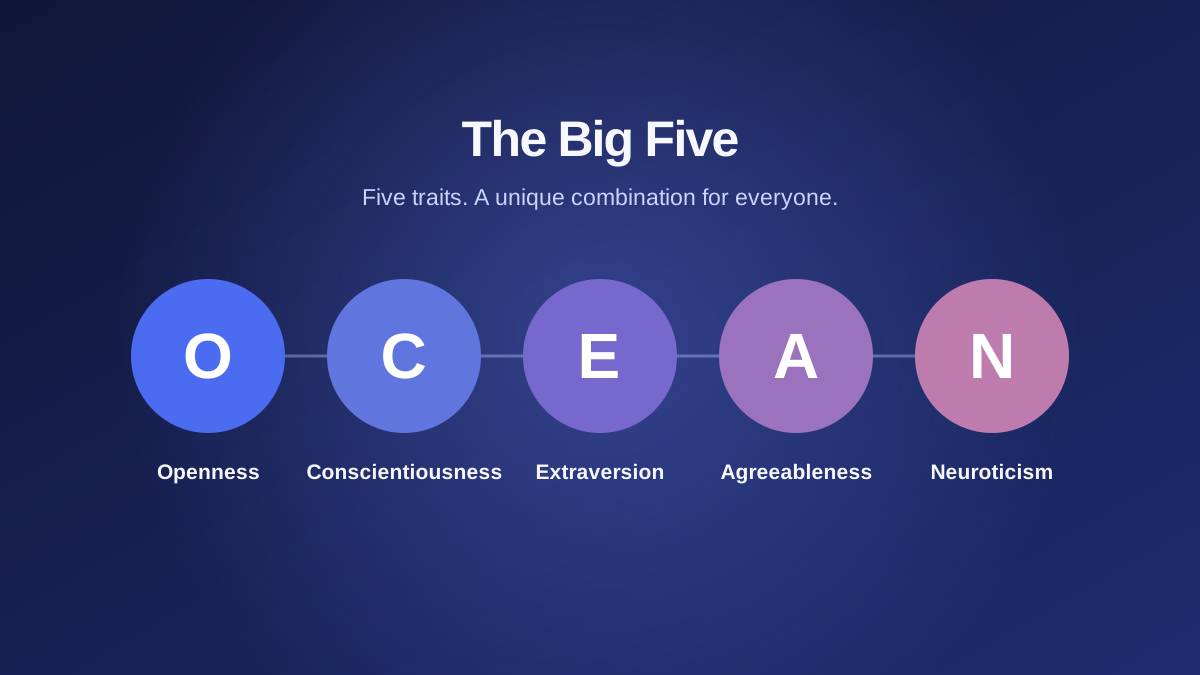
They looked at agreeableness, the Big Five trait that covers being warm, trusting, cooperative and accommodating. Across four studies with different samples and measures, they found the same pattern:
- People who scored higher on agreeableness earned less.
- The effect was much stronger for men. For women, agreeableness made only a minor difference.
- Men still earned more than women overall, but the pay gap was largest between disagreeable men and disagreeable women.
The fourth study was an experiment, and it pointed to what the authors call backlash: an agreeable man breaks with expectations of how men "should" behave, and pays for it.
That last point matters. If agreeable men earn less partly because others punish them for not fitting a stereotype, the lesson is not that kindness is a weakness. It is that the workplace may be unfair.
The confirmation: the personality of millionaires
If disagreeable people earn more, you might expect the very rich to be the least agreeable of all. A German team led by Marius Leckelt and Mitja Back tested this in a rare study of millionaires, published in the British Journal of Psychology.
Compared with the general population, the millionaires were:
| Trait | Millionaires compared with the general population |
|---|---|
| Emotional stability | Higher (less neurotic) |
| Extraversion | Higher |
| Openness | Higher |
| Conscientiousness | Higher |
| Narcissism | Higher |
| Sense of control over their own life | Higher |
| Agreeableness | Lower, but the smallest difference |
The authors describe the rich as "stable, flexible and agentic" people who are focused more on themselves than on others. People's stereotypes about the rich turned out to be accurate, but exaggerated.
Here is the detail most summaries miss. The lower agreeableness was the least pronounced difference of all. Once the researchers took into account that the millionaires were more often men, older and more highly educated, it disappeared. What remained were higher extraversion, conscientiousness, emotional stability, self-confident narcissism and sense of control.
In other words, the millionaires were not so much unkind as confident, energetic and calm.
The twist: it is the match that pays
So far, it can sound as if some personalities simply earn more. A study led by Jaap Denissen, published in Psychological Science in 2018, challenges that idea.
The researchers used data from 8,458 working people in the German Socio-Economic Panel, a large representative survey. Then they did something new: two occupational experts from the German Federal Employment Agency rated how much each occupation demands of each Big Five trait. For agreeableness, for example, the experts placed the armed forces lowest and religious professions highest. For extraversion, bookkeepers came lowest and actors and directors highest.
That made it possible to ask a different question: not "which personality earns most?", but "does it pay when your personality fits your job?"
For three of the five traits, it did. People whose personality matched what their job demanded earned more per year than those who were far off in either direction:
| Trait | Extra yearly income when personality fits the job |
|---|---|
| Agreeableness | €3,935 |
| Openness | €3,231 |
| Extraversion | €2,191 |
From Table 3 in Denissen and colleagues. For comparison, the median income in the sample was €33,180 per year, so the fit bonus can be worth more than a month's pay.
Look at the top row. The trait that supposedly costs you money is the one where fit paid the most. An agreeable person in a job that calls for agreeableness is not penalised. They get a bonus.
Conscientiousness behaved differently. There, the demands of the job mattered more than the fit: jobs that require a lot of conscientiousness tend to pay well, whoever holds them. Highly conscientious people in jobs that did not call for it actually earned less than less conscientious people in jobs that did. For emotional stability, the researchers found no clear fit effect.
The authors' conclusion is worth quoting: economic success depends "not only on having a 'successful personality' but also, in part, on finding the best niche for one's personality".
What predicts wealth best: self-control
If one trait stands out across this research, it is not disagreeableness. It is self-control, a core part of conscientiousness.
The Dunedin study in New Zealand followed about 1,000 children from birth to age 32. Terrie Moffitt and colleagues found that self-control in childhood predicted adult health, substance dependence, criminal offending and personal finances, in a steady gradient: the more self-control, the better the outcomes.
Two details make the finding hard to dismiss:
- The effect held after accounting for the children's intelligence and social background.
- In a separate study of about 500 pairs of siblings, the sibling with lower self-control had poorer outcomes, even though both grew up in the same family.
Can money change your personality?
Most of this research assumes that personality affects income. It may also work the other way.
Christopher Boyce and colleagues followed 6,769 employed Germans over four years. Some of them lost their jobs along the way. Compared with those who stayed employed, the people who became unemployed changed noticeably in agreeableness, conscientiousness and openness. Those who found a new job changed little.
So when we see that people with certain traits earn more, part of the story may be that work, money and security shape personality too.
So should you become more disagreeable?
Probably not. Here is our reading of the research as a whole:
- The penalty for agreeable men looks partly unfair. If it comes from backlash against men who do not fit a stereotype, the problem lies with the workplace, not with kindness.
- Fit beats type. Agreeable people earned more in jobs that call for agreeableness. The same goes for extraversion and openness. The question is less "what kind of person should I be?" than "what kind of job suits the person I am?".
- Calm and self-control seem to matter more than toughness. The traits that held up among millionaires were emotional stability, conscientiousness, extraversion and confidence, not a lack of warmth.
- You can stand up for yourself without being unkind. Asking for a raise, saying no to extra work and negotiating a salary are behaviours, not personality traits. Kind people can learn them too.
What the research cannot tell us
- Most of it shows associations, not causes. Only the experiment in Judge's study and the sibling comparison in the Dunedin study come close to testing cause and effect.
- Most data come from a few rich countries, especially the USA and Germany. Pay structures, gender norms and welfare systems differ a lot between countries.
- The millionaire sample is small. 130 people is impressive for such a hard-to-reach group, but small for detailed comparisons.
- Effects are modest. Personality is one of many factors behind income, and far from the largest.
- Income is not the same as a good life. None of these studies measured whether the higher earners were happier, healthier or better liked.
Where do you stand?
Our free Big Five test shows where you stand on agreeableness, conscientiousness, emotional stability and the other traits in this article, including the facets beneath them.
If you are wondering what kinds of jobs might suit your personality, our Holland code test matches your interests with hundreds of occupations.
Take the Big Five test and find out which niche your personality might thrive in.
Sources and further reading
- Boyce, C. J., Wood, A. M., Daly, M. & Sedikides, C. (2015). Personality change following unemployment. Journal of Applied Psychology, 100(4), 991–1011.
- Denissen, J. J. A., Bleidorn, W., Hennecke, M., Luhmann, M., Orth, U., Specht, J. & Zimmermann, J. (2018). Uncovering the power of personality to shape income. Psychological Science, 29(1), 3–13.
- Judge, T. A., Livingston, B. A. & Hurst, C. (2012). Do nice guys—and gals—really finish last? The joint effects of sex and agreeableness on income. Journal of Personality and Social Psychology, 102(2), 390–407.
- Leckelt, M., Richter, D., Schröder, C., Küfner, A. C. P., Grabka, M. M. & Back, M. D. (2019). The rich are different: Unravelling the perceived and self-reported personality profiles of high-net-worth individuals. British Journal of Psychology, 110(4), 769–789.
- Moffitt, T. E., Arseneault, L., Belsky, D., Dickson, N., Hancox, R. J., Harrington, H., … Caspi, A. (2011). A gradient of childhood self-control predicts health, wealth, and public safety. Proceedings of the National Academy of Sciences, 108(7), 2693–2698.