Why Do Some People Love Being Scared?
You hide behind a cushion. Your friend wants more. New research on psychopathic traits explores why the same scare can feel so different.
This translation was generated automatically and may contain errors.
The movie goes quiet. A little too quiet. The main character opens a door, the music stops — and something lunges at the camera.
You jump. So does the person next to you. Then one of you laughs, while the other wonders why you didn't pick a comedy.
The same scene can be the highlight of the evening or the reason to switch off. What turns fear into entertainment?
A new study of psychopathic personality traits examines one possible piece of this puzzle: a sense of invulnerability. But there are several possible explanations for enjoying horror, and your taste in movies is no personality test.
Two questions that sound alike
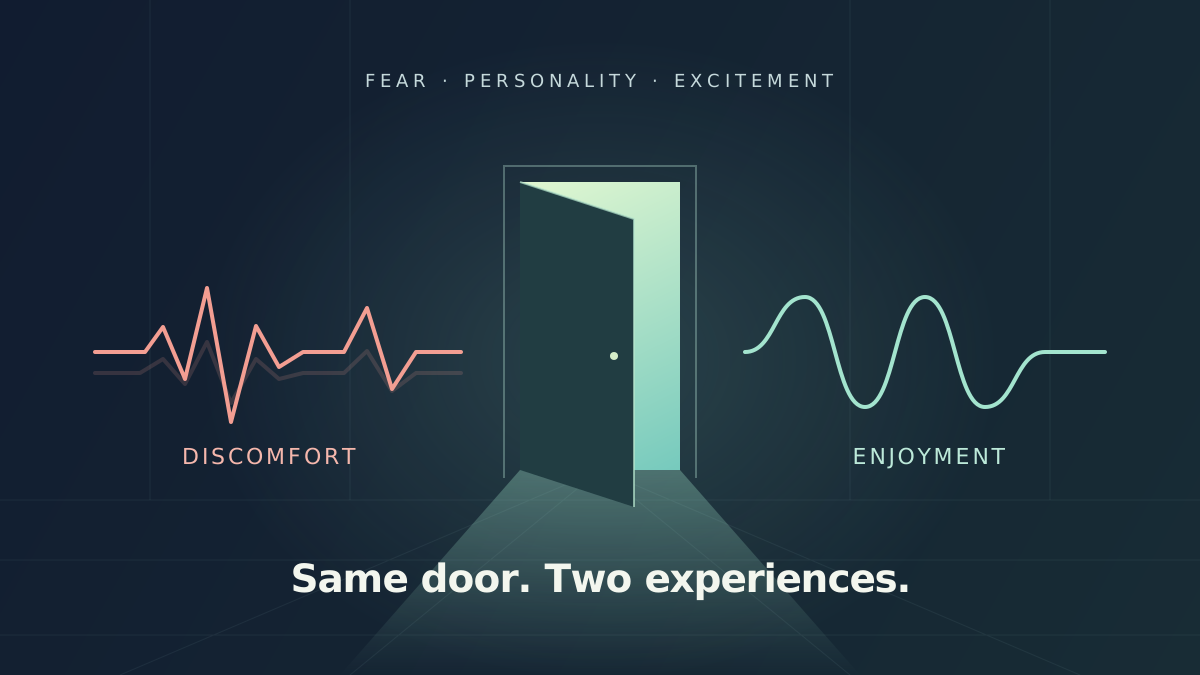
“How scared were you?” and “How much did you enjoy it?” are different questions. You can be quite frightened and still have a fantastic time. You can also feel little fear and find the movie boring.
“I want this to stop.”
The negative side: feeling frightened, uneasy or overwhelmed.
“Can we do that again?”
The positive side: feeling excitement, pleasure or exhilaration.
This distinction is central to the new research. Less discomfort does not automatically mean more enjoyment.
What did the researchers investigate?
Angela Book, Beth Visser, Tori Wattam and Kirkland Johnston published their study in Psychological Reports on October 10, 2026. They examined self-reported psychopathic traits, not a group with clinically diagnosed psychopathy.
The first study included 825 participants: university students and adults recruited through an online platform. The second included 425 students. Participants completed questionnaires and watched short videos of a roller coaster and a horror game. They then described their positive and negative emotional reactions. The number included in each analysis varied.
The researchers examined two possible explanations: perceived invulnerability and boredom proneness. Perhaps horror is more appealing if you feel nothing can hurt you? Or if you get bored easily and need something intense?
Greater enjoyment was the clearest finding in study one
People scoring higher on psychopathic traits generally reported more positive and less negative reactions to the frightening content. But the associations were not equally strong.
| Reaction to the horror video | Association with psychopathic traits in study 1 |
|---|---|
| More positive feelings | r = 0.26 to 0.32 |
| Less negative feelings | r = −0.10 to −0.07 |
These figures refer to the two participant groups in the first study. The weaker negative association was not statistically significant. See Table 2 in the original study.
A correlation, r, describes how much two measures vary together. It is not a percentage: r = 0.32 means neither “32 percent more enjoyment” nor that 32 percent of horror fans have psychopathic traits.
It also matters that these figures do not describe both studies combined. In the second, the association with positive reactions was approximately r = 0.22, and with negative reactions approximately r = −0.21. The pattern was therefore somewhat different. Original study, Table 9.
“This can't hurt me”
Perceived invulnerability statistically explained part of the association between psychopathic traits and less negative reactions in both studies. For positive reactions, the findings were less consistent. Boredom was not supported as an explanation in the way the researchers had expected. Book and colleagues, 2026.
One possible interpretation is that something frightening becomes easier to face when it does not feel like a personal threat. But the analyses do not show that feeling invulnerable causes enjoyment of fear. The researchers did not experimentally change participants' sense of invulnerability.
Think about the difference between seeing a monster on screen and hearing someone break into your home. Your heart may beat faster in both cases. Yet the situations are very different. That is precisely why we should be careful about applying findings from video clips to real danger.
Fear may be best in the right dose
A broader perspective comes from a field study at a Danish haunted house. Andersen and colleagues recruited 110 visitors and combined self-reported experiences with heart rate measurements. Enjoyment had an inverted-U-shaped relationship with fear: the most fear did not mean the most fun.
Little excitementJust enough
Scary and funToo much
Overwhelming
That does not mean everyone has the same threshold. The study also involved people who had already chosen to visit a haunted attraction. It cannot tell us how much fear everyone else would enjoy.
Still, it is a useful way to think about movie night: you need not disagree about how good the film is. It may simply land at different points on the spectrum between exciting and too much.
Where does the Big Five fit in?
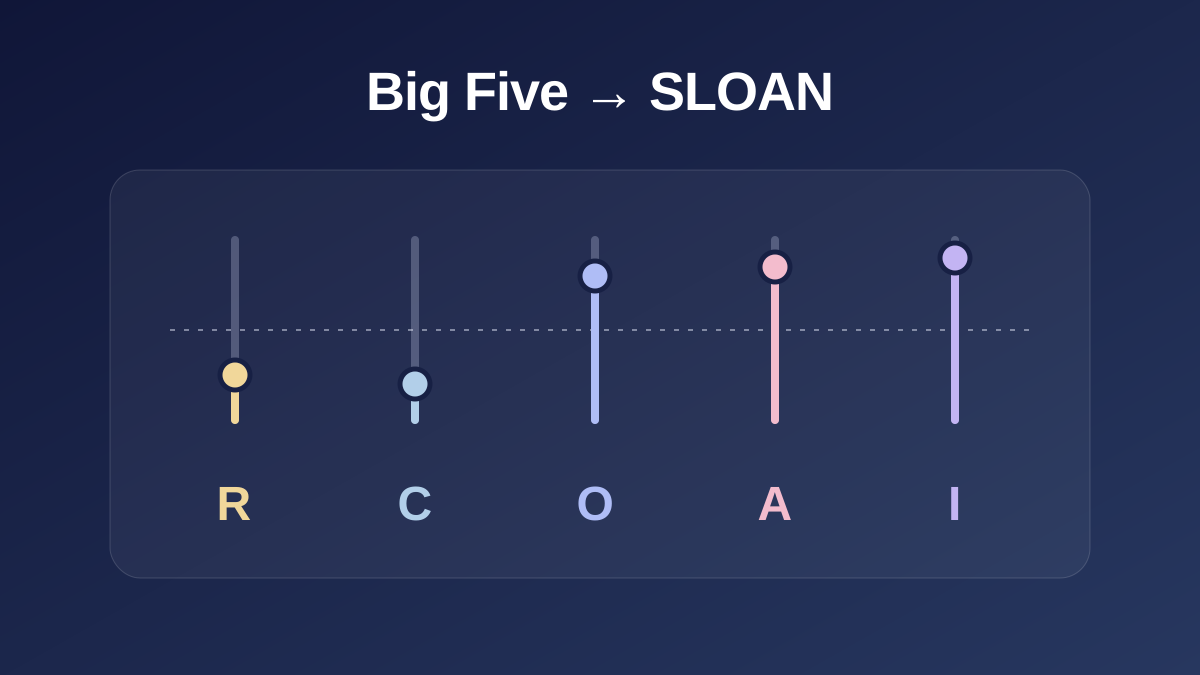
The new study did not measure the Big Five. We therefore cannot use it as evidence that particular Big Five profiles enjoy horror. Earlier research nevertheless offers some clues.
G. Neil Martin's 2019 research review describes an often positive, but inconsistent, association between sensation seeking and horror enjoyment. The review also discusses research linking imagination/intellect, related to openness, to horror media use. Extraversion had small associations with aspects including social use of horror, while emotional stability was associated with being less easily frightened. Research on the Big Five and horror was limited.
These traits illuminate different aspects of the experience: what draws you in? How strongly do you react? And does it matter who you watch the movie with? None can tell you for certain which movie you will like.
What the study cannot tell us
It is tempting to turn a surprising finding into a simple rule. Four limits are especially worth remembering:
- Traits are not a diagnosis. Participants reported on themselves; the researchers did not diagnose them.
- A video is not real danger. Clips of a roller coaster or a game are also not the same as experiencing the situation yourself.
- A statistical explanation is not a demonstrated cause. Other factors may contribute to the associations.
- The hypotheses were not preregistered. The findings should be examined further in new studies.
These are limitations of the research design, and a reason to read the findings as an interesting clue about differences between people.
Curious about your own traits?
Next time someone cheers after a horror movie you could barely sit through, try asking: “Were you less scared than me — or did you just enjoy the fear more?”
Those are two quite different answers.
Sources and further reading
- Book, A., Visser, B., Wattam, T. & Johnston, K. (2026). Psychopathy and Fear Enjoyment: The Role of Invincibility and Boredom Proneness. Psychological Reports. Published online October 10, 2026.
- Andersen, M. M. and colleagues (2020). Playing With Fear: A Field Study in Recreational Horror. Psychological Science, 31(12), 1497–1510.
- Martin, G. N. (2019). (Why) Do You Like Scary Movies? A Review of the Empirical Research on Psychological Responses to Horror Films. Frontiers in Psychology, 10, 2298.