Depression: why do some people feel down more often than others?
Why do some people sink into low moods more easily than others? What the depression facet means, how it differs from clinical depression, and how it is measured.
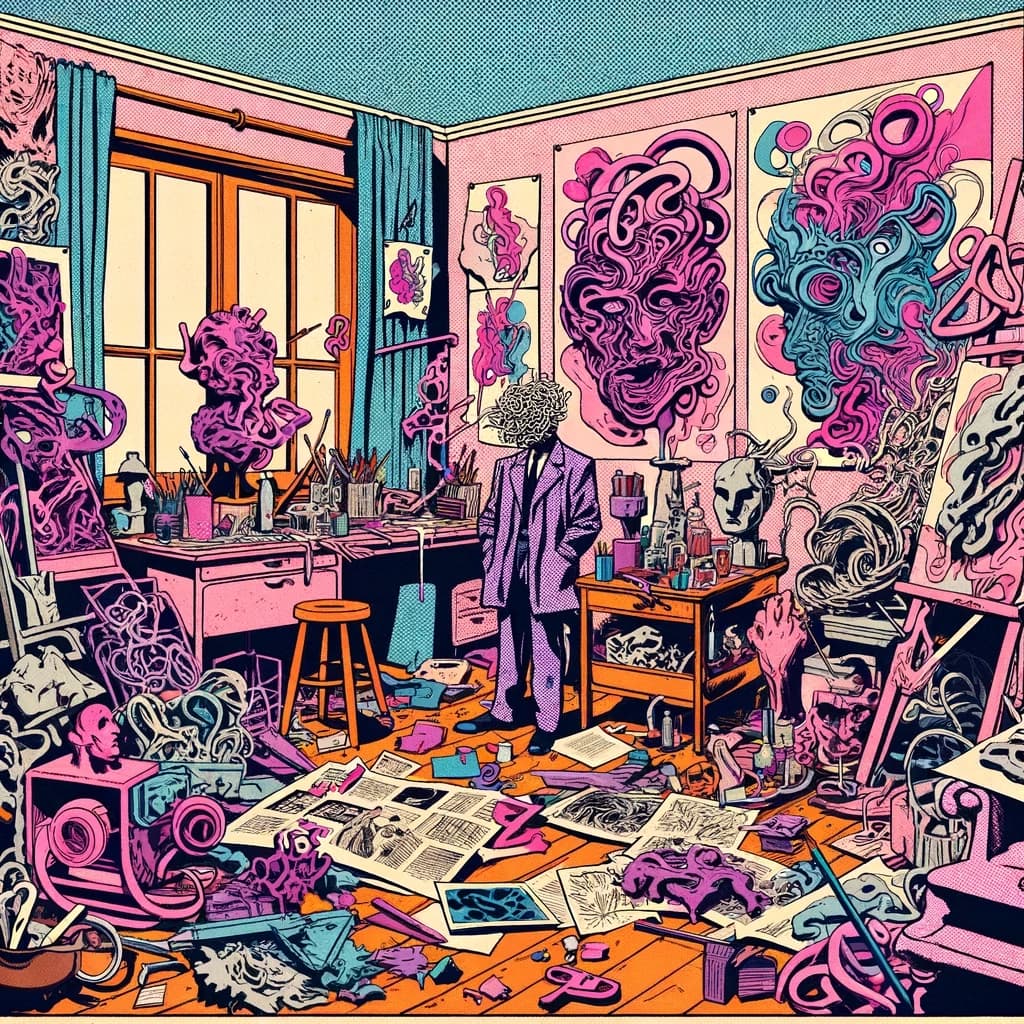
It is Sunday evening. Nothing in particular has happened, but a heavy, grey feeling settles in. Plans you were looking forward to suddenly feel pointless, and it is hard to get started on anything.
For some people this is a rare visitor. For others it comes often, and for no obvious reason.
Why are some people more prone to low moods than others, even when life is going reasonably well?
Psychologists describe part of this difference with the facet depression. In the Big Five model, it is one of six facets of neuroticism. It describes how easily you feel sad, dejected and discouraged, and how often you lack energy and drive.
What does depression mean?
The name can be misleading. In the Big Five, the depression facet does not measure the illness depression. It measures a normal personality tendency that everyone has to some degree: how prone you are to low mood and to feeling down about yourself.
People who score high often recognise themselves in this:
- You often feel blue or down in the dumps, sometimes without a clear reason.
- You can be hard on yourself and sometimes dislike who you are.
- You find it hard to get going, even with things you usually enjoy.
- Setbacks can feel heavier and last longer for you than for others.
- You may feel that things are hopeless when they are really just difficult.
A high score does not mean you are ill. Many people with high scores have never had a depressive episode, and many have good lives with close relationships and meaningful work.
The key is how easily your mood tips downward, and how long it takes to come back up.
Personality and depression are linked
A large meta-analysis from 2010 pooled 175 studies to examine how the Big Five relate to depression, anxiety and substance use disorders in adults.
All the diagnostic groups were high on neuroticism, with a large average difference compared with people without the disorders. Neuroticism was the strongest link across the board. Many groups were also low on extraversion, and the largest effect for low extraversion was found in dysthymic disorder, a long-lasting form of depression.
The analysis measured the broad trait, not the depression facet alone, and it shows associations, not causes. But it explains why researchers see neuroticism as an important risk factor: it raises the probability, without deciding the outcome.
Rumination: when thinking makes it worse
Why do some low moods pass, while others deepen?
The psychologist Susan Nolen-Hoeksema spent much of her career studying rumination: the habit of thinking over and over about how bad you feel, why you feel it and what it means.
In a study from 2000, she found that people who tended to ruminate when they felt down were more likely to develop depressive disorders later, including new onsets of depressive episodes. Rumination also predicted anxiety symptoms.
Rumination feels like problem-solving. You try to understand why you feel bad. But it mostly keeps your attention on the bad feeling, and that tends to make it stronger.
A personality trait is not the same as an illness
This is the most important distinction.
Depression as an illness is a clinical condition, with symptoms that last over time and clearly affect sleep, appetite, energy, concentration and functioning. Only a doctor or psychologist can make that diagnosis.
The depression facet is about a disposition. You can score high and never become ill, and you can score low and still become depressed after a heavy loss or a hard period.
A placebo-controlled trial from 2009 illustrates the difference. Adults with moderate to severe depression received an antidepressant, cognitive therapy or placebo. The patients on placebo improved substantially in their depression, but their neuroticism scores barely moved. The illness and the personality trait did not change in the same way.
The facet is also different from low cheerfulness, a facet of extraversion. Cheerfulness is about how often you feel joy and enthusiasm. Depression is about how often you feel sad and discouraged. You can laugh a lot and still have periods of heavy mood, and you can be quiet and serious without being sad.
What does a high or low score mean?
High depression
You are more prone to periods of low mood, self-criticism and low energy. That can make everyday life heavier, and it can be wise to keep an extra eye on yourself during demanding periods.
Many high scorers are also reflective, honest about difficult feelings and good at meeting others who are struggling.
Low depression
You are rarely down for long and usually like yourself as you are. Setbacks are unpleasant, but they rarely bring you to a standstill.
That does not mean you are protected against depression. Life events can hit anyone. A low score mainly means that low mood is not your default.
Both descriptions are about typical tendencies, not rules that hold in every situation.
In everyday life
- At work: Low energy can make it hard to start tasks, even simple ones. Breaking them into small steps often makes a big difference.
- In relationships: When you feel down, it is tempting to withdraw. Telling someone close how you are doing usually helps more than you expect.
- Self-image: High scorers can be their own toughest critic. Ask yourself whether you would talk to a friend the way you talk to yourself.
- Seasons and routines: Many notice that sleep, light, exercise and fixed routines affect their mood more than they think.
Can depression change?
Yes. Both mood and the underlying tendency can change.
Behavioural activation is one of the best-studied methods. It is based on a simple idea: instead of waiting until you feel like doing something, you plan small, meaningful activities and do them anyway, so that mood can follow action. A meta-analysis of 26 randomised trials from 2014 found that behavioural activation clearly reduced depressive symptoms compared with control conditions.
In the 2009 trial mentioned above, both medication and cognitive therapy led to more change in neuroticism than placebo. Personality is not set in stone.
Other things that may help:
- Notice when you start ruminating, and shift to something concrete you can do.
- Keep up activities that give you a sense of mastery or joy, even when you do not feel like it.
- Get enough sleep, daylight and physical activity. They will not solve everything, but they help.
A Big Five score is not a diagnosis. If you feel low most days for two weeks or more, or it affects your sleep, work or relationships, talk to your doctor or a psychologist. If you have thoughts of suicide, seek help immediately.
Frequently asked questions
Does a high score on the depression facet mean I am depressed?
No. The facet measures a personality tendency, not an illness. Many people with high scores are not depressed. If you are unsure about your own situation, talk to your doctor.
Can I be high on depression and still be happy?
Yes. A high score means you are more prone to low periods, not that you are always unhappy. Many have good lives with plenty of joy, but notice that their mood dips more easily than others'.
Why does the depression facet ask about how I see myself?
Because self-criticism and low mood often go together. Disliking yourself and feeling comfortable with yourself are two sides of the same tendency that the facet tries to capture.
How is depression measured in the Big Five test?
Our test is based on the IPIP-NEO-120, where each facet is measured with four statements. For depression, they are about often feeling blue, disliking yourself, often being down in the dumps, and (reversed) feeling comfortable with yourself. Read the score as a sign of a pattern, not as a complete description of you.
Find out where you score
Depression is only one of the six facets of neuroticism. You can be prone to low moods and still score low on anger, anxiety or vulnerability.
Take the Big Five test and see your whole profile, with all 30 facets.
Sources
- Kotov, R., Gamez, W., Schmidt, F. & Watson, D. (2010). Linking "big" personality traits to anxiety, depressive, and substance use disorders: A meta-analysis. Psychological Bulletin, 136(5), 768–821.
- Nolen-Hoeksema, S. (2000). The role of rumination in depressive disorders and mixed anxiety/depressive symptoms. Journal of Abnormal Psychology, 109(3), 504–511.
- Tang, T. Z., DeRubeis, R. J., Hollon, S. D., Amsterdam, J., Shelton, R. & Schalet, B. (2009). Personality change during depression treatment: A placebo-controlled trial. Archives of General Psychiatry, 66(12), 1322–1330.
- Ekers, D., Webster, L., Van Straten, A., Cuijpers, P., Richards, D. & Gilbody, S. (2014). Behavioural activation for depression; an update of meta-analysis of effectiveness and sub group analysis. PLOS ONE, 9(6), e100100.
- Johnson, J. A. (2014). Measuring thirty facets of the Five Factor Model with a 120-item public domain inventory: Development of the IPIP-NEO-120. Journal of Research in Personality, 51, 78–89.