Immoderation: why does the moment win over the plan?
Cravings, binges and impulse buys: why do some people find temptation so hard to resist? What the immoderation facet means, what research shows, and how it is measured.
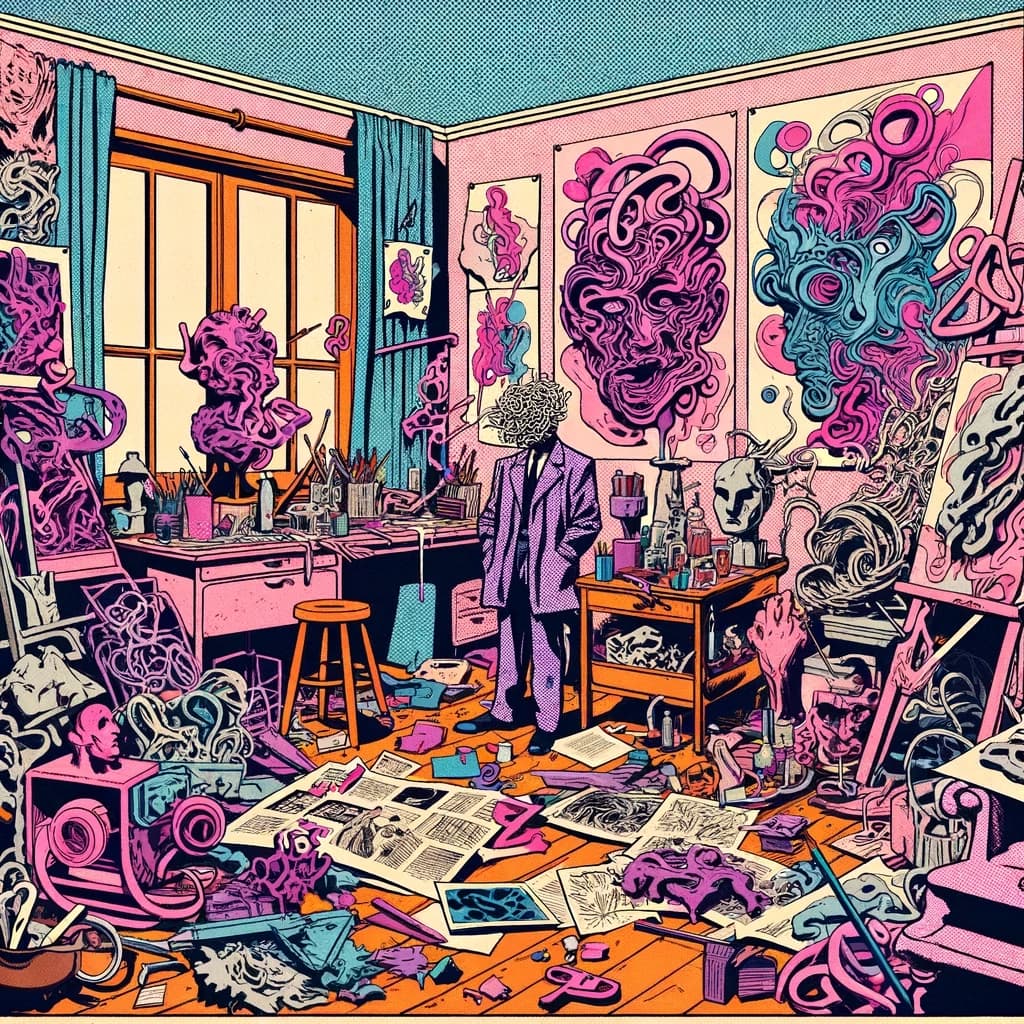
You decided this would be a quiet week. No sweets, no shopping, early to bed.
Then Tuesday turns out to be a bad day. On the way home you buy a bag of crisps, order something online you did not need, and stay up far too late watching one more episode.
The next morning you wonder what happened. You knew exactly what you wanted. So why did the moment win over the plan?
Psychologists describe part of this pattern with the facet immoderation. In the Big Five model, it is one of six facets of neuroticism. It describes how strongly you feel cravings and urges, and how hard it is to resist them, whether it is food, drink, shopping or something else.
What does immoderation mean?
Immoderation is about the pull of the moment. People high on this facet feel strong desires and find them difficult to say no to, even when they know they will regret it later.
People who score high often recognise themselves in this:
- You sometimes go on binges with food, drink, shopping or screens.
- Temptations are hard to resist once they are in front of you.
- You find it hard to control cravings, especially when you are tired or upset.
- You often promise yourself to cut back, and then do not.
- Short-term rewards tend to win over long-term goals.
It might seem odd that this facet belongs to neuroticism and not to conscientiousness. The reason is that the urges often come from emotions. Many people overindulge not because life is fun, but because it feels bad.
The key is not whether you have desires, because everyone does, but how strong they are and how much they steer you.
Everyday temptations: a week with a beeper
How often do we actually feel desires that clash with our goals?
Wilhelm Hofmann, Roy Baumeister and their colleagues gave 205 adults a beeper for a week. Whenever the beeper went off, the participants reported whether they were feeling a desire right then, how strong it was, and whether they tried to resist it. In total, the researchers collected 7,827 reports of desires.
Desires turned out to be common, varying in strength, and mostly harmless. But when a desire clashed with other goals, people usually tried to resist it, with mixed success.
Personality mattered most early on: how strong the desire was and how much it conflicted with other goals. The situation mattered more later on, when it came to whether people actually gave in. Alcohol and the presence of others who had already given in made resisting harder.
That is a useful insight. You cannot fully choose how strong your cravings are, but you can do a lot about the situations you put yourself in.
If you feel bad, do it!
One of the most cited studies on self-control has a title that says it all: "If you feel bad, do it!"
Dianne Tice, Ellen Bratslavsky and Roy Baumeister wanted to find out why self-control often breaks down when we are upset. In three experiments, they put participants in a bad mood. Normally, a bad mood made people eat more unhealthy snacks, seek quick rewards and procrastinate.
But when the participants were led to believe that their mood was "frozen" and could not be changed, the effect disappeared. They no longer ate more or sought quick rewards.
The researchers' interpretation: when we feel bad, we give in to impulses to make ourselves feel better. Repairing the mood right now gets priority over other goals.
This explains why immoderation sits under neuroticism. For many people, a binge is not about lack of willpower, but about trying to soothe a difficult feeling.
Urgency: rash action under strong emotion
Researchers who study impulsiveness have identified a trait they call urgency: the tendency to act rashly when you feel very strong emotions. Melissa Cyders and Gregory Smith distinguish between negative urgency, under strong negative feelings, and positive urgency, under strong positive feelings.
In a review from 2008, they argue that these traits differ from other forms of impulsiveness and are linked to problem drinking, binge eating, drug use and risky sexual behaviour. A later meta-analysis of 96 studies found that problems with alcohol were more strongly related to negative and positive urgency than to other aspects of impulsiveness.
Urgency is not measured in the same way as immoderation in the Big Five, but the two concepts are closely related. Both describe how emotions can take over the steering wheel.
Immoderation is not the same as poor self-discipline or a thirst for excitement
Three facets in the Big Five are easy to mix up.
Self-discipline, in conscientiousness, is about getting started and finishing what you have begun, even when it is boring. Someone low in self-discipline puts off the tax return. Someone high in immoderation eats the whole box of chocolates.
Excitement-seeking, in extraversion, is about seeking out thrills, noise and adventure. It is driven by a hunger for stimulation, not by difficult feelings.
Immoderation is about the strength of cravings and how hard they are to resist. Many people score high on only one of the three, and the explanation for their behaviour is then quite different.
What does a high or low score mean?
High immoderation
You feel desires strongly and find it hard to stop once you have started. This can lead to periods of overconsumption and frustration with yourself.
The other side is that you often enjoy things wholeheartedly. Many high scorers are sensual, generous and able to live in the moment. The challenge is to choose when the moment should win.
Low immoderation
You rarely feel cravings you cannot handle, and you find it fairly easy to stop when you have had enough.
That can make it easier to keep healthy habits and a steady budget. The flip side can be that you hold back pleasures more than you need to, or that you find it hard to understand people who struggle with temptations.
Both descriptions are about typical tendencies, not rules that hold in every situation.
In everyday life
- Money: Impulse purchases, especially online and late at night, are a classic sign. Removing saved card details can make a real difference.
- Food and drink: Many high scorers eat or drink more when they are stressed, tired or sad.
- Screens: Endless feeds and autoplay are designed to exploit exactly this tendency.
- At work: You may say yes to fun things in the moment and pay for it later in the week.
Can immoderation change?
Habits can change, even if the cravings themselves remain.
One of the best-documented techniques is called implementation intentions, or if-then plans. Instead of the vague intention "I will eat less sugar", you decide in advance: "If I get a craving for something sweet after dinner, then I will make a cup of tea." A meta-analysis of 94 tests by Peter Gollwitzer and Paschal Sheeran found a medium-to-large effect of such plans on reaching goals, partly because they help shield goals from unwanted influences.
Other things that may help:
- Change the surroundings rather than relying on willpower. What is not in the cupboard cannot be eaten.
- Notice the feeling behind the urge. Are you hungry, or are you tired, lonely or stressed?
- Delay rather than refuse. Telling yourself "I can have it later" gives the craving a chance to pass.
A Big Five score is not a diagnosis. If you lose control over alcohol, gambling, food, shopping or other things, and it affects your health, finances or relationships, it is worth talking to your doctor or a psychologist. Help is available, and it works.
Frequently asked questions
Is immoderation the same as addiction?
No. Immoderation is a normal personality tendency. Addiction is a clinical condition where use continues despite serious harm. High immoderation may increase the risk of problems, but most high scorers do not develop an addiction.
Does high immoderation mean I am impulsive in everything?
No. The facet is mainly about cravings and temptations. Rushing into decisions without thinking them through is measured separately, under cautiousness in conscientiousness. You can be careful with big decisions and still struggle to stop at one biscuit.
Is it about willpower?
Only partly. The research suggests that emotions and situations play a big role. People who seem to have strong willpower are often simply good at avoiding temptations in the first place.
How is immoderation measured in the Big Five test?
Our test is based on the IPIP-NEO-120, where each facet is measured with four statements. For immoderation, they are about going on binges, and (reversed) rarely overindulging, easily resisting temptations and being able to control your cravings. Read the score as a sign of a pattern, not as a complete description of you.
Find out where you score
Immoderation is only one of the six facets of neuroticism. You can struggle with cravings and still score low on anxiety, anger or depression.
Take the Big Five test and see your whole profile, with all 30 facets.
Sources
- Hofmann, W., Baumeister, R. F., Förster, G. & Vohs, K. D. (2012). Everyday temptations: An experience sampling study of desire, conflict, and self-control. Journal of Personality and Social Psychology, 102(6), 1318–1335.
- Tice, D. M., Bratslavsky, E. & Baumeister, R. F. (2001). Emotional distress regulation takes precedence over impulse control: If you feel bad, do it! Journal of Personality and Social Psychology, 80(1), 53–67.
- Cyders, M. A. & Smith, G. T. (2008). Emotion-based dispositions to rash action: Positive and negative urgency. Psychological Bulletin, 134(6), 807–828.
- Coskunpinar, A., Dir, A. L. & Cyders, M. A. (2013). Multidimensionality in impulsivity and alcohol use: A meta-analysis using the UPPS model of impulsivity. Alcoholism: Clinical and Experimental Research, 37(9), 1441–1450.
- Gollwitzer, P. M. & Sheeran, P. (2006). Implementation intentions and goal achievement: A meta-analysis of effects and processes. Advances in Experimental Social Psychology, 38, 69–119.
- Johnson, J. A. (2014). Measuring thirty facets of the Five Factor Model with a 120-item public domain inventory: Development of the IPIP-NEO-120. Journal of Research in Personality, 51, 78–89.