Cautiousness: should you think first or act fast?
Are you someone who thinks things through, or someone who jumps right in? What research on impulsivity and reflection shows, and how cautiousness is measured.

Try to answer this quickly: A bat and a ball cost $1.10 in total. The bat costs $1.00 more than the ball. How much does the ball cost?
Most people immediately think "10 cents". It feels obviously right. But if the ball cost 10 cents, the bat would cost $1.10, and together they would cost $1.20. The correct answer is 5 cents.
The question is not really about maths. It is about whether you stop and check the first answer that pops into your head, or go with it.
Some people do that kind of checking almost automatically, in all areas of life. Others act on their first impulse, and often enjoy it.
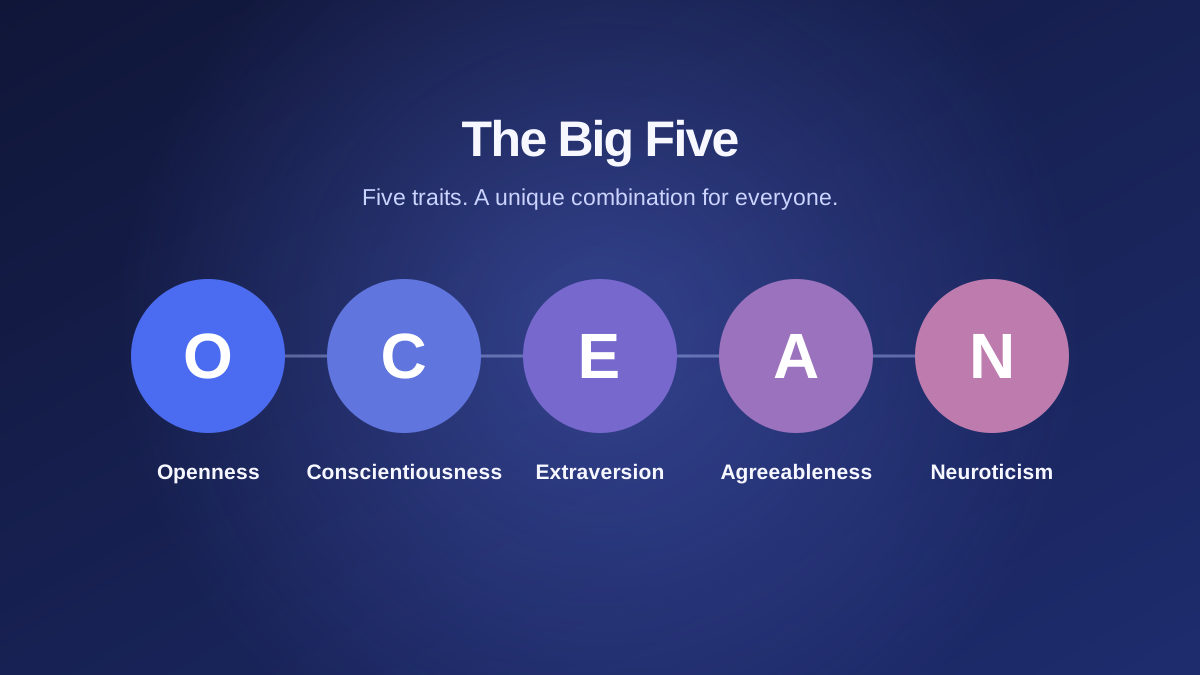
Psychologists call this tendency cautiousness. In the Big Five model, it is one of six facets of conscientiousness. The facet describes how much you think things through before you act.
What does cautiousness mean?
Cautiousness is a tendency to consider possibilities and consequences before making a decision. In other versions of the Big Five questionnaire, the same facet is called deliberation.
People who score high often recognise themselves in this:
- You think before you speak or act.
- You weigh pros and cons before making decisions.
- You rarely make decisions you regret because they were made too quickly.
- You prefer to sleep on big choices.
- You are sceptical of offers that require you to decide right now.
Cautiousness is not the same as fear or anxiety. You can be calm, confident and adventurous and still always think things through before you jump.
The key is not whether you take risks, but whether you think before you act.
The bat and the ball: a test of reflection
The question at the top of this article comes from the Cognitive Reflection Test, published in 2005 by the economist Shane Frederick. The test has three short questions, all with an intuitive but wrong answer.
According to Frederick, the test measures the ability or tendency to reflect on a question and resist reporting the first answer that comes to mind. Scores on the test were linked to how people made choices about time and risk, such as whether they preferred a smaller amount now or a larger amount later.
The test is not a measure of the cautiousness facet. It also measures cognitive ability. But it illustrates the mechanism at the heart of the facet well: there is often a gap between the first answer and the best answer, and some people are more inclined to check that gap than others.
Impulsivity is not one thing
In everyday speech, "impulsive" covers many different things. In 2001, the psychologists Stephen Whiteside and Donald Lynam examined a wide range of questionnaires on impulsivity, together with Big Five facets. They found that impulsivity split into four separate components:
- Urgency: acting rashly when you are upset. This is related to immoderation under neuroticism.
- Lack of premeditation: acting without considering the consequences. This is the opposite of cautiousness.
- Lack of perseverance: giving up when something gets boring. This is related to self-discipline.
- Sensation seeking: seeking out excitement and new experiences. This is related to excitement-seeking under extraversion.
This explains why two "impulsive" people can be completely different. One may be thoughtful and careful in everyday life, but lose control when angry. Another may be calm under pressure, but say yes to every new idea without thinking it through.
Low cautiousness is about one particular type: acting first and thinking later.
Is acting fast always a bad thing?
No. As early as 1990, the psychologist Scott Dickman distinguished between two types of impulsivity.
Dysfunctional impulsivity is acting without thinking when it causes problems. Functional impulsivity is acting quickly when that is actually the best strategy, for example when a decision has to be made fast and the opportunity will otherwise be gone.
In his studies, these two types were not strongly related, and they were linked to different traits and different ways of processing information. Someone who acts quickly is not necessarily acting carelessly.
That is a useful reminder for anyone with a low score on this facet. Speed is a strength in many situations, such as emergencies, negotiations, sport and creative work.
Cautiousness and health
There is nevertheless a well-documented link between conscientiousness and risky behaviour. A large meta-analysis from 2004 pooled 194 studies on conscientiousness and the behaviours that contribute most to premature death.
Traits related to conscientiousness were associated with less of all the risky behaviours studied, including smoking, excessive drinking, risky driving, risky sex, violence and drug use. They were also associated with more healthy behaviours, such as exercise and a healthy diet.
The study looked at conscientiousness broadly, not at cautiousness alone. But thinking about consequences before acting is an obvious part of the explanation. You can read more about this in our article on conscientiousness and longevity.
Cautiousness is not the same as anxiety
High cautiousness is often confused with being anxious. They are different things.
Anxiety, under neuroticism, is about worry and nervousness: an unpleasant feeling that something could go wrong. Cautiousness is about a thinking style: considering options before choosing.
An anxious person may avoid decisions because they feel uncomfortable. A cautious person makes decisions, but only after thinking them through. Many very cautious people are calm and secure.
Cautiousness is also not the same as low excitement-seeking. You can love skydiving and still plan every jump in detail.
What does a high or low score mean?
High cautiousness
You think before you act, and you rarely make hasty decisions you regret. Others often see you as sensible and wise, and you are good at spotting pitfalls before they become problems.
The flip side may be that you spend a long time on decisions, or that you miss opportunities that required a quick response. Overthinking can also be tiring.
Low cautiousness
You act quickly and spontaneously, and you are often the one who gets things moving. That can make you fun to be around and effective in situations that require quick action.
The risk is that you sometimes make decisions you regret, or say things you would not have said if you had thought about it first.
Both descriptions are about typical tendencies, not rules that hold in every situation.
If impulsive actions repeatedly lead to serious problems, such as debt, accidents or broken relationships, it can be worth talking to your doctor or a psychologist. A Big Five score is not a diagnosis.
In everyday life
- At work: Cautious people are valuable in roles where mistakes are costly, such as finance, healthcare and safety. Less cautious people often thrive where speed matters more than precision.
- With money: Low cautiousness can mean more impulse purchases. A simple rule, such as waiting 24 hours before larger purchases, can help.
- In conflicts: Thinking before you answer can prevent things being said that are hard to take back.
- In relationships: A cautious and a spontaneous partner can complement each other well, as long as they respect each other's pace.
Can cautiousness change?
Personality is fairly stable, but not fixed. A large meta-analysis from 2006 found that conscientiousness tends to increase through adulthood, especially between the ages of 20 and 40. Many people become somewhat more thoughtful with age.
If you want to act less impulsively, small built-in pauses often help:
- Wait a day before major purchases or decisions.
- Count to ten before replying to messages that annoy you.
- Ask yourself: "What is the worst that could happen, and can I live with it?"
If you are very cautious and feel it is holding you back, you can practise setting a time limit on decisions, and accept that many choices can be adjusted later.
Frequently asked questions
Is high cautiousness the same as being boring?
No. Cautiousness is about thinking before acting, not about avoiding fun. Many cautious people are adventurous, but they plan their adventures.
Is low cautiousness the same as ADHD?
No. Impulsivity is one of the features of ADHD, but most people who act quickly do not have ADHD. A Big Five score cannot be used to make a diagnosis.
Is it better to trust your gut or think it through?
It depends on the situation. Dickman's research suggests that quick decisions can be the best strategy when time is short, while the bat-and-ball question shows how the first answer can be wrong. Knowing your own tendency helps you choose when to slow down.
How is cautiousness measured in the Big Five test?
Our test is based on the IPIP-NEO-120, where each facet is measured with four statements. For cautiousness, all four describe the opposite: jumping into things without thinking, making rash decisions, rushing into things and acting without thinking. Disagreeing with them gives a high score. Read the score as a sign of a pattern, not as a complete description of you.
Find out where you score
Cautiousness is only one of the six facets of conscientiousness. You can be very cautious and still score low on orderliness or self-discipline.
Take the Big Five test and see your whole profile, with all 30 facets.
Sources
- Frederick, S. (2005). Cognitive reflection and decision making. Journal of Economic Perspectives, 19(4), 25–42.
- Whiteside, S. P. & Lynam, D. R. (2001). The Five Factor Model and impulsivity: Using a structural model of personality to understand impulsivity. Personality and Individual Differences, 30(4), 669–689.
- Dickman, S. J. (1990). Functional and dysfunctional impulsivity: Personality and cognitive correlates. Journal of Personality and Social Psychology, 58(1), 95–102.
- Bogg, T. & Roberts, B. W. (2004). Conscientiousness and health-related behaviors: A meta-analysis of the leading behavioral contributors to mortality. Psychological Bulletin, 130(6), 887–919.
- Roberts, B. W., Walton, K. E. & Viechtbauer, W. (2006). Patterns of mean-level change in personality traits across the life course: A meta-analysis of longitudinal studies. Psychological Bulletin, 132(1), 1–25.
- Johnson, J. A. (2014). Measuring thirty facets of the Five Factor Model with a 120-item public domain inventory: Development of the IPIP-NEO-120. Journal of Research in Personality, 51, 78–89.