Dutifulness: why do some people keep their word even when no one is checking?
Why do some people keep promises and follow rules even when no one would notice? What research says about duty, guilt and obedience, and how the facet is measured.

It is late at night, the street is empty, and the pedestrian light is red. No cars, no people, no cameras.
Some people walk straight across. Others stand and wait for the green light, even though they know perfectly well that no one would ever find out.
The same pattern shows up elsewhere. Some people keep a promise they made in passing months ago, even when the other person has probably forgotten. Others see promises and rules as rough guidelines that can be adjusted when circumstances change.
Why are some people so bound by their word, their duties and the rules?
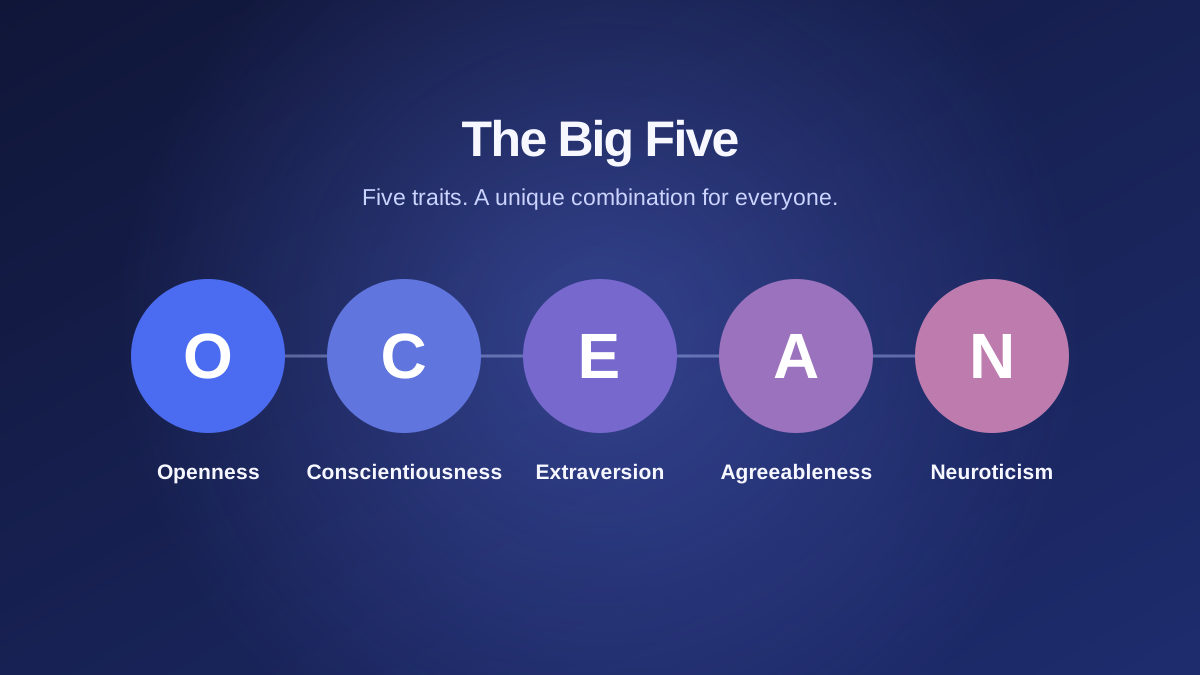
Psychologists call this tendency dutifulness. In the Big Five model, it is one of six facets of conscientiousness. The facet describes how strongly you feel bound by obligations, promises and rules.
What does dutifulness mean?
Dutifulness is a sense of duty and moral obligation. People who score high take promises seriously, follow rules and feel uneasy when they break them.
People who score high often recognise themselves in this:
- You keep your promises, including small ones.
- You find it hard to break rules, even ones you think are silly.
- You tell the truth, even when a small lie would be easier.
- You feel a strong sense of responsibility for tasks you have taken on.
- It bothers you when others do not do what they said they would.
Dutifulness is not the same as being boring or rigid. Many dutiful people are warm, funny and spontaneous. The facet is about how you relate to obligations, not about how you are as company.
The key is not whether you like rules, but how strongly you feel bound by what you have committed to.
Guilt as an inner alarm
What makes some people keep their word when no one is watching? Part of the answer may be how strongly they anticipate feeling bad about doing wrong.
The psychologist Taya Cohen and her colleagues have studied what they call guilt proneness: a tendency to expect to feel bad about wrongdoing, even when the wrongdoing is private and no one else would find out. It is not about feeling guilty all the time, but about the anticipation of guilt before you act.
In their research across adults in the United States, people high in guilt proneness made fewer unethical business decisions, committed fewer delinquent acts and behaved more honestly in economic decisions. At work, guilt-prone employees were less likely to engage in behaviour that harms the organisation.
Guilt proneness is not the same as the dutifulness facet. But it illustrates a mechanism that probably lies behind much of what the facet measures: an inner alarm that sounds before you break a promise, not just after you are caught.
Duty at work and in health
Conscientiousness, the broader trait that dutifulness belongs to, shows up clearly in research on behaviour at work.
A meta-analysis from 2007 looked at what researchers call deviance at work: behaviour that harms colleagues or the organisation, such as theft, sabotage, rudeness or deliberately working slowly. Such behaviour had its strongest links with low agreeableness, low conscientiousness and low emotional stability, along with less willingness to help out beyond what the job requires.
The same pattern is found in health. Between a quarter and half of all people do not take their medicine as prescribed. A meta-analysis from 2014 pooled 16 studies with 3,476 participants and found that higher conscientiousness went together with better medication adherence. The link was small overall, but stronger in younger samples.
A small effect may sound unimportant, but for medicines where every dose counts, small differences in adherence can have real consequences.
The dark side of duty: obedience
Dutifulness is not only positive. A sense of duty can also make people do things they should not do, if someone in authority asks.
In the 1960s, Stanley Milgram showed that many ordinary people were willing to give what they believed were dangerous electric shocks to another person when an authority figure told them to continue. In his first published study, 26 of 40 participants went all the way to the highest level on the shock generator. The shocks were not real, and the "victim" was working with the researcher, but the participants did not know that.
A French study published in 2015 repeated the setup in the form of a fake TV game show. Eight months later, the researchers contacted 66 of the participants for what was presented as an unrelated opinion poll, which included a personality questionnaire.
Those who scored higher on conscientiousness and agreeableness had been willing to give stronger shocks. The sample was small, and the study measured broad traits rather than the dutifulness facet itself. But it shows that qualities we usually praise, such as being reliable and cooperative, can also make it harder to say no to an authority figure.
Dutifulness is not the same as morality
Dutifulness is easily confused with being a good person. They overlap, but they are not the same.
The Big Five has a separate facet called morality, under agreeableness. It is about honesty and fairness towards other people, and about not manipulating others for your own gain.
Dutifulness is more about your relationship with duties, rules and promises. Someone can be very honest and fair to others, yet find bureaucracy and rigid rules meaningless. Someone else can follow every rule to the letter without caring much about the people the rules affect.
Dutifulness is also different from orderliness. Orderliness is about structure and tidiness. You can be messy and still always do what you have promised.
What does a high or low score mean?
High dutifulness
You are reliable, and others know they can count on you. You take obligations seriously and feel a strong sense of responsibility for keeping your word.
The flip side may be that you find it hard to say no, take on too much or feel strong guilt when you cannot keep everything you have promised. You can also find it hard to break a rule even when breaking it would be the right thing to do.
Low dutifulness
You see rules and agreements as practical tools rather than sacred obligations. You are willing to adapt when circumstances change, and you are not afraid to question rules that do not make sense.
The risk is that others may experience you as unreliable if you change plans or let small promises slide. Being clear about what you can and cannot commit to helps.
Both descriptions are about typical tendencies, not rules that hold in every situation.
In everyday life
- At work: High scorers are often the ones who meet deadlines and follow procedures. Low scorers can be good at seeing when procedures should be changed.
- In relationships: Keeping small promises, such as calling when you said you would, builds trust over time. Differences in dutifulness can create friction if one partner sees agreements as binding and the other as flexible.
- With friends: Dutiful people often show up when they said they would, even when they are tired. That is valued, but it can also lead to exhaustion.
- In society: Dutifulness affects how we relate to taxes, traffic rules and public advice. Low scorers are often the ones who ask whether a rule actually makes sense.
Can dutifulness change?
Personality is fairly stable, but not fixed. A large meta-analysis from 2006 found that conscientiousness tends to increase through adulthood, especially between the ages of 20 and 40. Many people become more reliable as they take on responsibility for jobs, homes and other people.
If you want to be someone others can count on, small adjustments often help most:
- Promise less, and keep what you promise.
- Write down agreements you make in passing.
- Say no or "I'll get back to you" instead of yes when you are unsure.
If you score very high, the challenge is often the opposite: allowing yourself to drop or renegotiate obligations without feeling that you have failed.
Frequently asked questions
Are dutiful people more honest?
Often, but not always. The IPIP-NEO-120 includes telling the truth in this facet, so honesty is part of what is measured. Honesty towards others is also measured under morality in agreeableness.
Is low dutifulness the same as being irresponsible?
Not necessarily. A low score means that you feel less bound by rules and agreements in general. Many low scorers take great responsibility for things they consider important, but they do not do it out of a sense of duty alone.
Can you be too dutiful?
Yes. A very strong sense of duty can make it hard to say no, can lead to guilt when you fall short and, as the obedience research shows, can make it harder to resist an authority figure.
How is dutifulness measured in the Big Five test?
Our test is based on the IPIP-NEO-120, where each facet is measured with four statements. For dutifulness, they are about keeping your promises, telling the truth, breaking rules and breaking your promises. Read the score as a sign of a pattern, not as a complete description of you.
Find out where you score
Dutifulness is only one of the six facets of conscientiousness. You can be very dutiful and still score low on orderliness or achievement-striving.
Take the Big Five test and see your whole profile, with all 30 facets.
Sources
- Cohen, T. R., Panter, A. T. & Turan, N. (2012). Guilt proneness and moral character. Current Directions in Psychological Science, 21(5), 355–359.
- Berry, C. M., Ones, D. S. & Sackett, P. R. (2007). Interpersonal deviance, organizational deviance, and their common correlates: A review and meta-analysis. Journal of Applied Psychology, 92(2), 410–424.
- Molloy, G. J., O'Carroll, R. E. & Ferguson, E. (2014). Conscientiousness and medication adherence: A meta-analysis. Annals of Behavioral Medicine, 47(1), 92–101.
- Milgram, S. (1963). Behavioral study of obedience. Journal of Abnormal and Social Psychology, 67(4), 371–378.
- Bègue, L., Beauvois, J.-L., Courbet, D., Oberlé, D., Lepage, J. & Duke, A. A. (2015). Personality predicts obedience in a Milgram paradigm. Journal of Personality, 83(3), 299–306.
- Roberts, B. W., Walton, K. E. & Viechtbauer, W. (2006). Patterns of mean-level change in personality traits across the life course: A meta-analysis of longitudinal studies. Psychological Bulletin, 132(1), 1–25.
- Johnson, J. A. (2014). Measuring thirty facets of the Five Factor Model with a 120-item public domain inventory: Development of the IPIP-NEO-120. Journal of Research in Personality, 51, 78–89.