How Your Personality Can Shape Successful Negotiations
Understanding the role of personality traits in negotiations reveals that focusing on relationship-building, especially in high ERRO contexts, can be more beneficial than prioritizing profit alone.

Hindi pa naisasalin ang artikulong ito at ipinapakita sa Ingles.

When it comes to negotiating, many of us think that focusing solely on profit is the best strategy. However, recent research suggests that this isn't always the case. Let's explore how understanding personality traits can help negotiators achieve better outcomes.
The Big Five Personality Traits
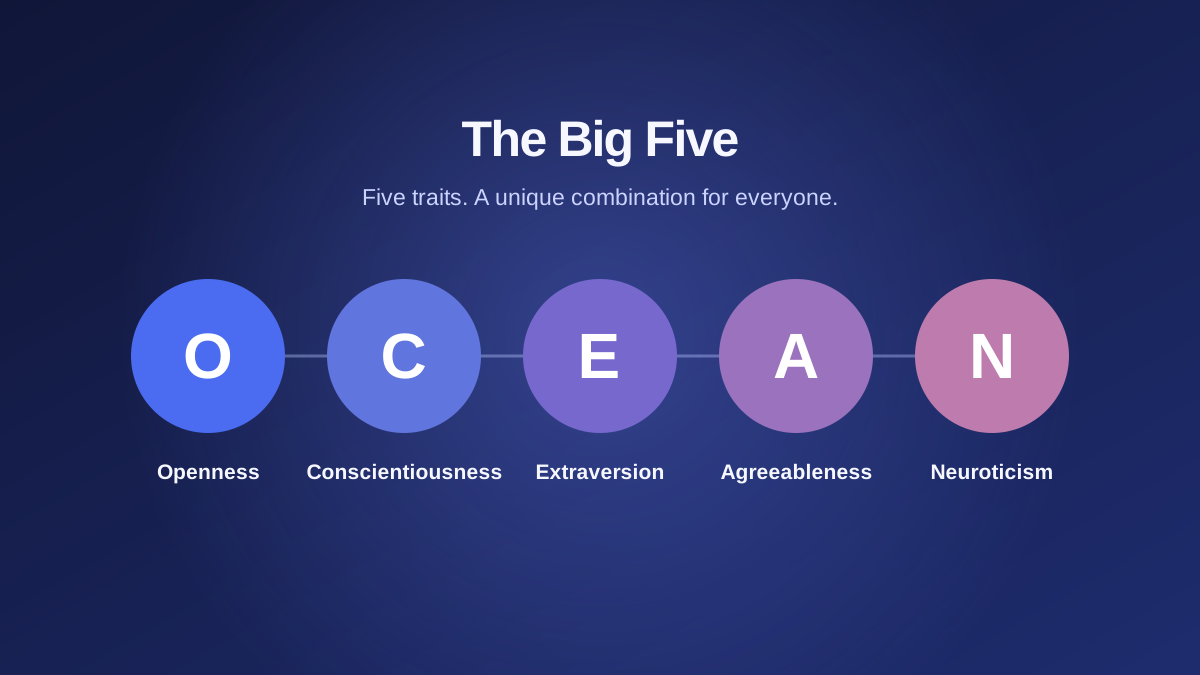
The Big Five personality traits—Openness, Conscientiousness, Extraversion, Agreeableness, and Neuroticism—can significantly influence negotiation strategies. Here's how:
- Openness: Open individuals tend to be more creative and adaptable in negotiations. They can think outside the box, finding innovative solutions that benefit both parties.
- Conscientiousness: Highly conscientious people are thorough and detail-oriented. They prepare extensively for negotiations, which helps in crafting deals that are fair and well-documented.
- Extraversion: Extraverts thrive in social settings and are often persuasive. Their outgoing nature can help build rapport and trust with the counterpart, leading to more collaborative agreements.
- Agreeableness: Agreeable individuals prioritize harmony and are more likely to adopt a collaborative approach. They excel in high ERRO (Economic Relevance of Relational Outcomes) contexts, where maintaining a good relationship can enhance post-negotiation benefits.
- Neuroticism: Those high in neuroticism may struggle with stress and emotional regulation during negotiations. It's important for them to develop coping strategies to remain calm and focused.
ERRO: When Relationships Matter
ERRO is a concept introduced in recent studies to describe situations where post-negotiation relationships impact economic outcomes. In high ERRO contexts, like hiring a service provider, a good relationship can lead to better long-term results. Conversely, in low ERRO contexts, such as purchasing a product, the relationship might not significantly impact the outcome.
Tailoring Your Strategy
Understanding whether your negotiation is in a high or low ERRO context can help tailor your approach:
- High ERRO Contexts: Focus on building a positive relationship. Collaborative tactics and fostering goodwill can lead to better long-term outcomes.
- Low ERRO Contexts: Competitive tactics may be more effective here. Aim for the best deal terms without overemphasizing the relationship. By considering your personality traits and the context of the negotiation, you can adapt your strategy to achieve the best possible outcomes. Whether it's being more open and creative, or leveraging your extraversion to build trust, knowing yourself is key to successful negotiations.