Hitler's DNA Has Been Analysed: What Can Genes Really Say About a Person?
Researchers found unusually high genetic risk scores in what is probably Hitler's DNA. But can genes explain a dictator? How people have tried to measure him for 80 years.
Ezt a cikket még nem fordítottuk le, ezért angolul jelenik meg.
On 30 April 1945, Adolf Hitler took his own life on a sofa in his Berlin bunker. Some time later, an American soldier cut a piece from the bloodstained upholstery. The fabric eventually ended up in a small military history museum in Gettysburg, Pennsylvania. Eighty years on, it became the basis for a genetic analysis.
The findings emerged in November 2025, and they are striking: Hitler reportedly ranked in the top one percent for genetic risk of autism, schizophrenia and bipolar disorder.
But can DNA tell us who Hitler was? No. The question is still worth taking seriously, because this is only the latest of many attempts to measure the man. Spies, psychiatrists and historians have all tried before. Each time, the answer has said at least as much about the method as about Hitler.
What did the researchers find?
The work was led by geneticist Turi King of the University of Bath, who previously identified the remains of Richard III. To check that the blood was Hitler's, the team compared it with a sample from a male-line relative. According to The Guardian, the Y chromosome was a perfect match. The sample had been collected ten years earlier by a Belgian journalist, and it is unclear whether the relative agreed to this use.
Professor Ditte Demontis of Aarhus University was then asked to analyse the genetic profile.
The analysis produced three main findings:
- High polygenic risk scores. None of the 37,000 Danes scored as high on all three conditions at once.
- A gene variant linked to Kallmann syndrome. The change in the PROK2 gene is associated with a rare condition that disrupts puberty and hormone production. A prison medical record from 1923 describes Hitler as having an undescended testicle, which fits the syndrome but does not prove it.
- No support for Jewish ancestry. The researchers found nothing to back up the old rumour.
The results were presented in the Channel 4 documentary Hitler's DNA: Blueprint of a Dictator. A year later, the research has still not been published in a peer-reviewed journal. Other scientists have therefore been unable to check the methods, and little is known about the quality of the DNA.
What does the top one percent mean?
Less than it sounds like. A polygenic risk score adds up thousands of small genetic differences, each of which means very little alone. The score is designed to describe groups.
So the most important number is not "top 1%" but 5%. Among Danes with an equivalent score, the likelihood of being diagnosed with one of the conditions was about 5 percent. In other words, around 95 in 100 were not.
"Polygenic risk scores tell you something about population at large, not about individuals," geneticist David Curtis of University College London told The Guardian. Demontis herself is clear that the study cannot be used to diagnose Hitler, and that the scores say nothing about morals or actions.
The fact that no Dane matched Hitler on all three is also less magical than it seems. The more characteristics you compare at once, the easier it is to look unique. This finding cannot be properly assessed until the method is public. The three scores are also unlikely to be independent, because psychiatric disorders share much of their genetic risk, schizophrenia and bipolar disorder especially.
The irony of Hitler's own law
The most striking part of this story is not in the DNA. It is in the statute book.
On 14 July 1933, the Nazis introduced a compulsory sterilisation law. Its list of hereditary conditions included schizophrenia and manic-depressive insanity, what we now call bipolar disorder. An estimated 400,000 people were sterilised. From 1939, patients and disabled people were murdered in the so-called euthanasia programme, which claimed around 250,000 lives.
As Turi King put it: "If he had been able to look at his own DNA ... he almost certainly would have sent himself," referring to the gas chambers.
It is a powerful line, and a rhetorical one. The Nazis used diagnoses, not risk scores, and a high score is not an illness. Still, it points to something important: the idea that DNA determines what a person is and what they are worth was the very foundation of the regime's racial hygiene.
That makes caution here more than good manners. Journalist Philip Oltermann asked in The Guardian whether people with autism might now be branded "Little Hitlers". Autism researcher Simon Baron-Cohen warned in the documentary that going from biology to behaviour is a big jump, and that the risk of stigma is big too.
Three earlier attempts to measure Hitler
As far as we know, Hitler never took a personality test. That has not stopped anyone.
1943–44: The spies who predicted the suicide
In the middle of the war, the American intelligence service OSS asked psychoanalyst Walter Langer to profile the enemy. Langer had never met Hitler, but he concluded that "the most likely possibility is that he will commit suicide in the event of defeat".
He was right, and the CIA still highlights the report. But historians have argued that Langer borrowed heavily from psychologist Henry Murray without credit, including the suicide prediction. The rest of the analysis was shaped by psychoanalytic thinking and speculation about Hitler's sexuality. A hit is not the same as a valid method.
1946: The inkblots at Nuremberg
Hitler was dead by the time the Nazi leadership stood trial. So psychologists got the next best thing: prisoners they could test. Douglas Kelley and Gustave Gilbert gave 21 defendants the Rorschach test, in which people interpret inkblots. The defendants had an average IQ of 128, and Hermann Göring scored 138.
The two men did not agree. Kelley thought he was dealing with normal people. Gilbert saw disturbed personalities.
Thirty years later, psychologist Molly Harrower ran an elegant experiment. She gave ten Rorschach experts eight records from Nazis and eight from controls without saying which was which. The experts could not pick out the Nazis.
That sounds like proof that evil is invisible. But it is at least as much proof that the Rorschach is a weak instrument. A review from 2015 concluded that the tests probably added little of value. Psychologist Eric Zillmer sums up Harrower's main finding this way: there was no single, uniform, abnormal personality among them.
2007: Five historians fill in a form
Frederick Coolidge and his colleagues tried something new. They asked 19 Hitler experts to complete a personality inventory on Hitler's behalf, much as a relative might in a clinical assessment. Five did so. One of those who declined felt he would be guessing too much for his answers to have any value.
| Scale | Mean T score |
|---|---|
| Paranoid personality disorder | 78 |
| Antisocial personality disorder | 78 |
| Narcissistic personality disorder | 77 |
| Sadistic personality disorder | 76 |
| Post-traumatic stress disorder | 76 |
| Psychotic thinking | 73 |
The norm group mean is 50, and 70 or above may indicate a disorder. Figures from Coolidge, Davis and Segal (2007).
The historians agreed fairly well, but that does not make them right, as the authors note themselves. Anyone completing such a form also knows how the story ended, and it is hard to set Auschwitz aside when asked whether someone is cruel. On psychotic thinking, four of the five gave high scores, while the fifth gave 53, close to normal.
Other experts have reached a different conclusion. Historian Ian Kershaw held that Hitler was not clinically insane. Psychiatrist Fritz Redlich found enough paranoia to fill a textbook, but thought Hitler "knew what he was doing and he did it with pride and enthusiasm".
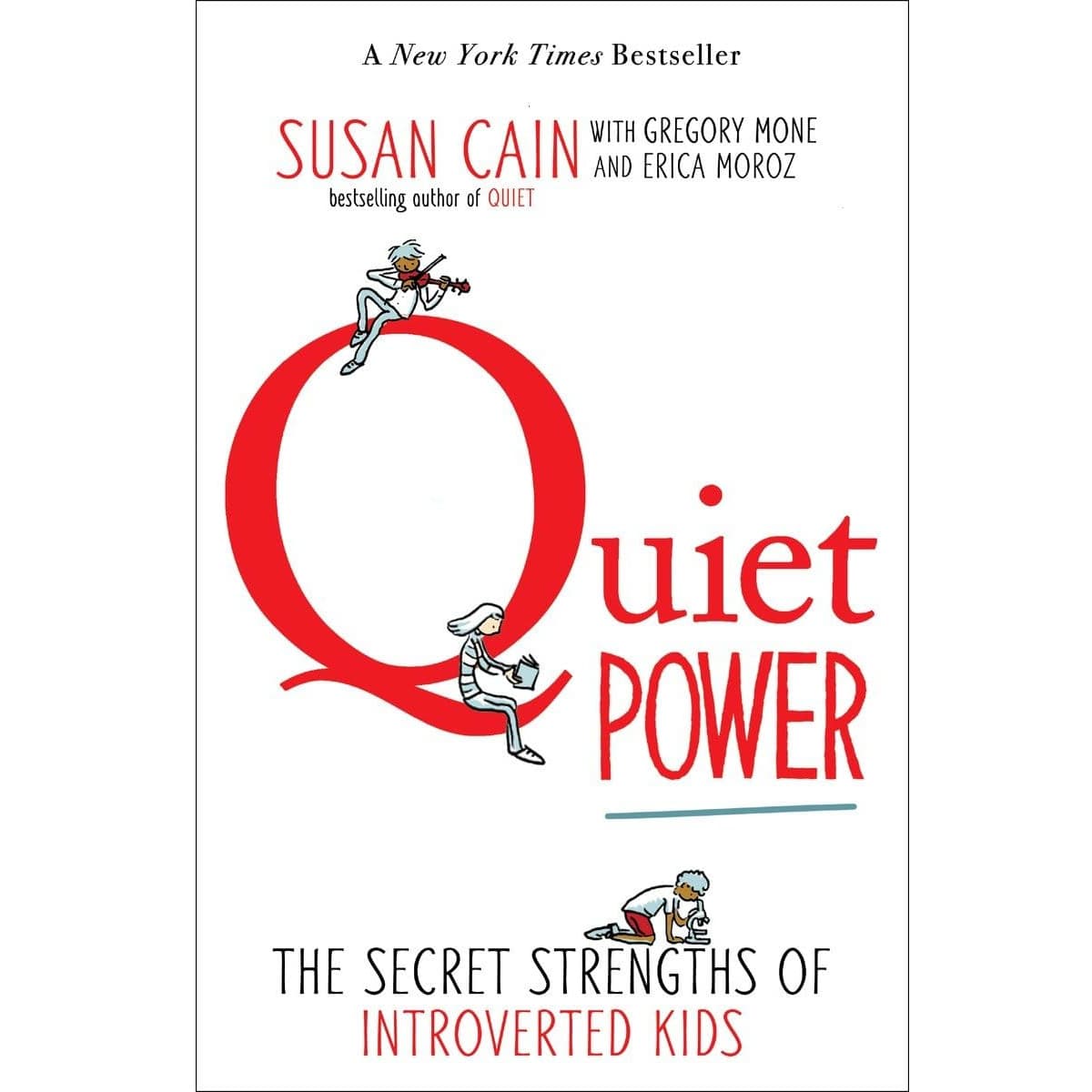
One small detail will still interest anyone who likes the Big Five: all five historians described Hitler as strongly introverted. According to the study, the man who addressed vast crowds was socially awkward and preferred talking at people rather than with them. It is a reminder that introversion has nothing to do with how well you can give a speech.
What about the Dark Tetrad?
The Dark Tetrad consists of narcissism, Machiavellianism, psychopathy and sadism. Nobody has measured Hitler on these traits, and the DNA analysis says nothing about them. They are not even in the same category as schizophrenia or autism.
But we can try a thought experiment: what in the historical record would point in that direction, and why does it not work as a measurement?
Narcissism. In March 1945, Albert Speer wrote that Hitler had said the nation had shown itself to be the weaker one, and that its basic means of survival need not be spared. But: This is Speer's own account. The remark could also reflect Social Darwinist ideology rather than an inflated self-image.
Machiavellianism. He signed the Munich Agreement in 1938 and occupied the rest of Czechoslovakia the following year. He made a pact with Stalin in 1939 and attacked the Soviet Union in 1941. But: Broken agreements are also ordinary power politics. Machiavellianism is about cold pragmatism, while Hitler clung to his ideology to the point of self-destruction. Coolidge's inventory had no scale for this trait either.
Psychopathy. A high antisocial score in Coolidge's study. The Nuremberg defendants have also been described as possible "successful psychopaths". But: Antisocial personality disorder and psychopathy are not the same thing, and the Nuremberg description did not concern Hitler.
Sadism. A high sadism score in Coolidge's study. But: Everyday sadism is about enjoying the suffering of others. Orders for mass murder show unimaginable indifference or hatred, but do not in themselves show what he felt.
The pattern is the same each time. The actions are documented, but a personality trait is a tendency across situations. It is not a verdict on the worst things a person has done. It is also nearly impossible to separate personality from ideology in someone who appeared to believe completely in his own worldview.
Here, research on the dark core of personality offers an interesting angle. The so-called D factor is about more than putting yourself ahead of others. It also includes the beliefs that justify doing so. That may be the most frightening insight here: cruelty on a large scale needs a story that makes it look right.
Are dark traits heritable?
Yes, in part. A meta-analysis of more than 100,000 participants found that around 40 percent of individual differences in personality could be linked to genes. The rest was attributed to the environment. An early twin study put heritability at about 60 percent for psychopathy and narcissism, while shared environmental factors also appeared to play a part in Machiavellianism.
But these figures describe differences within a group. A trait being 40 percent heritable does not mean that 40 percent of a person comes from their genes. Nor can the figures be converted into one man born in Austria in 1889. Genes influence what comes easily to us, but they do not choose what we believe, whom we hate or what we do with power. King put it briefly: "You cannot see evil in a genome."
The truly unsettling question
We look for something abnormal in Hitler because it would be a comfort. If the cause lay in a rare gene variant, we could place evil far away from ourselves.
But the Holocaust was not carried out by one person. After the war, researchers tried to find the personality type susceptible to fascism, and the result was The Authoritarian Personality in 1950. The book has been heavily criticised for its methods, but the question has never gone away.
Historian Christopher Browning found an answer that is harder to live with. In Ordinary Men, he studied a reserve police battalion of middle-aged men sent to Poland to kill Jews. Their commander once offered them the chance to opt out. Fewer than 12 out of around 500 did so. Browning emphasised obedience and peer pressure, while other historians have placed more weight on antisemitism.
Kershaw showed something similar from the top down. With the phrase "working towards the Führer", he described how subordinates radicalised policy on their own initiative, competing to fulfil what they took to be Hitler's will. His personality mattered enormously, but it worked through an entire society that let it work.
None of this excuses Hitler. To explain is not to acquit. He knew what he was doing. But a DNA sample can never answer the most important question: how millions of other people could follow him.
What can a personality test tell you?
DNA says something about biological risk. A personality test captures something else: how you usually think, feel and act. Neither decides whether you are a good person.
If you want to get to know yourself better, you can take the Big Five test and see how you score on the five broad traits. You can also take the Dark Tetrad test to see where you land on narcissism, Machiavellianism, psychopathy and sadism. Everyone has these traits to some degree, and the result is neither a diagnosis nor a moral verdict.
Sources and further reading
On the DNA findings
- Aarhus University (2025, revised 4 November 2026). Professor from Aarhus University reveals new findings in Adolf Hitler's DNA.
- forskning.no (29 October 2026). Adolf Hitlers DNA inneholdt noe oppsiktsvekkende. In Norwegian.
- Oltermann, P. (13 November 2025). Did Hitler really have a 'micropenis'? The dubious documentary analysing the dictator's DNA. The Guardian.
- CBS News (13 November 2025). Hitler's DNA reveals Nazi leader likely had syndrome that can affect genitals, researchers say.
- The Brainstorm Consortium (2018). Analysis of shared heritability in common disorders of the brain. Science, 360(6395).
On the attempts to measure Hitler and the Nazis
- Coolidge, F. L., Davis, F. L. & Segal, D. L. (2007). Understanding madmen: A DSM-IV assessment of Adolf Hitler. Individual Differences Research, 5(1), 30–43.
- Dimsdale, J. E. (2015). Use of Rorschach tests at the Nuremberg war crimes trial: A forgotten chapter in history of medicine. Journal of Psychosomatic Research, 78(6), 515–518.
- Harrower, M. (1976). Rorschach records of the Nazi war criminals: An experimental study after thirty years. Journal of Personality Assessment, 40(4), 341–351.
- Langer, W. C. (1972). The Mind of Adolf Hitler: The Secret Wartime Report. Basic Books.
- Redlich, F. (1998). Hitler: Diagnosis of a Destructive Prophet. Oxford University Press.
- Zillmer, E. A., Harrower, M., Ritzler, B. A. & Archer, R. P. (1995). The Quest for the Nazi Personality. Routledge. See also the interview with Zillmer in Cabinet.
On dark traits and heritability
- Buckels, E. E., Jones, D. N. & Paulhus, D. L. (2013). Behavioral confirmation of everyday sadism. Psychological Science, 24(11), 2201–2209.
- Campbell, J., Schermer, J. A., Villani, V. C., Nguyen, B., Vickers, L. & Vernon, P. A. (2009). A behavioral genetic study of the Dark Triad of personality and moral development. Twin Research and Human Genetics, 12(2), 132–136.
- Moshagen, M., Hilbig, B. E. & Zettler, I. (2018). The dark core of personality. Psychological Review, 125(5), 656–688.
- Vernon, P. A., Villani, V. C., Vickers, L. C. & Harris, J. A. (2008). A behavioral genetic investigation of the Dark Triad and the Big 5. Personality and Individual Differences, 44(2), 445–452.
- Vukasović, T. & Bratko, D. (2015). Heritability of personality: A meta-analysis of behavior genetic studies. Psychological Bulletin, 141(4), 769–785.
On the history
- Browning, C. R. (1992). Ordinary Men: Reserve Police Battalion 101 and the Final Solution in Poland. HarperCollins.
- Kershaw, I. (1993). 'Working towards the Führer': Reflections on the nature of the Hitler dictatorship. Contemporary European History, 2(2), 103–118.
- United States Holocaust Memorial Museum. The Biological State: Nazi Racial Hygiene, 1933–1939 and Euthanasia Program and Aktion T4.