Why a Simple Thank You Makes People More Helpful, and Why We Say It Far Too Rarely
In a classic experiment, two short sentences of thanks doubled the share of people who helped again. Other studies show that we thank each other surprisingly rarely, and that we badly underestimate how much it means.
You are crossing the street. A driver stops to let you pass. You raise your hand in a quick wave of thanks, the driver nods, and a second later you have both moved on.
It is such an ordinary moment that most of us never think about it. But it hides a real question: can something as small as a thank you change what another person does next?
Psychologists have tested this, with emails, with call-centre workers and with video cameras in people's homes. The answer is yes, often. And along the way they found something stranger: thanking is powerful, and yet we do it far less than we think.
The experiment where two sentences doubled helping
In 2010, Adam Grant and Francesca Gino published a study with a title that gives the result away: "A little thanks goes a long way".
In the first experiment, 69 students were asked to give feedback on a cover letter written by a student called Eric. Afterwards, Eric sent a short email asking for help with a second letter. Half the participants got a neutral version that only confirmed he had received their comments. The other half got the same email with two extra sentences:
Thank you so much! I am really grateful.
That was the whole difference. Eight words.
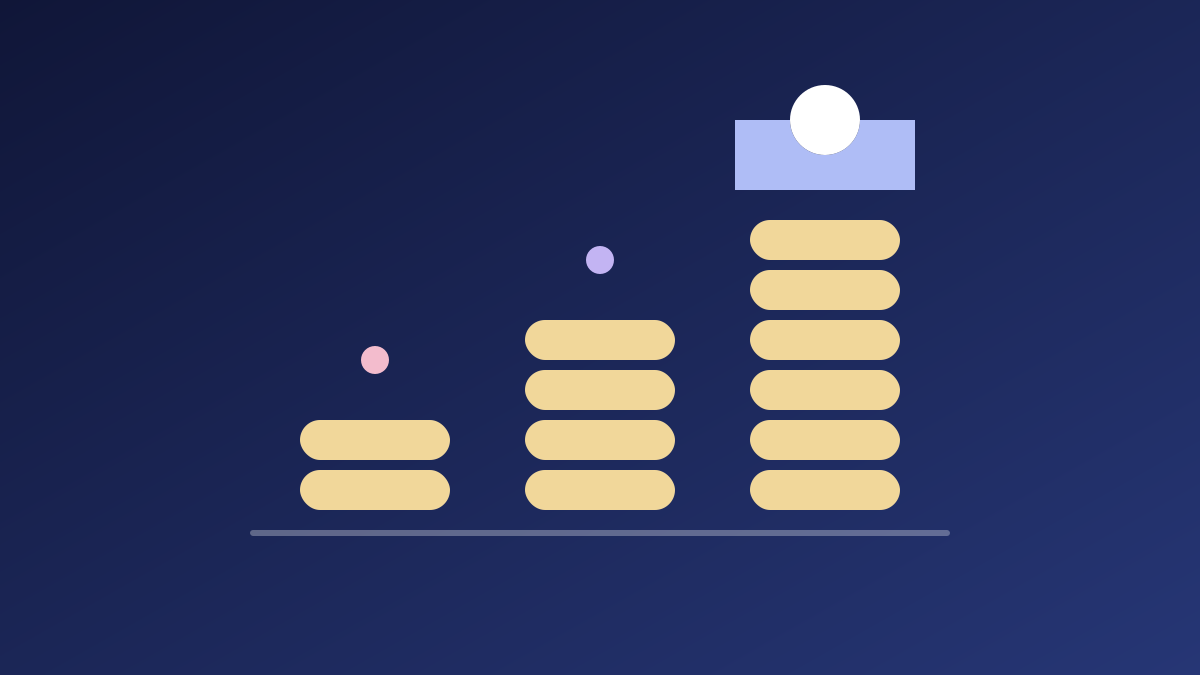
Twice as many people helped when they had been thanked.
The third number comes from a field experiment in the same paper. The researchers followed 41 fundraisers who phoned former students to ask for donations to a university. They were on a fixed salary, so extra calls gave them nothing. One day, a director visited half of them and said: "I am very grateful for your hard work. We sincerely appreciate your contributions to the university."
The week before, that group had made 41 calls each on average. The week after, they made 63. The group that received no visit stayed at about 40.
Why it works: not happier, but valued
Why would two sentences have that kind of effect? Grant and Gino tested three explanations.
- Thanks puts you in a good mood, and people in a good mood help more.
- Thanks makes you feel competent. You did it well, so you are willing to do it again.
- Thanks makes you feel valued. Your effort mattered to someone.
Only the third one explained the results. People who were thanked did feel a little more competent, but that is not what made them help again. What carried the effect was what the researchers call social worth: the feeling of being needed and appreciated by others.
That says something about why people hesitate to help in the first place. Often the doubt is not "can I do this?" but "is my help even wanted?". A thank you answers that question.
Think of the last time you did someone a favour and heard nothing back. The work was the same, and so was the time you spent. What was missing was the signal that it had landed.
The surprise: we say thank you much less than we think
If thanks works this well, you might expect people to use it all the time. They do not.
A team of linguists led by Simeon Floyd recorded everyday life in homes and villages on five continents, in eight languages from English and Italian to Cha'palaa in Ecuador and Murrinhpatha in northern Australia. They looked for moments where one person asked for something (pass the salt, hold this, help me with that) and the other complied.
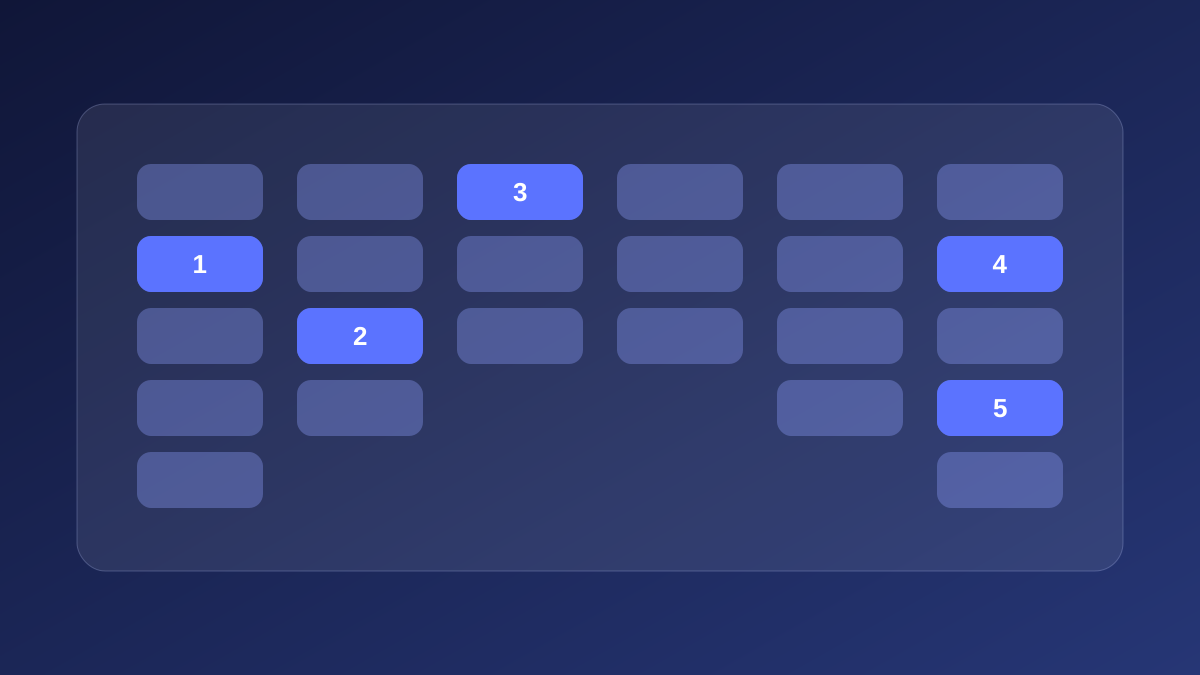
They found 928 such moments. In how many did the person who got help express any kind of thanks or appreciation?
In 51. That is about one in twenty.
English speakers were the most thankful, and still only said something appreciative about one time in seven. In Cha'palaa, it did not happen once.
This is not a story about rudeness. The recordings were mostly of family and friends, and the researchers' point is that among people who are close, helping each other is simply taken for granted. Cooperation is the default, so nobody needs to mark it.
But it also means that an explicit thank you is rarer than we assume, which may be part of why it is noticed when it comes.
We are bad at guessing how much a thank you means
There is another reason we hold back. We misjudge how it will be received.
Amit Kumar and Nicholas Epley asked people to write a letter of gratitude to someone who had meant a lot to them, and to predict how the recipient would react. Then the researchers asked the recipients.
The letter writers were wrong in three ways:
| What the writers guessed | What the recipients reported |
|---|---|
| It will not be much of a surprise why I am grateful | They were more surprised than expected |
| It will feel a bit awkward for them | It felt less awkward than expected |
| They will be fairly pleased | They were much happier than expected |
The writers also worried about finding the right words. The recipients were less critical: they found the letters both warmer and better written than the writers expected.
The authors' conclusion is that we undervalue gratitude, and so we express it less often than would be good for both parties. The thank you that feels too small or too awkward to send is usually worth more than the sender believes.
Can a thank you spread?
In Grant and Gino's second experiment, the participants were thanked by Eric, and then a different student, Steven, wrote and asked for help. Of those who had been thanked, 55% helped Steven. Of those who had not, 25% did. The feeling of being valued did not stay inside one relationship.
It may even reach people who only look on. In eight experiments with 1,817 participants, Sara Algoe and colleagues let people witness a single line of thanks from one person to another. The witnesses then became more helpful towards the person who had said thank you, and more interested in getting to know both of them.
So a thank you seems to tell bystanders something as well: here is a person who notices what others do, and here is a person worth helping.
More broadly, a meta-analysis of 91 studies with over 18,000 participants found a moderate positive link between gratitude and helping others (r = .37).
But it does not always work
It would be easy to stop here and conclude that a thank you always doubles helpfulness. The newest and largest test says otherwise.
In 2025, Anurada Amarasekera, Lara Aknin and colleagues published a registered report, meaning the method and analysis were approved by the journal before the data were collected. They ran two experiments, far bigger than the original ones:
- 603 students did something kind for a new student and were then thanked or not. Result: no difference in how much they helped afterwards.
- 876 adults gave money to charity and then received either a letter of thanks or just a confirmation. Result: those who were thanked gave more the next time.
The researchers also tested whether it matters if you thank someone for what they did ("that was very kind") or for who they are ("you are very kind"). It made little difference.
The authors call this mixed support. A reasonable reading is that the effect is real but smaller and more dependent on the situation than the first small experiments suggested. That is a common pattern in psychology: the first study finds the largest effect.
What does personality have to do with it?
Some people thank the bus driver, the cashier and the colleague who held the door. Others feel just as grateful but rarely say so. Is that personality?
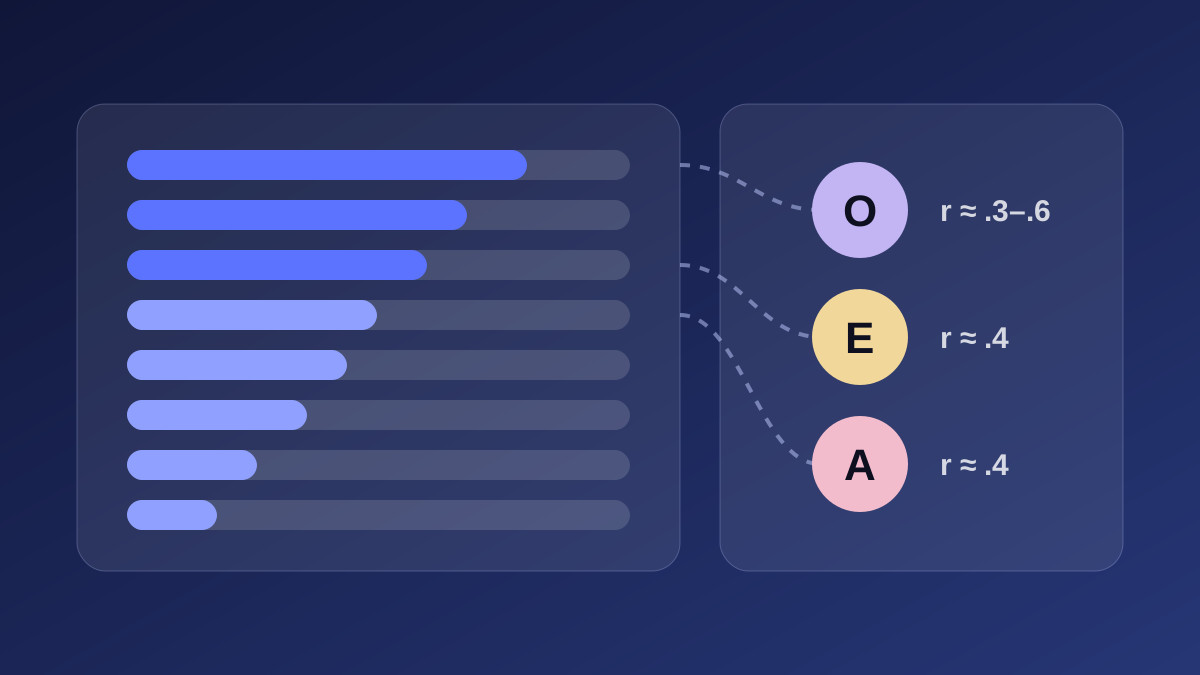
Partly. In an overview of 30 studies, Nancy Frye and colleagues found that the tendency to feel grateful was related to all five Big Five traits. The strongest link was with agreeableness, which explained 8.6% of the differences in gratitude between people. The weakest was with neuroticism, at 1.8%. One caveat: this overview is available from a university archive and has, as far as we can tell, not been published in a peer-reviewed journal.
Agreeableness is the trait that covers warmth, trust, cooperation and concern for others, including the facet altruism. It makes sense that people who care about how others are doing also notice what others do for them.
But look at the number again. 8.6% means that more than nine tenths of the differences in gratitude are not explained by agreeableness. Culture, upbringing, mood and habit matter too. Someone who does not wave at the driver may be shy, distracted, or from a place where nobody does it.
One gesture tells you nothing about someone's personality. Personality is about patterns across many situations, not single moments.
And the other way round: in the experiments above, people were randomly assigned to be thanked or not. The effect did not depend on the helper being a particular kind of person. Being thanked seems to work on most of us.
Back to the pedestrian crossing
So does your wave make the driver more likely to stop for the next pedestrian?
Nobody knows. As far as we can find, no one has tested it. In many countries, the driver is also required by law to stop, so it is not really a favour.
Still, the research gives a reason to think the wave is not wasted. It says: I saw what you did, and I appreciate it. In a setting where people are otherwise anonymous to each other, behind glass and in a hurry, that is exactly the kind of signal that made the participants in the experiments feel valued.
How to thank so that it is felt
The research points to a few simple things:
- Say it, even if it feels small. Kumar and Epley's main finding is that we underestimate the effect. The two short sentences in Eric's email were enough.
- Do not wait for the perfect wording. Recipients judge your words more kindly than you do.
- Say what the help meant. It was the feeling of being useful to someone that carried the effect. "Thanks, that saved me an hour" says more than "thanks".
- Do it in front of others when it is natural. People who witness a thank you think better of both of you.
- Do not use it as a technique. A thank you given to get something is not a thank you, and people tend to notice.
What the research cannot tell us
- The classic experiments were small. 69, 57 and 41 participants are low numbers by today's standards, and the larger replication found the effect only in one of two experiments.
- Many participants were students at American universities. Floyd's study shows that everyday thanking differs a lot between cultures, so the effect of a thank you may differ as well.
- The effects were measured over days, not years. We do not know how long a single thank you lasts.
- The link with personality is a correlation. It does not show that agreeableness causes gratitude, and the overview we cite has not been peer-reviewed.
- The pedestrian crossing has not been studied. That part is our own reasoning from the research.
Where do you stand?
Our free Big Five test shows where you stand on agreeableness and its six facets, among them altruism, trust and sympathy, along with the other four traits.
Take the Big Five test and see how you tend to approach other people. And the next time someone helps you, even with something small, consider saying so. Not to get something back, but because being seen is something most people value.
Sources and further reading
- Algoe, S. B., Dwyer, P. C., Younge, A. & Oveis, C. (2020). A new perspective on the social functions of emotions: Gratitude and the witnessing effect. Journal of Personality and Social Psychology, 119(1), 40–74.
- Amarasekera, A. U., Travis, K. L., Castaneto, K. K., Cash, T. A. & Aknin, L. B. (2025). What types of gratitude expressions promote prosocial behavior? A registered report. Journal of Experimental Social Psychology, 121, 104805.
- Floyd, S., Rossi, G., Baranova, J., Blythe, J., Dingemanse, M., Kendrick, K. H., Zinken, J. & Enfield, N. J. (2018). Universals and cultural diversity in the expression of gratitude. Royal Society Open Science, 5(5), 180391.
- Frye, N., Aytac, S. & Dornisch, M. M. (2024). Predicting gratitude based on personality traits: A meta-analysis. Long Island University Digital Commons.
- Grant, A. M. & Gino, F. (2010). A little thanks goes a long way: Explaining why gratitude expressions motivate prosocial behavior. Journal of Personality and Social Psychology, 98(6), 946–955.
- Kumar, A. & Epley, N. (2018). Undervaluing gratitude: Expressers misunderstand the consequences of showing appreciation. Psychological Science, 29(9), 1423–1435.
- Ma, L. K., Tunney, R. J. & Ferguson, E. (2017). Does gratitude enhance prosociality? A meta-analytic review. Psychological Bulletin, 143(6), 601–635.