Altruism: does helping others make you happier?
Does helping others make you happier, or just more tired? What research says about generosity, well-being and helping too much, and how the Big Five measures altruism.

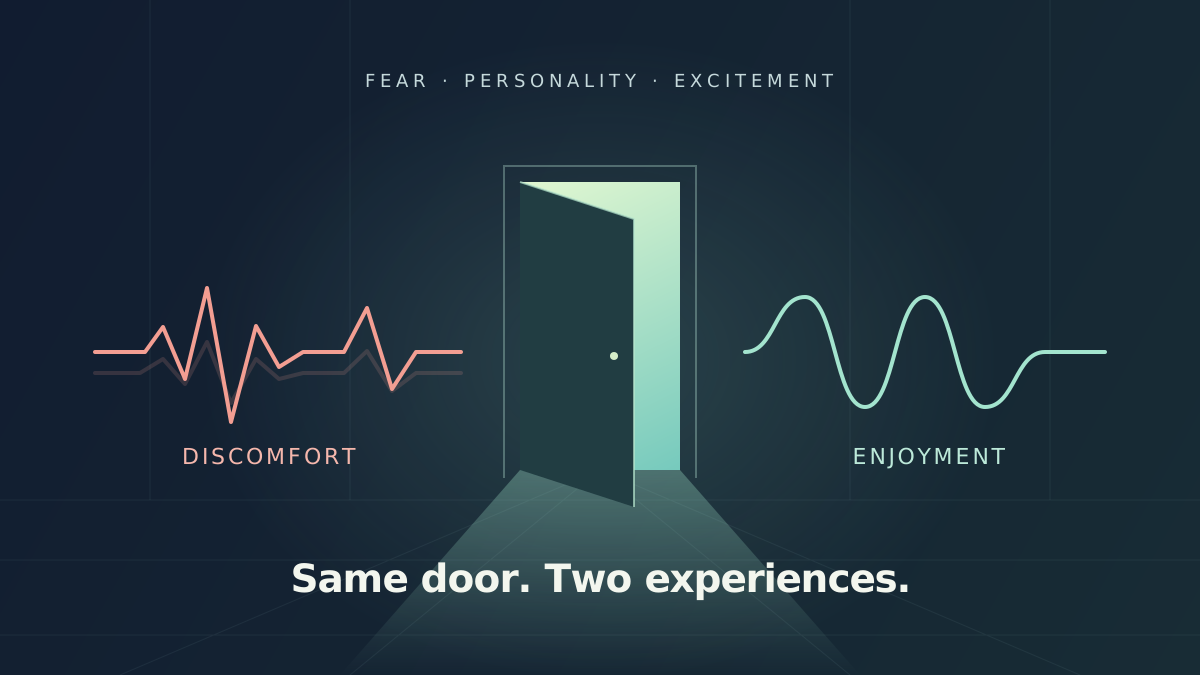
A friend is moving and asks for help on Saturday. One person says yes right away and actually looks forward to it. Another says yes too, but feels the weekend slipping away.
A third finds an excuse.
Helping others is often described as the road to a good life. But is that true for everyone? And can you help so much that it starts to cost you?
In the Big Five model, the tendency to find helping others genuinely rewarding is called altruism. It is one of six facets of agreeableness, and it describes how willing you are to spend your time and energy on other people.
What does altruism mean?
In philosophy, altruism sometimes means acting purely for others' sake with no benefit to yourself. In personality psychology the meaning is more practical: how much you enjoy and prioritise helping.
People who score high often recognise themselves in this:
- You like helping others, and do it without being asked.
- You notice when someone around you is struggling.
- You make time for others, even when you are busy.
- Helping feels like a source of meaning rather than a sacrifice.
People who score low are more likely to experience requests for help as an imposition. That does not mean they never help, but they do it less often and get less satisfaction from it.
The key is not whether you help, but whether helping gives you energy or takes it.
Spending on others can increase happiness
In 2008, Elizabeth Dunn, Lara Aknin and Michael Norton published a short but much-discussed study in the journal Science.
They found that people who spent more of their income on others were happier, both in a nationally representative survey and in a field study of people who had received a windfall. In an experiment, participants who were randomly assigned to spend money on someone else became happier than those assigned to spend it on themselves.
But the effect is smaller than first thought
Many early studies of generosity were small. So in 2020 the same research group ran large, preregistered replications.
In the first experiment, with 712 students, those who bought something for a stranger in need reported greater happiness than those who bought something for themselves. In the second, with 1,950 adults simply recalling a time they had spent money on someone else, there was no difference. In the third, with over 5,000 participants and a more engaging task, the effect appeared again, but was small.
The conclusion was that spending money on others does promote happiness, but how much depends on how it is measured. Helping is not a magic happiness pill, but it tends to pull in the right direction.
It matters why you help
Netta Weinstein and Richard Ryan tested whether the reason for helping makes a difference.
Across four studies, including a diary study and experiments, they found that helping out of free will, because you want to, gave benefits for both the helper and the person being helped. Helping because you felt pressured or obliged did not give the same benefits.
This fits with how the altruism facet is described: high scorers experience helping as a form of self-fulfilment, not as a duty.
Helping too much has a price
Not all helping is good for the helper.
Mark Bolino and William Turnley studied 98 couples. Employees who often took extra initiative at work, as reported by their partner, had more role overload, more job stress and more conflict between work and family. The link with work-family conflict was stronger for women than for men.
The study measured extra effort at work, not the altruism facet itself, but it illustrates a mechanism many high scorers know: when you always say yes, your own needs may end up last.
Altruism is not the same as sympathy
Altruism and sympathy are close neighbours, but they are not the same.
Sympathy is about what you feel when you see others suffer. Altruism is about what you do, and whether you find it rewarding. You can be deeply moved by others' pain and still find it hard to take action. You can also be a practical helper who fixes things without being particularly sentimental.
Altruism is also different from friendliness, a facet of extraversion. Friendliness is about warmth and how easily you make contact. You can be reserved and quiet and still be the first to offer help when someone needs it.
What does a high or low score mean?
High altruism
You find meaning in helping others and are often the one people turn to. Colleagues, friends and family appreciate your willingness to step in.
The risk is that you say yes too often, and that your own needs or boundaries get lost. Some high scorers find it hard to receive help themselves.
Low altruism
You are more careful with your time and energy, and you do not feel obliged to solve other people's problems. This makes it easier for you to set boundaries and focus on your own goals.
It does not mean you are selfish or cold. Many low scorers help when it really matters, but they do not seek out opportunities to help in the same way.
Both descriptions are about typical tendencies, not rules that hold in every situation.
In everyday life
- At work: High scorers often take on extra tasks, help new colleagues and keep the team together. Make sure the effort is noticed, and that it does not crowd out your own core tasks.
- In relationships: Altruism can be a great strength, but a relationship where one person always gives and the other always receives can become unbalanced.
- With friends: High scorers are the ones who help with moving and babysitting. Low scorers may contribute in other ways, such as advice, honesty or practical solutions.
- Volunteering: Many high scorers thrive in volunteering. Choose something you actually want to do, since helping out of obligation gives less back.
Can altruism change?
There is evidence that the motivation to help can be strengthened.
Helen Weng and colleagues gave healthy adults a short course in compassion training. Afterwards, the participants gave more of their own money to help a victim they met in an economic game, a situation that had nothing to do with the training itself.
If you score high and feel worn out, the goal may rather be to help in a more sustainable way:
- Help because you want to, not because you feel you have to. Research suggests that is when helping does both of you good.
- Practise saying "not this time" without long explanations.
- Prioritise the kind of helping that gives you energy.
- Let others help you too.
Frequently asked questions
Is anyone truly altruistic?
That is an old philosophical question. Personality psychology is less concerned with whether helping is "pure", and more with how much people enjoy and prioritise it. That you feel good when you help does not make the help less real.
Does low altruism mean I am selfish?
No. A low score means helping gives you less satisfaction and that you are more protective of your time. Many low scorers are fair, loyal and helpful when it really counts.
Can I be too altruistic?
Yes, in the sense that helping can come at the expense of your own health, work or relationships. If you constantly feel exhausted or used, it can be a sign that you need clearer boundaries.
How is altruism measured in the Big Five test?
Our test is based on the IPIP-NEO-120, where each facet is measured with four statements. For altruism, they are about loving to help others, being concerned about others, and (reversed) being indifferent to others' feelings and not taking time for others. Read the score as a sign of a pattern, not as a complete description of you.
Find out where you score
Altruism is only one of the six facets of agreeableness. You can be very helpful and still score low on trust or modesty.
Take the Big Five test and see your whole profile, with all 30 facets.
Sources
- Dunn, E. W., Aknin, L. B. & Norton, M. I. (2008). Spending money on others promotes happiness. Science, 319(5870), 1687–1688.
- Aknin, L. B., Dunn, E. W., Proulx, J., Lok, I. & Norton, M. I. (2020). Does spending money on others promote happiness? A registered replication report. Journal of Personality and Social Psychology, 119(2), e15–e26.
- Weinstein, N. & Ryan, R. M. (2010). When helping helps: Autonomous motivation for prosocial behavior and its influence on well-being for the helper and recipient. Journal of Personality and Social Psychology, 98(2), 222–244.
- Bolino, M. C. & Turnley, W. H. (2005). The personal costs of citizenship behavior: The relationship between individual initiative and role overload, job stress, and work-family conflict. Journal of Applied Psychology, 90(4), 740–748.
- Weng, H. Y. et al. (2013). Compassion training alters altruism and neural responses to suffering. Psychological Science, 24(7), 1171–1180.
- Johnson, J. A. (2014). Measuring thirty facets of the Five Factor Model with a 120-item public domain inventory: Development of the IPIP-NEO-120. Journal of Research in Personality, 51, 78–89.