Sympathy: why do some people look away from suffering?
Why are some people deeply moved by suffering while others look away? What research says about compassion and empathy, and how the Big Five measures sympathy.

The news shows pictures from a disaster. One person stops and watches, feels a lump in their throat and looks for a way to donate. Another changes the channel. A third thinks it is terrible, but that there is little point in getting upset over something they cannot change.
Why do some people find it hard to let go of other people's suffering, while others look away?
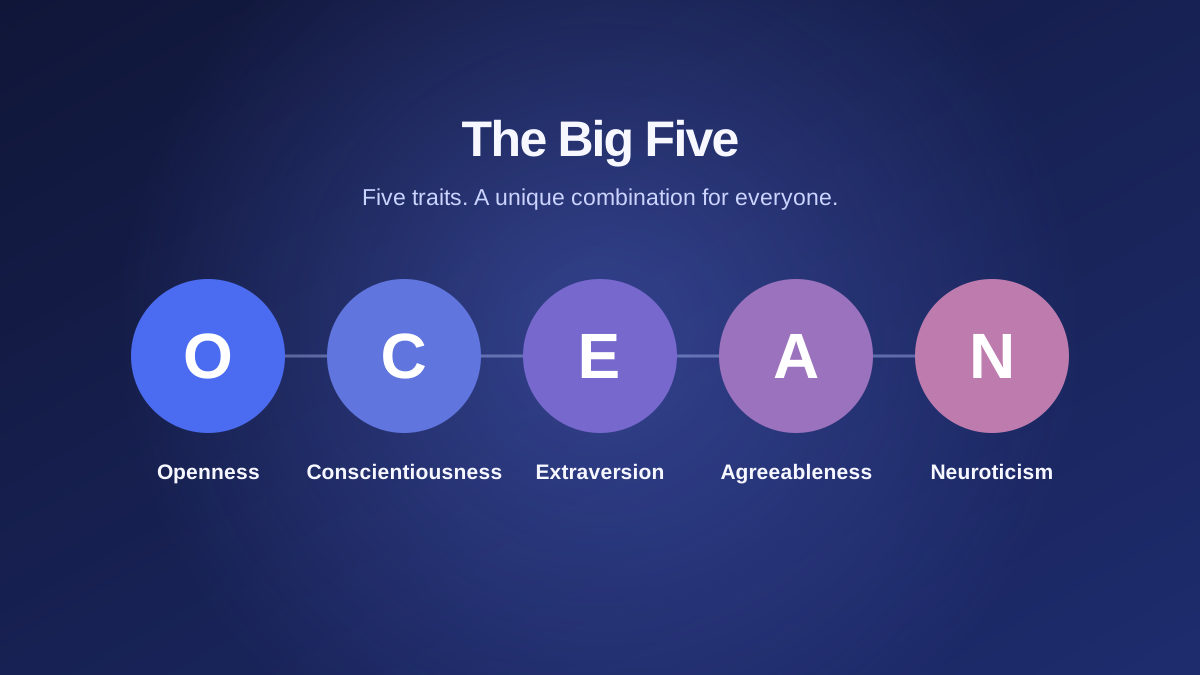
Part of the answer lies in what the Big Five calls sympathy. It is one of six facets of agreeableness, and it describes how tenderhearted you are, and how strongly you are moved by people who are worse off than yourself.
What does sympathy mean?
Sympathy is about feeling for others: being moved by their suffering and wanting things to go well for them. In the original NEO model, the same facet is called tender-mindedness.
People who score high often recognise themselves in this:
- You are moved when you see someone who is struggling.
- You think about people who are worse off, such as the homeless or refugees.
- You find it hard to ignore others' problems.
- You lean towards mercy rather than strict principles when someone has made a mistake.
People who score low are less affected by others' suffering. They often value objective, rational judgments and are more concerned with fairness and consistency than with mercy.
The key is not whether you understand that others are suffering, but how much it touches you.
Agreeable people feel more for victims
Meara Habashi, William Graziano and Ann Hoover studied how the Big Five traits are linked to helping.
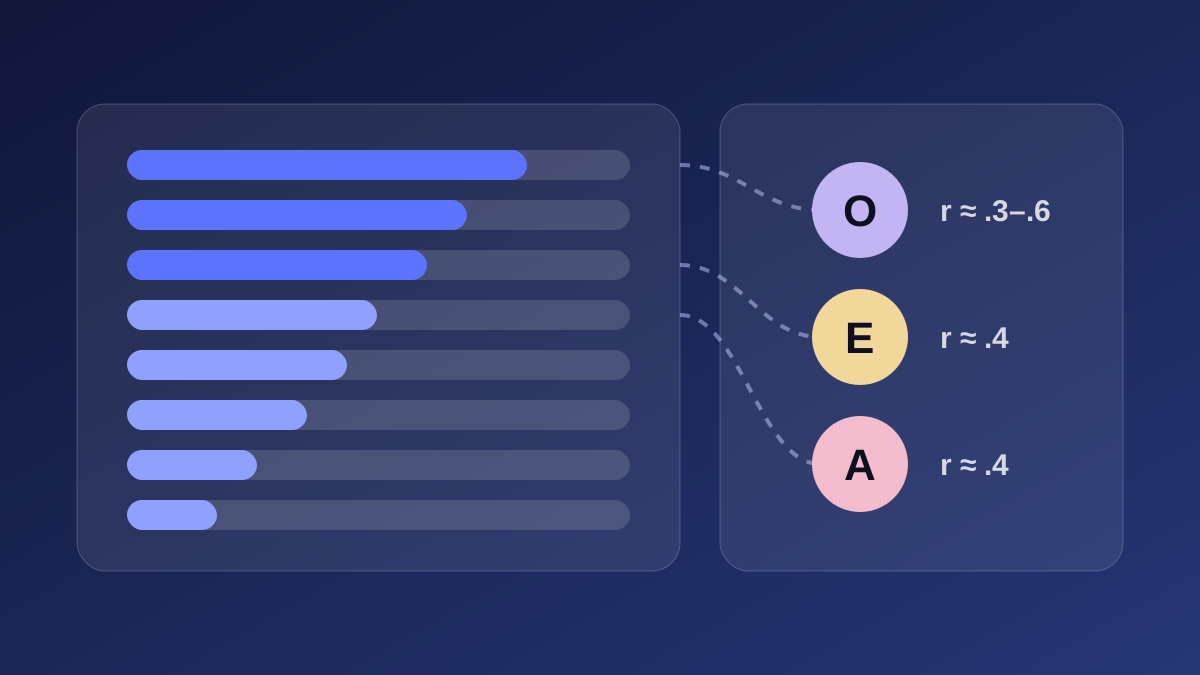
Across three studies with different methods, agreeableness was the trait most closely linked to emotional reactions to people in need, and to decisions to help them.
This suggests that sympathy is not just a nice attitude. It is part of a chain where feeling for others leads to action.
Empathy can lead to genuine helping
Do we help others to relieve our own discomfort, or for their sake?
Daniel Batson and colleagues tested this in a classic experiment. Participants watched another student receive what they believed were electric shocks, and could offer to take the remaining shocks themselves. In reality, the situation was staged. In some conditions it was easy to leave without helping, in others it was hard.
Those who felt little empathy helped mainly when it was hard to escape, which suggests they were relieving their own discomfort. Those who felt much empathy helped just as much whether escape was easy or not. Batson took this as evidence that empathy can lead to genuinely altruistic motivation.
Why we feel less when many suffer
A well-known paradox is that one person's suffering can move us more than thousands. Daryl Cameron and Keith Payne called this the collapse of compassion.
Their explanation was that people expect the needs of large groups to be overwhelming, and therefore dampen their own feelings in advance to protect themselves.
In their experiments, the collapse of compassion appeared only when participants expected to be asked for money, and only among those who were good at regulating their emotions. When participants were told to let themselves feel, the effect disappeared.
This sheds light on one of the statements in the test, about trying not to think about the needy. Looking away is not always indifference. It can also be a way of protecting yourself from feelings you fear will be too much.
Sympathy is not the same as empathic distress
This is an important distinction.
Sharing others' pain so strongly that you yourself are overwhelmed is sometimes called empathic distress. Compassion, on the other hand, is a warm concern for others that makes it possible to help without burning out.
Olga Klimecki and colleagues trained participants first in empathy, sharing others' feelings, and then in compassion. After empathy training, the participants reacted to videos of human suffering with more negative feelings. After compassion training, the negative feelings decreased again, and positive feelings increased.
Sympathy is also different from emotionality, a facet of openness, which is about how aware you are of your own feelings. And it is different from altruism, which is about what you actually do to help.
What does a high or low score mean?
High sympathy
You are tenderhearted and easily moved by others' suffering. You are often a good listener and a good support when someone is struggling.
The risk is that others' pain weighs heavily on you, especially if you work with people in crisis, or if the news is full of tragedies. Without good coping strategies, it can become exhausting.
Low sympathy
You are less affected by others' suffering, and you emphasise reason, fairness and consistency. This can be an advantage in roles where you need to make tough decisions, such as allocating limited resources or giving honest feedback.
It does not mean you are cruel or lack conscience. Many low scorers are fair and helpful, but are driven more by principles than by feelings.
Both descriptions are about typical tendencies, not rules that hold in every situation.
In everyday life
- At work: High scorers often thrive in caring professions, but are at risk of compassion fatigue. Low scorers can keep a cool head in crisis and difficult decisions.
- In relationships: High sympathy makes you a supportive partner. If your partner scores low, they may show care through practical action rather than words.
- With news and social media: High scorers can be strongly affected by a constant stream of suffering. It is fine to limit how much you take in.
- In giving: Many high scorers donate on impulse when moved. It can be good to decide in advance what you want to give, and to whom.
Can sympathy change?
There is solid evidence that compassion can be trained.
Klimecki's research showed that compassion training gave more positive feelings in response to others' suffering, and activated a different brain network than empathy training did. Helen Weng and colleagues found that a short compassion training made participants more willing to spend their own money to help others.
Some practical ideas:
- If you are easily overwhelmed, shift your focus from sharing the pain to wishing the other person well and asking what you can do.
- If you notice that you look away, ask yourself whether it is indifference or self-protection.
- Take breaks from news and social media when you need it.
- Remember that you do not have to feel everything to act well.
If you work closely with suffering and feel constantly drained, it can help to talk to a doctor or psychologist.
Frequently asked questions
Is high sympathy the same as being an empath?
"Empath" is a popular term, not a scientific concept. High sympathy means you are easily moved by others' suffering, which many people who call themselves empaths recognise. But a test score cannot say that you have any special abilities.
Does low sympathy mean I am cold or psychopathic?
No. Low sympathy is a normal variation and often reflects a preference for reason and principles. Psychopathy involves much more, such as manipulation and a lack of remorse, and cannot be diagnosed with a Big Five test.
Why do I feel more for one person than for thousands?
According to Cameron and Payne, it is partly because we protect ourselves from feelings we expect to be overwhelming. Large numbers trigger that defence more easily than a single face.
How is sympathy measured in the Big Five test?
Our test is based on the IPIP-NEO-120, where each facet is measured with four statements. For sympathy, they are about sympathising with the homeless, feeling sympathy for those who are worse off than yourself, and (reversed) not being interested in other people's problems and trying not to think about the needy. Read the score as a sign of a pattern, not as a complete description of you.
Find out where you score
Sympathy is only one of the six facets of agreeableness. You can be deeply moved by others and still score low on trust or cooperation.
Take the Big Five test and see your whole profile, with all 30 facets.
Sources
- Habashi, M. M., Graziano, W. G. & Hoover, A. E. (2016). Searching for the prosocial personality: A Big Five approach to linking personality and prosocial behavior. Personality and Social Psychology Bulletin, 42(9), 1177–1192.
- Batson, C. D., Duncan, B. D., Ackerman, P., Buckley, T. & Birch, K. (1981). Is empathic emotion a source of altruistic motivation? Journal of Personality and Social Psychology, 40(2), 290–302.
- Cameron, C. D. & Payne, B. K. (2011). Escaping affect: How motivated emotion regulation creates insensitivity to mass suffering. Journal of Personality and Social Psychology, 100(1), 1–15.
- Klimecki, O. M., Leiberg, S., Ricard, M. & Singer, T. (2014). Differential pattern of functional brain plasticity after compassion and empathy training. Social Cognitive and Affective Neuroscience, 9(6), 873–879.
- Weng, H. Y. et al. (2013). Compassion training alters altruism and neural responses to suffering. Psychological Science, 24(7), 1171–1180.
- Johnson, J. A. (2014). Measuring thirty facets of the Five Factor Model with a 120-item public domain inventory: Development of the IPIP-NEO-120. Journal of Research in Personality, 51, 78–89.