Gregariousness: why do parties energise some people and drain others?
Some people come alive at a party, others count the minutes until they can go home. What gregariousness means, what the research says and how it is measured.
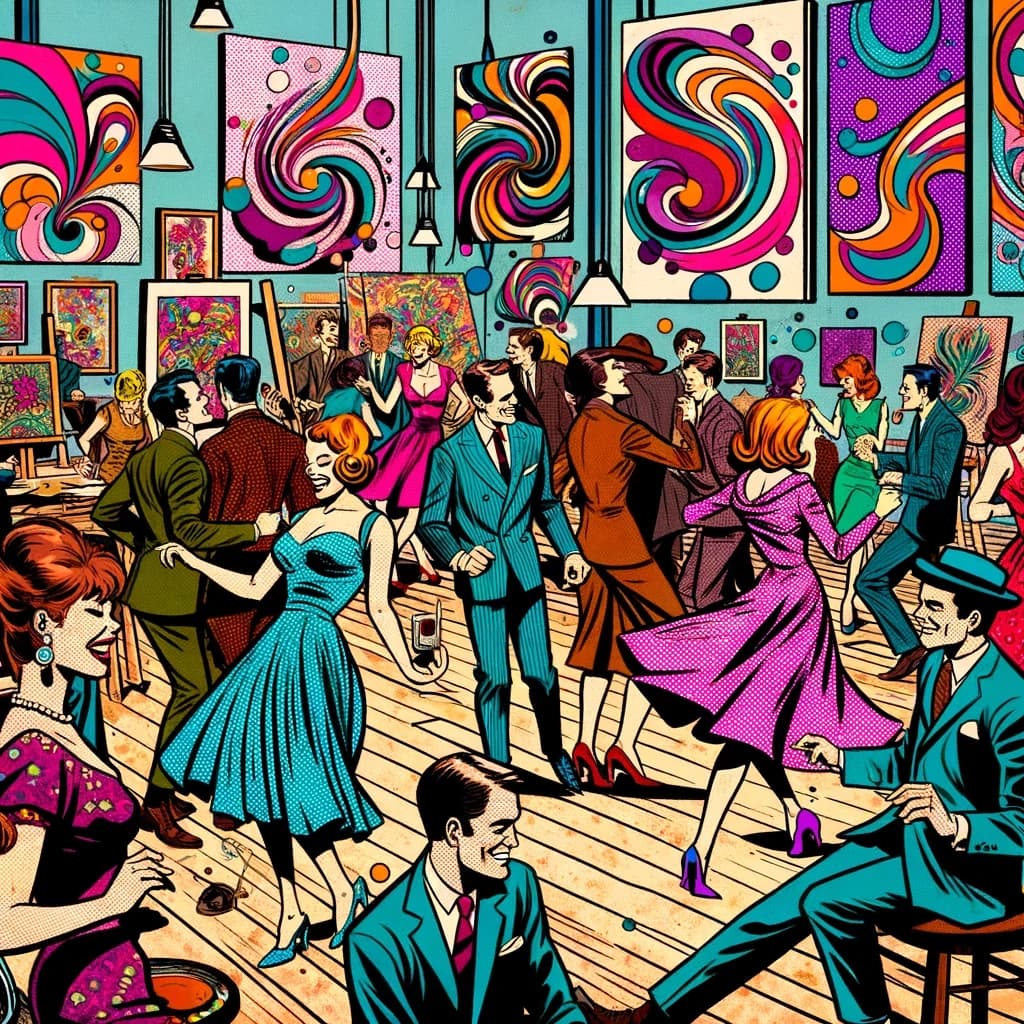
It is eleven o'clock on a Saturday night. The party is in full swing.
One friend is in the kitchen talking to people she met an hour ago, and she has no plans to leave. Another has quietly found his coat. He has had a nice time, but now he mostly wants to be at home on the sofa.
Neither of them is doing anything wrong. So why does the same evening fill one person up and empty the other?
Part of the explanation lies in what psychologists call gregariousness. In the Big Five model, it is one of six facets of extraversion. The facet describes how much you enjoy being among many people, and how much you seek out crowds, parties and busy social settings.
What does gregariousness mean?
The word comes from the Latin grex, meaning flock or herd. In personality psychology it means a preference for the company of others, especially in larger groups.
People who score high often recognise themselves in this:
- You love big parties and gatherings.
- You talk to many different people, not just the ones you came with.
- You find crowds lively rather than tiring.
- You rarely choose to spend an evening alone if there is something social to do.
- You get restless after a long time on your own.
People who score low are not antisocial. They often enjoy a dinner with a few friends. They simply have a greater need for time alone and tend to avoid crowds.
The key is not whether you like people, but how much company, and how many people at once, feels good to you.
Acting extraverted feels good, for almost everyone
You might expect that socialising feels good only for extraverts. The research says otherwise.
In a well-known set of studies, participants reported every three hours for two weeks how extraverted they had been acting and how they felt. Each participant felt happier when acting extraverted, such as being talkative and outgoing, than when acting introverted. The same pattern appeared in weekly diaries and in a lab experiment where people were asked to act in a more or less extraverted way.
A follow-up study tested whether this also held for introverts. Participants were randomly assigned to act either extraverted or introverted. Positive feelings rose when people acted extraverted, including the introverts. Negative feelings did not increase.
So it is not that introverts dislike social life. Most people feel lifted in the moment.
Happy now, tired later
Then why do so many people need to go home and recharge?
A study followed 48 people for 12 days, asking them five times a day about their behaviour, mood and fatigue. Acting extraverted was linked to a better mood and less fatigue in the moment. But three hours later, the same behaviour was linked to more fatigue. The more people someone had met, the stronger the effect.
Surprisingly, this delayed fatigue was not stronger for introverts. It applied regardless of personality.
That suggests social life has a cost for everyone. What may differ is how much of it you want, and how much you are willing to pay. People high in gregariousness may simply be more willing to trade a tired Sunday for a lively Saturday.
We underestimate how nice it is to talk to strangers
At the same time, many of us choose solitude more often than we would actually enjoy it.
In experiments on trains and buses, commuters were asked either to talk to a stranger, to keep to themselves, or to commute as usual. Those who talked to someone reported a more pleasant journey, and no less productive. Yet other commuters, asked to predict the outcome, expected the opposite.
Part of the reason was that people underestimated how interested others would be in talking to them.
This is not a study of gregariousness. But it shows that the urge to avoid others can be based on a wrong prediction, not only on a real preference.
Gregariousness is not the same as friendliness or shyness
Two distinctions are worth making.
First, gregariousness is not the same as friendliness. Friendliness is about warmth and how easily you make friends. You can be warm and easy to get to know one-to-one, while avoiding big parties. Many low scorers on gregariousness have close and loyal friendships.
Second, it is not the same as shyness or social anxiety. A person low in gregariousness avoids crowds because they do not need them. A shy person may want to be part of things, but feels uneasy because of how others might judge them. That is a different facet, self-consciousness, which belongs to neuroticism.
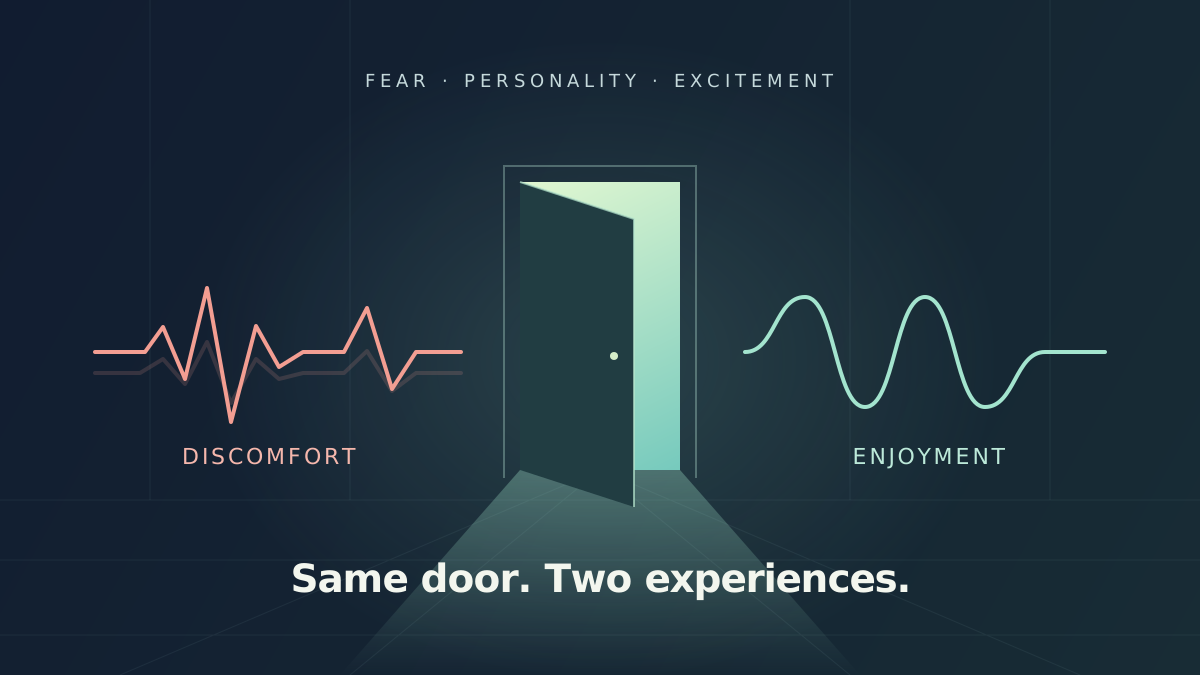
Imagine two people who both skip the office party. One would rather spend the evening reading. The other would like to go but dreads standing alone with a drink. Same behaviour, different reasons. You can read more about this in our article on what being an introvert really means.
What does a high or low score mean?
High gregariousness
You get energy and enjoyment from being among many people. You often say yes to invitations, and you may be the one who brings groups together.
The flip side can be restlessness when you are alone for long, or a calendar so full that there is little room for rest.
Low gregariousness
You prefer smaller groups and value time to yourself. You may find large gatherings tiring, even when you enjoy parts of them.
That does not mean you are lonely or antisocial. Many low scorers have rich social lives, just on a smaller scale and at a calmer pace.
Both descriptions are about typical tendencies, not rules that hold in every situation.
In everyday life
- At work: Open-plan offices, team events and conferences suit high scorers well. Low scorers often do their best work with some quiet time and may benefit from planning breaks after long meetings.
- In relationships: Couples with different scores often disagree about how many weekend plans to make. A useful compromise is to agree on how many social evenings a week feel right, and go separately sometimes.
- At parties: Low scorers often enjoy themselves more if they arrive early, find a smaller conversation and leave when they want to, without guilt.
- On holiday: High scorers may enjoy a busy resort or a group trip. Low scorers often prefer a cabin, a small group or travelling alone.
Can gregariousness change?
Personality is fairly stable, but not fixed.
In a large long-term study of adults, measured with the questionnaire our test's facets are modelled on, gregariousness followed a curved pattern across adulthood, with scores peaking around age 60.
Experiments also suggest that introverts can benefit from acting a bit more extraverted now and then. The researchers behind the study on counter-dispositional behaviour concluded that introverts may gain in mood from it, while extraverts who have to act introverted for long may find it mentally costly.
You do not have to become a party person. But if you want more social contact, it can help to:
- Remember that most people enjoy socialising more than they predicted beforehand.
- Plan recovery time after big events, rather than avoiding them altogether.
- Choose formats that suit you, such as a walk with a friend instead of a crowded bar.
- Accept that wanting to go home early is a preference, not a flaw.
Frequently asked questions
Is it true that introverts recharge alone and extraverts recharge with people?
Partly. Research shows that social behaviour feels good in the moment for most people, and that it is linked to more fatigue a few hours later for most people too. High scorers on gregariousness seem to want more of it, but the idea that introverts are uniquely drained by people is too simple.
Can I be gregarious and still need time alone?
Yes. Everyone needs some rest. A high score means you seek out company more often, not that you never need a quiet evening.
Is low gregariousness a sign of depression?
Not in itself. Preferring small groups and solitude is a normal personality difference. But if you have lost interest in people and activities you used to enjoy, that is something different, and it can be worth talking to your doctor or a psychologist.
How is gregariousness measured in the Big Five test?
Our test is based on the IPIP-NEO-120, where each facet is measured with four statements. For gregariousness, they are about loving large parties, talking to many different people at parties, preferring to be alone and avoiding crowds. The last two are scored in reverse. Read the score as a sign of a pattern, not as a complete description of you.
Find out where you score
Gregariousness is only one of the six facets of extraversion. You can avoid big parties and still be warm, assertive or full of energy.
Take the Big Five test and see your whole profile, with all 30 facets.
Sources
- Fleeson, W., Malanos, A. B. & Achille, N. M. (2002). An intraindividual process approach to the relationship between extraversion and positive affect: Is acting extraverted as "good" as being extraverted? Journal of Personality and Social Psychology, 83(6), 1409–1422.
- Zelenski, J. M., Santoro, M. S. & Whelan, D. C. (2012). Would introverts be better off if they acted more like extraverts? Exploring emotional and cognitive consequences of counterdispositional behavior. Emotion, 12(2), 290–303.
- Leikas, S. & Ilmarinen, V.-J. (2017). Happy now, tired later? Extraverted and conscientious behavior are related to immediate mood gains, but to later fatigue. Journal of Personality, 85(5), 603–615.
- Epley, N. & Schroeder, J. (2014). Mistakenly seeking solitude. Journal of Experimental Psychology: General, 143(5), 1980–1999.
- Terracciano, A., McCrae, R. R., Brant, L. J. & Costa, P. T. (2005). Hierarchical linear modeling analyses of the NEO-PI-R scales in the Baltimore Longitudinal Study of Aging. Psychology and Aging, 20(3), 493–506.
- Johnson, J. A. (2014). Measuring thirty facets of the Five Factor Model with a 120-item public domain inventory: Development of the IPIP-NEO-120. Journal of Research in Personality, 51, 78–89.