How Your Personality Can Shape Successful Negotiations
Agreeable and extraverted people tend to give away more when haggling over price, but do better when a deal can grow. Here is what research says about personality and negotiation, and how to use your traits.

এই আর্টিকেলটি এখনও অনূদিত হয়নি, তাই ইংরেজিতে দেখানো হচ্ছে।

The short answer: Personality matters, but it depends on the kind of negotiation. When two people split a fixed sum, such as haggling over the price of a used car, agreeable and extraverted people tend to end up with less. When a deal can be made bigger for both sides, or when the relationship continues after the deal is signed, the same traits become an advantage. And the strongest predictors of how well people negotiate are not fixed traits at all, but things you can change.
Key findings
- Some people negotiate consistently better than others. In one study, stable individual differences explained 46% of how well people did.
- Agreeableness and extraversion are liabilities when splitting a fixed pie, especially for people without ambitious goals.
- Highly agreeable people do best in cooperative negotiations, and less agreeable people do best in competitive ones.
- Anxiety makes people open with lower offers, give up sooner and earn less.
- Conscientiousness, surprisingly, barely predicts negotiation results.
- Whoever makes the first offer usually gets the better deal.
- How people feel after a job negotiation predicted their job satisfaction a year later. The salary they won did not.
- The best predictors of success are confidence and positive expectations, and both can be learned.
Are some people simply better negotiators?
For decades, researchers believed personality played only a small role in negotiation. The evidence seemed weak, and many concluded that the situation mattered far more than the person.
That view has changed. Elfenbein and colleagues had people negotiate with several different partners, so they could see who did well again and again. Individual differences explained 46% of the economic results and 19% of how satisfied people felt afterwards. Some negotiators really are consistently better than others.
A meta-analysis by Sharma, Bottom and Elfenbein confirmed that personality, cognitive ability and emotional intelligence all predict negotiation outcomes. Every Big Five trait except conscientiousness predicted at least one outcome, and the effects were stronger in real-world field data than in laboratory experiments.
Two kinds of negotiation
To understand how personality works, you need to separate two kinds of negotiation:
- Distributive negotiation is about splitting a fixed pie. Every dollar the seller gains, the buyer loses. Haggling over a price is the classic example.
- Integrative negotiation has room to create value. The parties care about different things, so they can trade: one gets the earlier delivery date, the other the better price.
Most real negotiations are a mix. Many people assume every negotiation is purely distributive. A meta-analysis of 32 experiments by Thompson and Hrebec found that negotiators often fail to notice when both sides actually want the same thing, and end up with agreements that are worse for both. These are known as lose-lose agreements.
Trait by trait
| Trait | In a fixed-pie negotiation | When value can be created |
|---|---|---|
| Agreeableness | A liability: gives in more easily | An advantage: builds trust and finds joint solutions |
| Extraversion | A liability, especially without a high goal | Helps build rapport |
| Neuroticism | Anxiety leads to low offers and early exits | Anxiety still hurts, but confidence offsets it |
| Conscientiousness | Little effect | Little effect |
| Openness | Little known | Little known; cognitive ability helps more |
Agreeableness: the biggest double-edged sword
In two studies by Barry and Friedman, agreeableness and extraversion were liabilities in distributive bargaining. Agreeable people want to avoid conflict and are more easily pulled towards the other side's position.
But Dimotakis, Conlon and Ilies found that this is a question of fit. Highly agreeable negotiators did best in integrative negotiations, while less agreeable negotiators did best in distributive ones. When people's personality fit the situation, they became more engaged, their heart rate rose, they persisted longer, and they achieved better economic outcomes. Negotiators who were "misplaced" did worse.
There is also a related trait that is more costly. Amanatullah, Morris and Curhan studied unmitigated communion: a strong worry about straining relationships, even at your own expense. It is different from agreeableness. People high in this trait set a lower walk-away point before the negotiation even starts, because they are prepared to make large concessions to avoid an impasse. Even among successful business executives, it predicted giving in during everyday conflicts.
Extraversion: charm is not always an advantage
Extraverts are sociable and talkative, so you might expect them to be good negotiators. In fixed-pie negotiations, Barry and Friedman found the opposite: extraversion was a liability. Sharing information freely and wanting to be liked can give the other side an advantage.
The effect was strongest for people without high goals. Extraverts and agreeable people who went in with ambitious targets were much less affected. A clear, high goal works as a counterweight to a personality that wants to please.
Neuroticism: anxiety costs money
Brooks and Schweitzer found that anxiety is common in negotiations and directly harmful. Anxious negotiators made lower first offers, made steeper concessions, exited earlier and earned less. The harmful effect was weaker for people who had high confidence in their own negotiation skills.
People high in neuroticism feel anxious more often, so they are more exposed to this. The good news is that confidence can be built through preparation and practice.
Conscientiousness: the surprise
You might think that conscientious people, who prepare thoroughly, would be the best negotiators. But in Barry and Friedman's studies, conscientiousness was generally unrelated to bargaining success. In the meta-analysis by Sharma and colleagues, it was the only Big Five trait that did not predict any negotiation outcome.
Preparation still matters. It is just that conscientious people do not automatically prepare in the ways that pay off at the table, such as knowing their walk-away point and setting a high goal.
Openness and intelligence
There is little solid research specifically linking openness to negotiation results. What Barry and Friedman did find is that cognitive ability played no role when splitting a fixed pie, but was strongly related to finding solutions that were good for both parties when there was room to create value. Seeing the trade-offs takes thinking, not just charm.
The first offer is a strong anchor
Galinsky and Mussweiler found that whoever made the first offer, buyer or seller, got the better outcome. The first offer was also a strong predictor of the final price.
You can protect yourself if the other side opens first. When negotiators thought about the other side's alternatives, the other side's walk-away price, or their own goal, the advantage of the first offer disappeared. This matters for anxious negotiators, who tend to make low first offers, and for agreeable negotiators, who are easily drawn towards the other side's anchor.
When relationships matter more than the deal
Hart and Schweitzer introduced the term ERRO, the economic relevance of relational outcomes. It describes how much the total value of a deal depends on the relationship after the negotiation is over.
- In a high ERRO situation, such as hiring a new employee or a contractor, the other side's effort after the deal matters a lot. In their experiments, negotiators who built a positive relationship achieved better economic outcomes, because their counterparts worked harder afterwards.
- In a low ERRO situation, such as buying a used car from a stranger, the relationship matters little, and you can focus on the price.
A study of job offer negotiations by Curhan, Elfenbein and Kilduff points in the same direction. How people felt about the negotiation, the subjective value, predicted their job satisfaction, satisfaction with pay and intention to stay one year later. Surprisingly, the economic outcome they had achieved had no clear effect. Curhan and colleagues have shown that subjective value consists of four parts: how you feel about the result, about yourself, about the process and about the relationship.
In other words: the salary increase you squeezed out may matter less than whether you and your new boss still like each other afterwards.
The best predictors can be learned
Elfenbein summarised the research with an optimistic conclusion: the strongest and most reliable predictors of negotiation performance are also the most open to change. People with positive expectations and who are comfortable negotiating consistently do better. Abilities such as cognitive intelligence and emotional intelligence also help.
How to use your personality
- If you are agreeable: Set a clear, high goal and a firm walk-away point before you start. Write them down. Your strength comes into play when you look for solutions that benefit both sides.
- If you are extraverted: Use your social skills to build rapport, but be careful about giving away information about your own limits.
- If you are prone to anxiety: Prepare well, practise, and think about your own goal rather than the other side's offer. Confidence weakens the effect of anxiety.
- If you are less agreeable: You have an edge when haggling over price, but in high ERRO situations a hard win can cost you later.
- Whatever your personality: Consider making the first offer, and ask yourself what the other side really cares about. There is often more to gain than you think.
Find out where you score
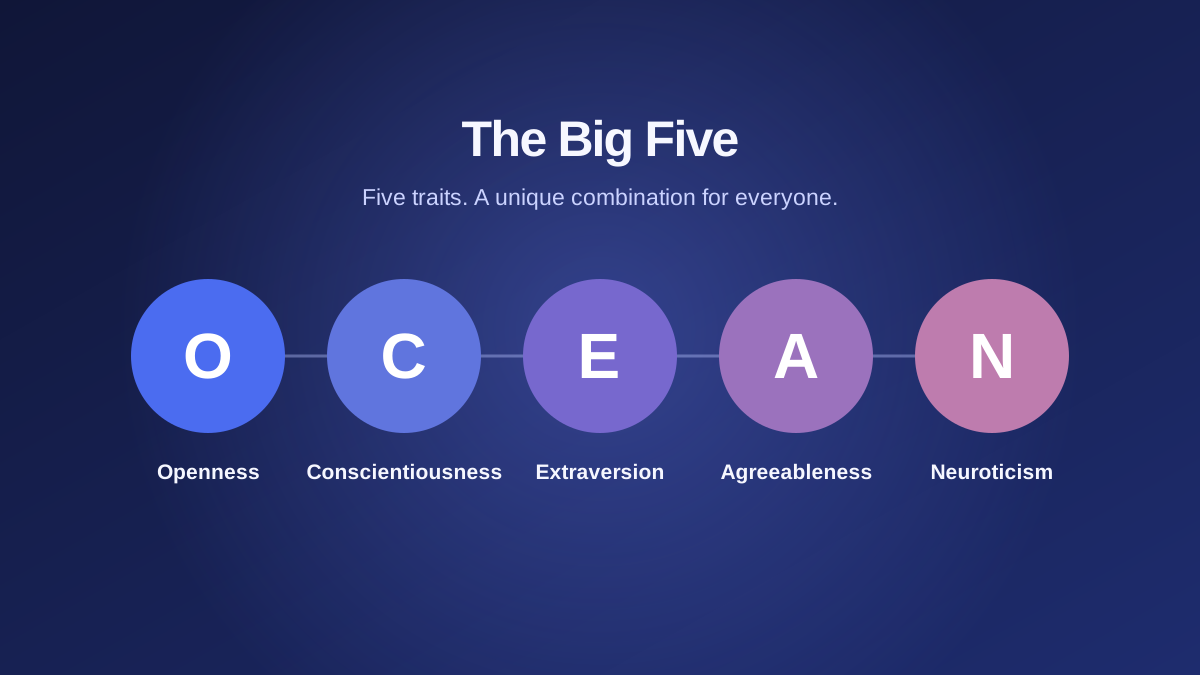
The free Big Five personality test measures agreeableness, extraversion, neuroticism and the other traits, along with 30 facets. Knowing where you score makes it easier to see which of the pitfalls above you need to watch out for.
Sources
- Amanatullah, E. T., Morris, M. W., & Curhan, J. R. (2008). Negotiators who give too much: Unmitigated communion, relational anxieties, and economic costs in distributive and integrative bargaining. Journal of Personality and Social Psychology, 95(3), 723–738. doi:10.1037/a0012612
- Barry, B., & Friedman, R. A. (1998). Bargainer characteristics in distributive and integrative negotiation. Journal of Personality and Social Psychology, 74(2), 345–359. doi:10.1037/0022-3514.74.2.345
- Brooks, A. W., & Schweitzer, M. E. (2011). Can Nervous Nelly negotiate? How anxiety causes negotiators to make low first offers, exit early, and earn less profit. Organizational Behavior and Human Decision Processes, 115(1), 43–54. doi:10.1016/j.obhdp.2011.01.008
- Curhan, J. R., Elfenbein, H. A., & Kilduff, G. J. (2009). Getting off on the right foot: Subjective value versus economic value in predicting longitudinal job outcomes from job offer negotiations. Journal of Applied Psychology, 94(2), 524–534. doi:10.1037/a0013746
- Curhan, J. R., Elfenbein, H. A., & Xu, H. (2006). What do people value when they negotiate? Mapping the domain of subjective value in negotiation. Journal of Personality and Social Psychology, 91(3), 493–512. doi:10.1037/0022-3514.91.3.493
- Dimotakis, N., Conlon, D. E., & Ilies, R. (2012). The mind and heart (literally) of the negotiator: Personality and contextual determinants of experiential reactions and economic outcomes in negotiation. Journal of Applied Psychology, 97(1), 183–193. doi:10.1037/a0025706
- Elfenbein, H. A. (2015). Individual differences in negotiation: A nearly abandoned pursuit revived. Current Directions in Psychological Science, 24(2), 131–136. doi:10.1177/0963721414558114
- Elfenbein, H. A., Curhan, J. R., Eisenkraft, N., Shirako, A., & Baccaro, L. (2008). Are some negotiators better than others? Individual differences in bargaining outcomes. Journal of Research in Personality, 42(6), 1463–1475. doi:10.1016/j.jrp.2008.06.010
- Galinsky, A. D., & Mussweiler, T. (2001). First offers as anchors: The role of perspective-taking and negotiator focus. Journal of Personality and Social Psychology, 81(4), 657–669. doi:10.1037/0022-3514.81.4.657
- Hart, E., & Schweitzer, M. E. (2022). When we should care more about relationships than favorable deal terms in negotiation: The economic relevance of relational outcomes (ERRO). Organizational Behavior and Human Decision Processes, 168, 104108. doi:10.1016/j.obhdp.2021.104108
- Sharma, S., Bottom, W. P., & Elfenbein, H. A. (2013). On the role of personality, cognitive ability, and emotional intelligence in predicting negotiation outcomes: A meta-analysis. Organizational Psychology Review, 3(4), 293–336. doi:10.1177/2041386613505857
- Thompson, L., & Hrebec, D. (1996). Lose–lose agreements in interdependent decision making. Psychological Bulletin, 120(3), 396–409. doi:10.1037/0033-2909.120.3.396