Profil anda
 Aisyah
Jawab 120 pernyataan
Pilih pilihan yang paling menggambarkan diri anda. Tiada jawapan yang betul atau salah.
Dapatkan gambaran terperinci tentang cara anda berfikir, merasa dan bertindak, serta bandingkan diri anda dengan pasangan, keluarga atau rakan sekerja. Ujian ini dibina berdasarkan IPIP-NEO, model penyelidikan terbuka di sebalik Big Five. Percuma, tanpa pendaftaran.
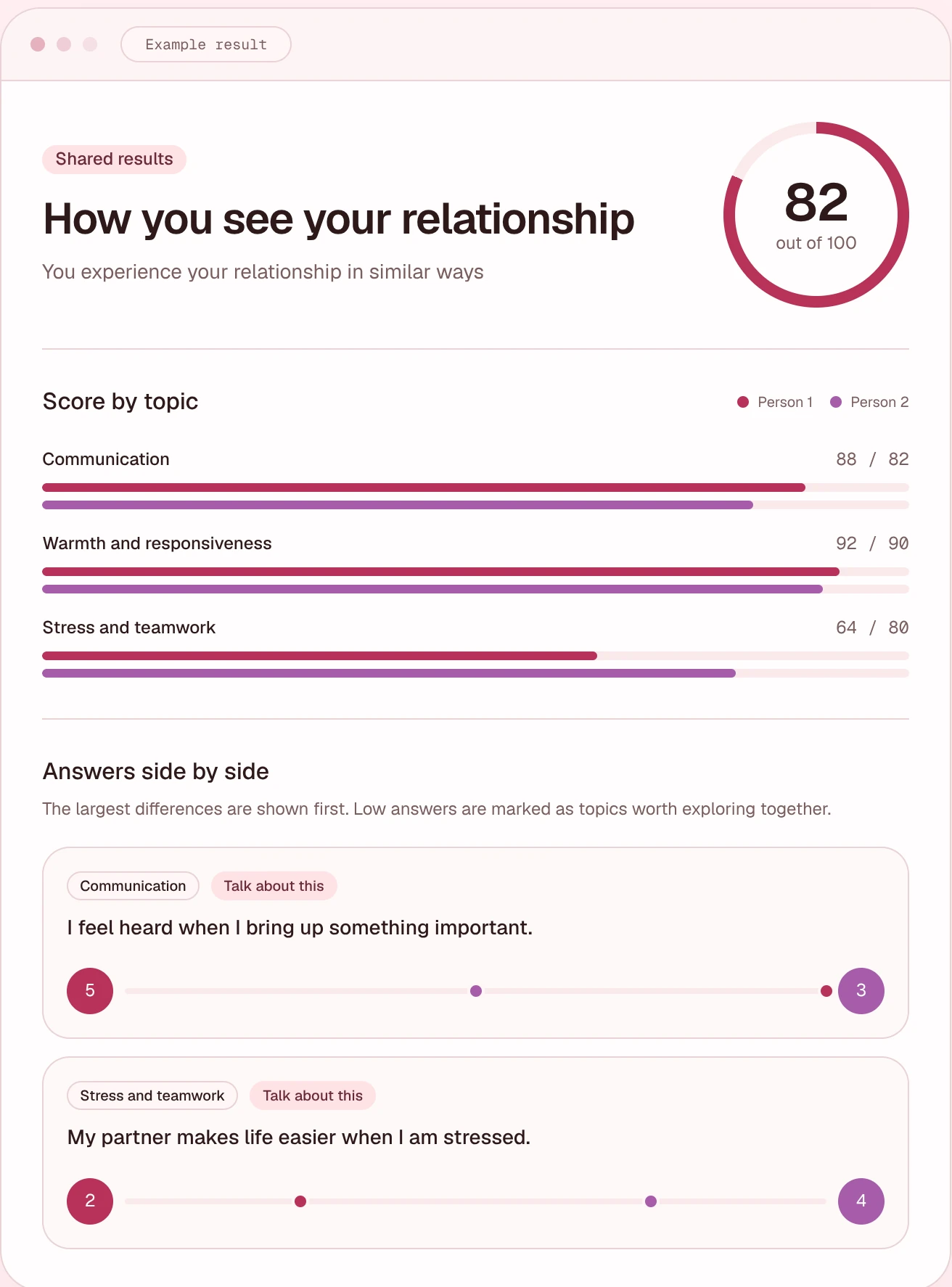
Pasangan, keluarga, kawan atau rakan sekerja anda. Setelah kedua-dua anda mengambil ujian, anda dapat melihat persamaan dan perbezaan secara bersebelahan, berserta topik konkrit untuk dibincangkan.
Mulakan dengan profil peribadi anda sendiri.
Orang itu menjawab secara bersendirian.
Keputusan menonjolkan persamaan dan juga perbezaan.
3topik perbualan yang jelas
Jadikan perbezaan ini sebagai jemputan untuk ingin tahu, bukan sebagai penghakiman.
Pair Perspective ialah ujian hubungan kami. Jawab 57 soalan secara berasingan, kemudian teroka kekuatan yang anda kongsi dan perbezaan yang wajar dibincangkan.
Big Five menggambarkan personaliti melalui lima dimensi yang bebas antara satu sama lain. Tiada profil yang lebih baik daripada yang lain – ia hanya mencerminkan kekuatan, keperluan dan kecenderungan yang berbeza.
Temui corak andaSifat ingin tahu, daya imaginasi dan minat terhadap idea baharu.
Struktur, disiplin diri dan cara anda berusaha mencapai matlamat.
Tenaga sosial, inisiatif dan keperluan terhadap rangsangan.
Kepercayaan, empati dan cara anda berhubung dengan orang lain.
Ujian ini percuma. Anda tidak memerlukan akaun, dan anda boleh menjawab mengikut rentak sendiri.
Ambil ujian sekarangPilih pilihan yang paling menggambarkan diri anda. Tiada jawapan yang betul atau salah.
Keputusan anda menunjukkan lima domain utama dan 30 faset personaliti di bawahnya.
Fahami corak anda dan bandingkan keputusan anda dengan orang yang anda kenali.
Anda sering mencari perspektif baharu dan menikmati idea yang mencabar perkara yang biasa.
Mulakan dengan gambaran keseluruhan yang jelas, kemudian teroka setiap ciri personaliti dan maksud skor anda dalam kehidupan seharian.
Profil anda menggambarkan kecenderungan, bukan diagnosis atau jawapan muktamad tentang siapa diri anda.
Kupasan mendalam tentang lima ciri, penyelidikannya dan cara personaliti membentuk kehidupan seharian.
Lihat semua artikelYou can understand your anger perfectly and still lie awake replaying the argument. A new Australian study suggests why insight alone may not calm you down.
Researchers found unusually high genetic risk scores in what is probably Hitler's DNA. But can genes explain a dictator? How people have tried to measure him for 80 years.
Two teenagers go through the same hard year, and only one seems to bounce back. A new study looks at how personality, hope and childhood relate to resilience.
You hide behind a cushion. Your friend wants more. New research on psychopathic traits explores why the same scare can feel so different.
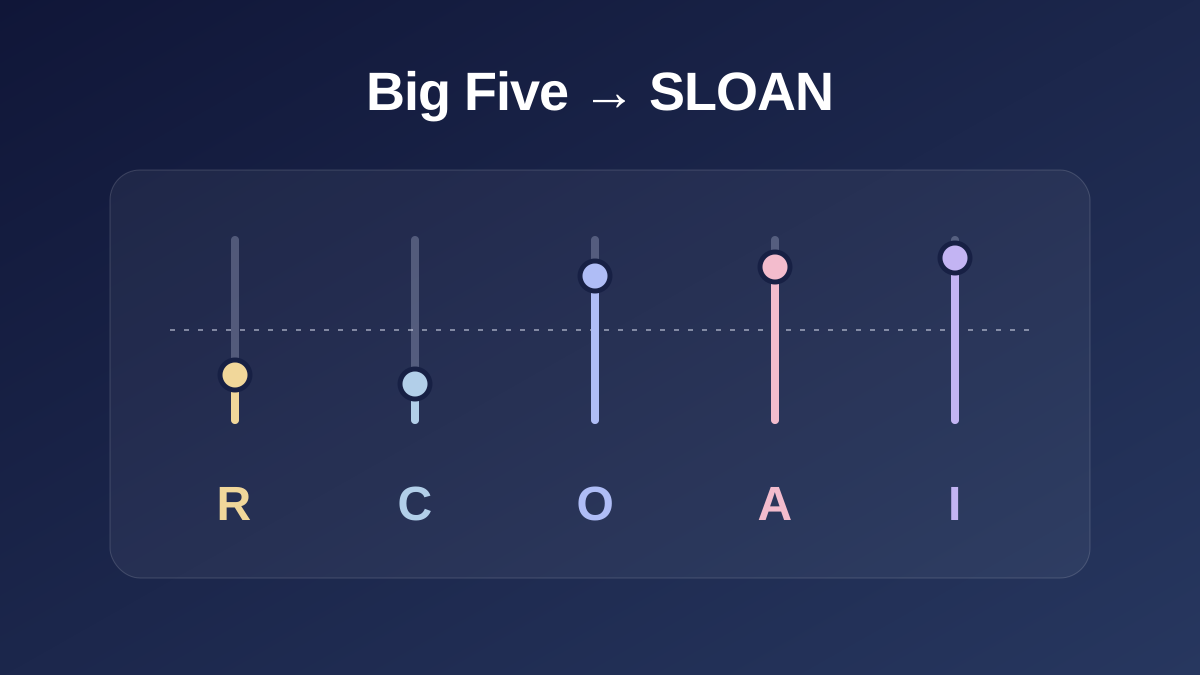
Decode your SLOAN personality code, see how it connects to the Big Five, and learn why scores near the middle matter more than a type label.
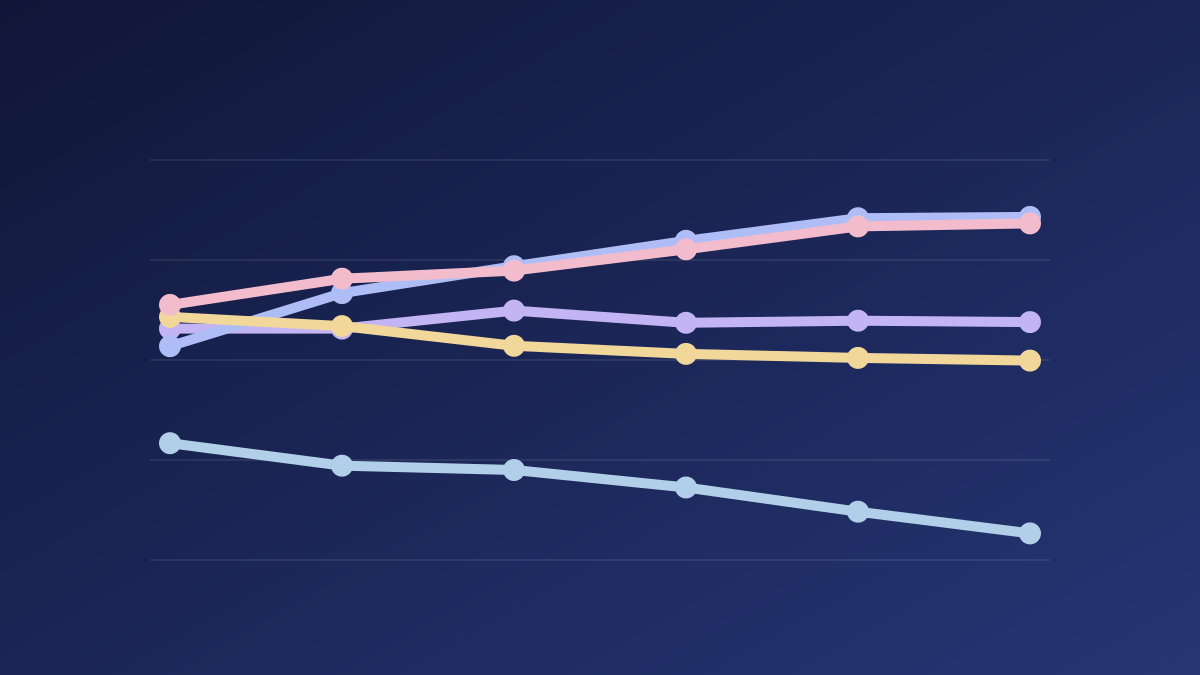
Bandingkan profil Big Five purata wanita dan lelaki pada mana-mana usia, sifat demi sifat dan faset demi faset. Ketelitian dan keramahan meningkat dengan usia, neurotisisme menurun, dan wanita mendapat skor lebih tinggi dalam keramahan dan neurotisisme.
Ujian ini berdasarkan model IPIP yang terbuka, percuma untuk digunakan dan bersumber terbuka. Kaedah dan soalannya tersedia untuk disemak.
Personaliti, kekuatan, minat kerjaya dan banyak lagi. Anda terus mendapat keputusan.
Lihat kesemua 36 ujianPersonaliti anda merentasi lima ciri besar dan 30 faset: keterbukaan, ketelitian, ekstraversi, keramahan dan neurotisisme. Selepas itu, bandingkan dengan rakan dan pasangan.
Explore nine personality types and the patterns you recognize in yourself. A free full profile for self-reflection.
Explore six sides of love, from chemistry and friendship to care. Get a personal profile and something to talk about.
Is jealousy a feeling, a habit of checking, or a fear of losing someone? 16 statements, with a score on three sides.
A three-minute test of six broad traits: the Big Five plus honesty-humility. A quick overview; take the full Big Five test for facets and more detail.
Are you an introvert, an extrovert or somewhere in between? 24 statements, with your placement and a score on six facets.
IPIP-NEO-300 penuh dengan 300 soalan. Ia mengambil masa lebih lama, tetapi memberikan profil yang lebih tepat bagi lima ciri dan kesemua 30 faset.
Each Big Five trait split in two: compassion and politeness, industriousness and orderliness, and more. 100 public-domain statements give you ten aspects.
Six broad traits instead of five: the HEXACO model adds honesty-humility to the Big Five picture. 240 public-domain statements give you 24 facets.
Raymond Cattell's classic model with 16 factors, from warmth and dominance to vigilance and perfectionism. 163 public-domain statements give you a profile between opposite poles.
Soalan verbal, rajah dan nombor dalam 15 minit, daripada ujian yang diterbitkan oleh ahli psikologi dalam jurnal Intelligence. Menunjukkan kebolehan penaakulan anda dalam tiga bidang. Bukan ujian IQ.
Find your signature strengths among the 24 character strengths in Peterson and Seligman's classification, from curiosity and kindness to bravery and humor.
Find out which of eight interest areas suit you best, from leadership and creativity to analysis and practical work, and which occupations match your profile.
Which of Holland's six interest types fit you: Realistic, Investigative, Artistic, Social, Enterprising or Conventional? Get your three-letter code and matching careers, with the O*NET Interest Profiler used in career guidance across the United States.
Your profile across seven components of emotional intelligence: noticing your feelings, showing joy and distress, empathy, being moved by others, and how much feelings guide your decisions.
How strongly do you feel with others, and how much do you show it? 17 statements, with a score on two sides of empathy.
How quickly do you catch fire, and does it reach other people? 27 statements, with a score on four sides of anger.
Is work taking over your life, or do you just work hard? 16 statements, with a score and what drives it.
How strongly do you react to rewards and to risks? Four scales on drive, fun seeking, reward responsiveness and caution, based on Gray's model of the brain's approach and avoidance systems.
Do you believe your life is steered by your own choices, by powerful others, or by chance? Three scales from Levenson's classic model, with your orientation explained.
Ten statements on how you value yourself and your abilities, based on Rosenberg's classic self-esteem scale. Quick, with a short explanation of your score.
Do you tend to see possibilities or difficulties? Ten statements about your outlook on life, with an explanation of your optimism score.
How satisfied are you with your life as a whole? Five statements and one minute, using one of the most widely used scales in happiness research.
A checklist of five kinds of everyday habits linked with good mental health: enjoyment, thinking habits, goals, routines and connection. With ideas for small steps.
The Short Dark Tetrad (SD4) measures four socially aversive traits found in everyone to some degree: Machiavellianism, narcissism, psychopathy and sadism.
Four sides of narcissism: the urge to lead, the need for attention, a sense of entitlement and a willingness to exploit others. Based on public-domain research scales.
How bold, how mean and how impulsive are you compared with others? Nine traits grouped into the three sides of psychopathy in Patrick's triarchic model. Measures normal variation, not a diagnosis.
The six-question screener from the WHO Adult ADHD Self-Report Scale (ASRS v1.1). Shows whether your answers are consistent with adult ADHD symptoms. Not a diagnosis.
Seven questions about worry and nervousness over the past two weeks, from the most widely used anxiety questionnaire. Shows how much the symptoms bother you. Not a diagnosis.
Sembilan soalan tentang mood, tidur, tenaga dan harga diri dalam dua minggu lepas, daripada soal selidik kemurungan yang paling banyak digunakan. Menunjukkan sejauh mana gejala mengganggu anda. Bukan diagnosis.
Twenty questions about how much memories, avoidance, mood and tension after a very stressful experience have bothered you in the past month. Not a diagnosis.
Twelve statements about checking, washing, order, numbers and unwanted thoughts, showing how well typical obsessive-compulsive symptoms fit you. Not a diagnosis.
The World Health Organization's ten questions on how much you drink, signs of dependence and harm, with your risk level.
Thirteen questions about exhaustion in daily life and at work, from the Copenhagen Burnout Inventory. Shows how worn out you are compared with others. Not a diagnosis.
Fourteen statements from a research-based screener for autism in adults. Shows whether your answers resemble those common in autism. Not a diagnosis.
Build the missing figure in a matrix. Choose 12, 22 or 36 tasks. A free pilot with a raw score.
Percuma · sumber terbuka · tanpa pendaftaran · kira-kira 10 minit