Big Five SLOAN Explained: What Your Five-Letter Personality Code Means
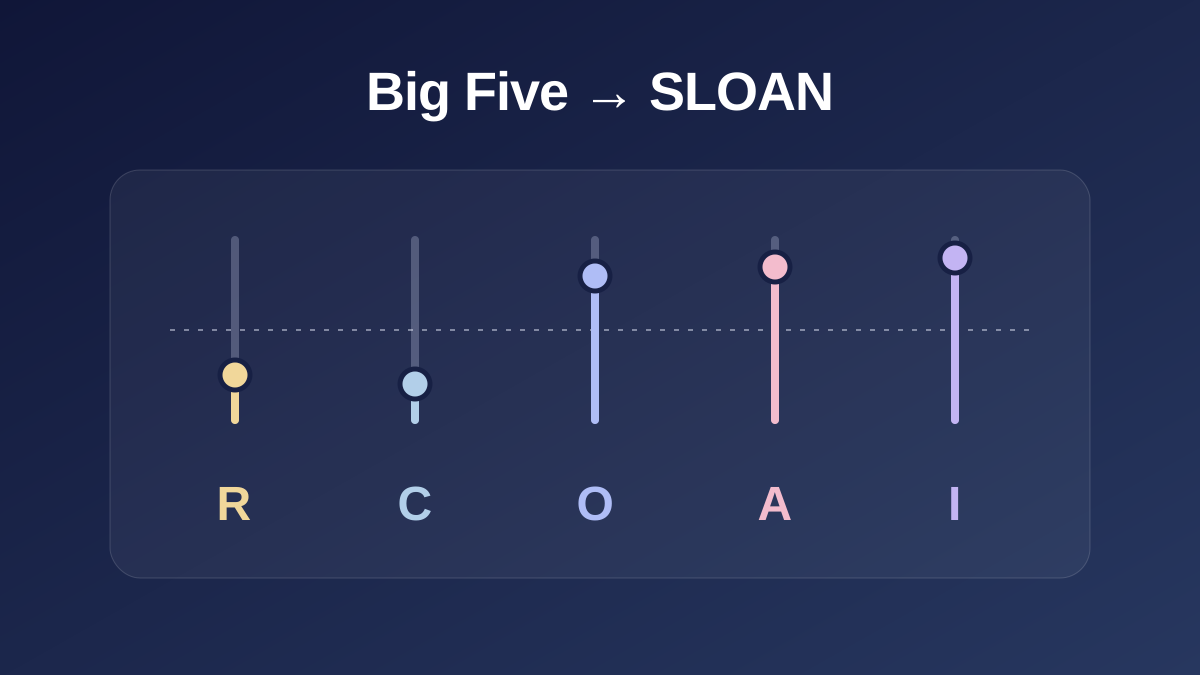
Decode your SLOAN personality code, see how it connects to the Big Five, and learn why scores near the middle matter more than a type label.
Глибокі розбори п'яти рис, досліджень і того, як особистість формує повсякденне життя.
По одній статті на кожну рису, з поясненням аспектів.
Decode your SLOAN personality code, see how it connects to the Big Five, and learn why scores near the middle matter more than a type label.
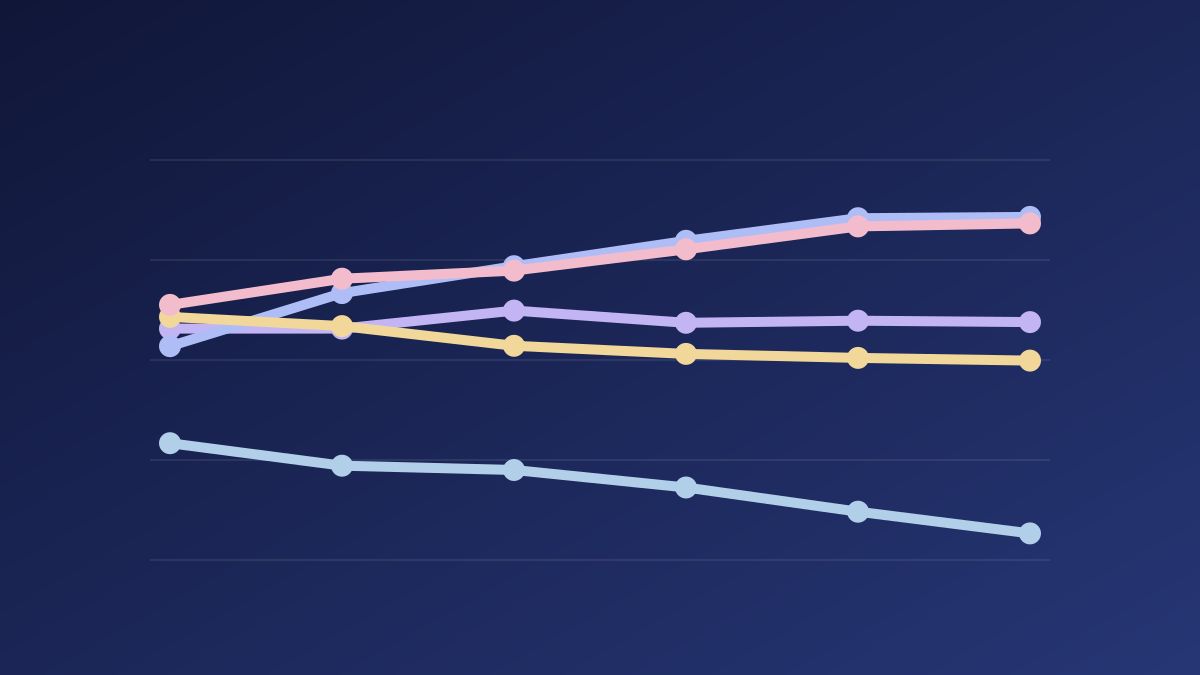
Порівняйте середній профіль Великої п'ятірки жінок і чоловіків будь-якого віку, риса за рисою та фасет за фасетом. Сумлінність і доброзичливість зростають із віком, нейротизм знижується, а жінки отримують вищі бали за доброзичливістю та нейротизмом.
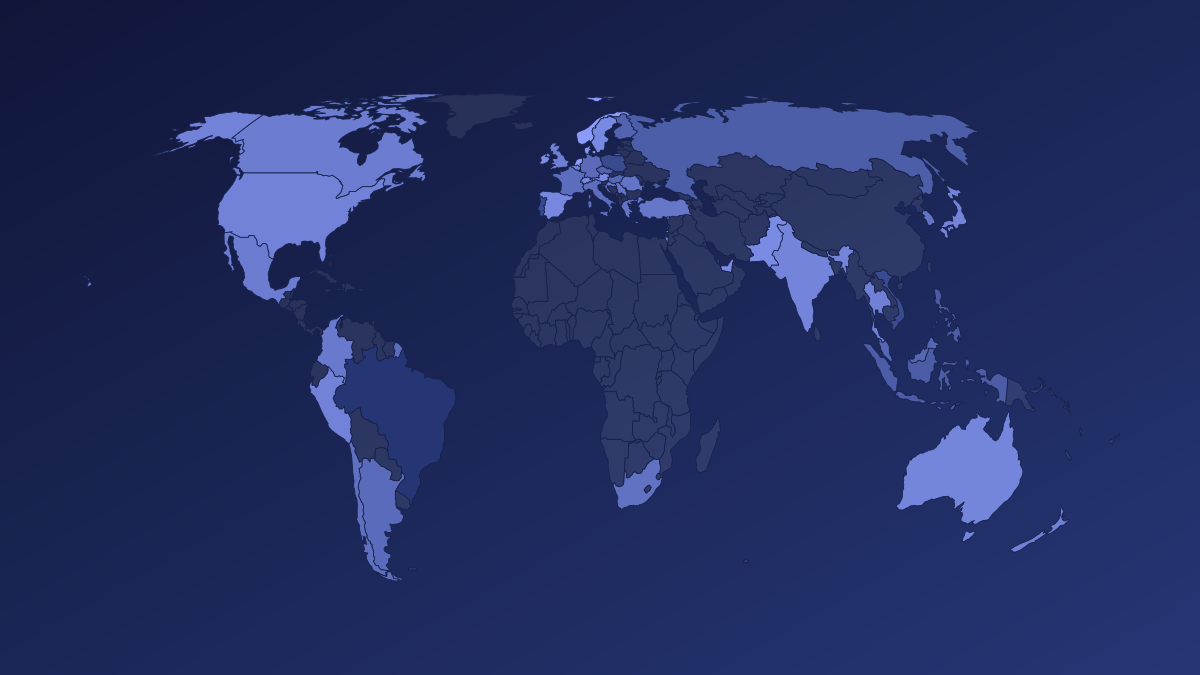
Карта світу за Big Five за даними 584 535 людей із 48 країн. Нідерланди й Норвегія найекстравертніші, Бразилія найменш. Дослідіть кожну рису й країну та дізнайтеся, чому порівняння країн потребує обережності.
We judge strangers in a fraction of a second. A new study in Nature Human Behaviour shows how these first impressions are organised, and why they say more about stereotypes than about real personality.
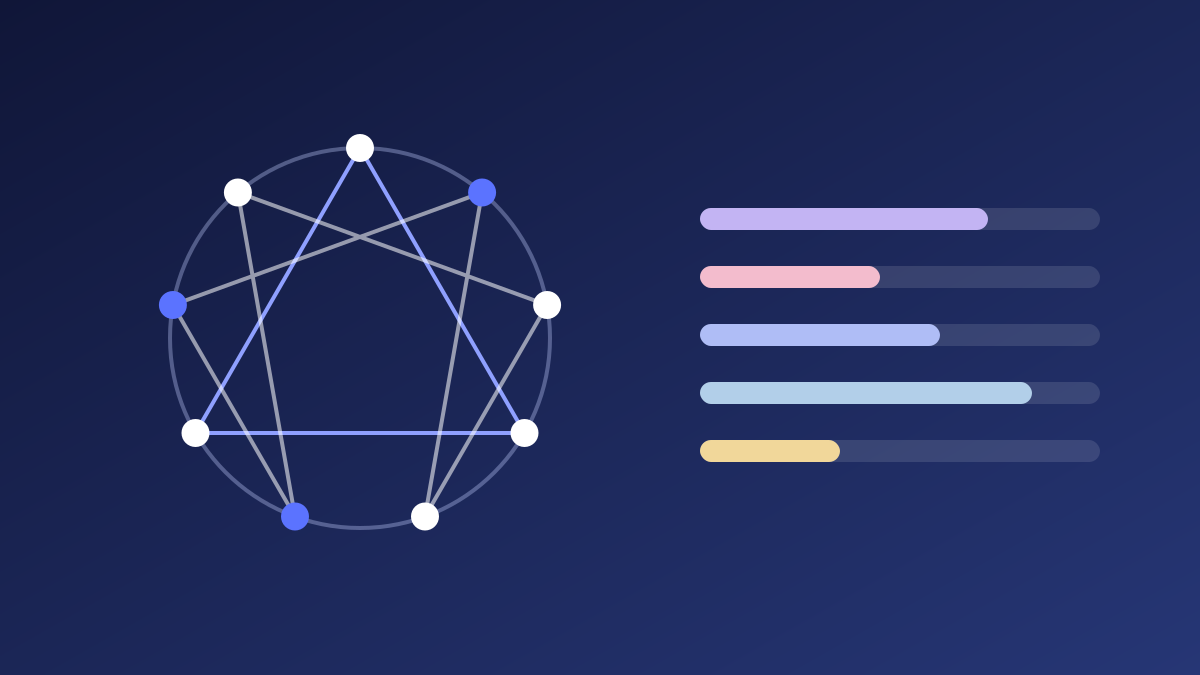
What the nine Enneagram types are, how reliable Enneagram tests are, and how each type lines up with the Big Five traits, based on a review of 104 studies.
Your interests are not just your personality at work. They are among the most stable traits you have, and they predict job satisfaction, performance and choices in life. Take the free career interest test.
Curiosity, kindness, bravery, humor and 20 more. What the 24 character strengths are, which ones are linked to happiness, and how using your top strengths can make a difference. Take the free character strengths test.
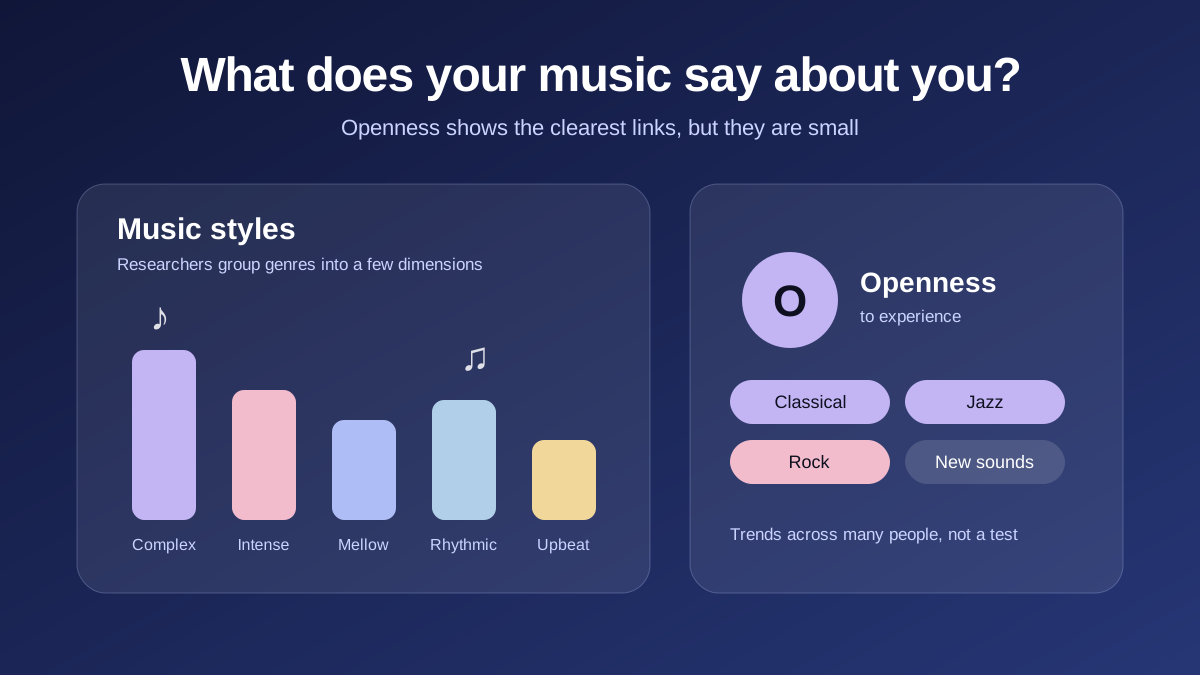
People high in openness lean towards complex, unconventional music. But the links between music taste and personality are smaller than most people think.
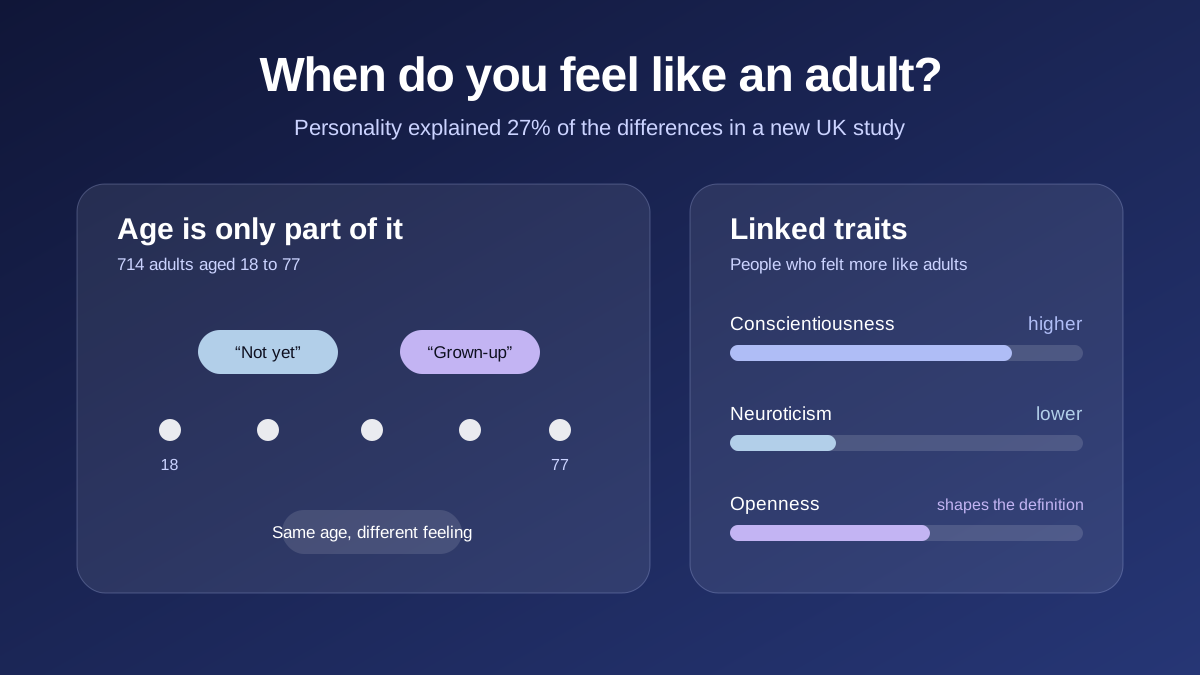
A new UK study of 714 adults found that people higher in conscientiousness and lower in neuroticism are more likely to feel like adults, regardless of age.
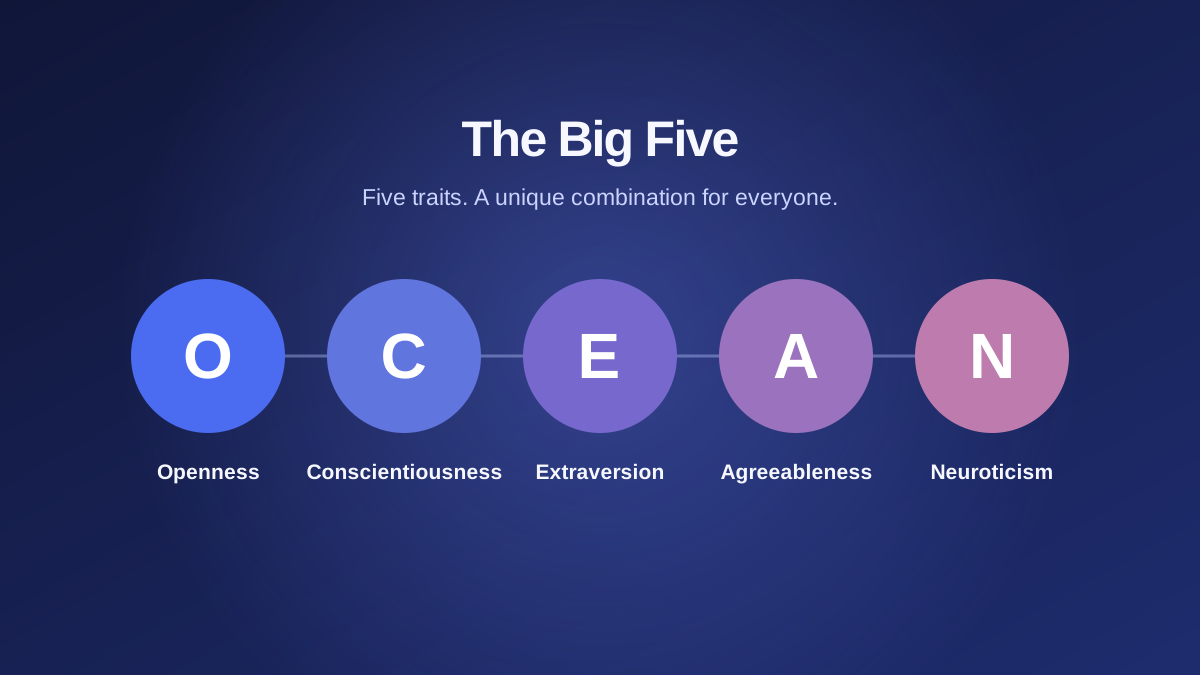
The five Big Five traits (OCEAN) and their 30 facets, where the model comes from, how it is measured, and what high and low scores say about you.
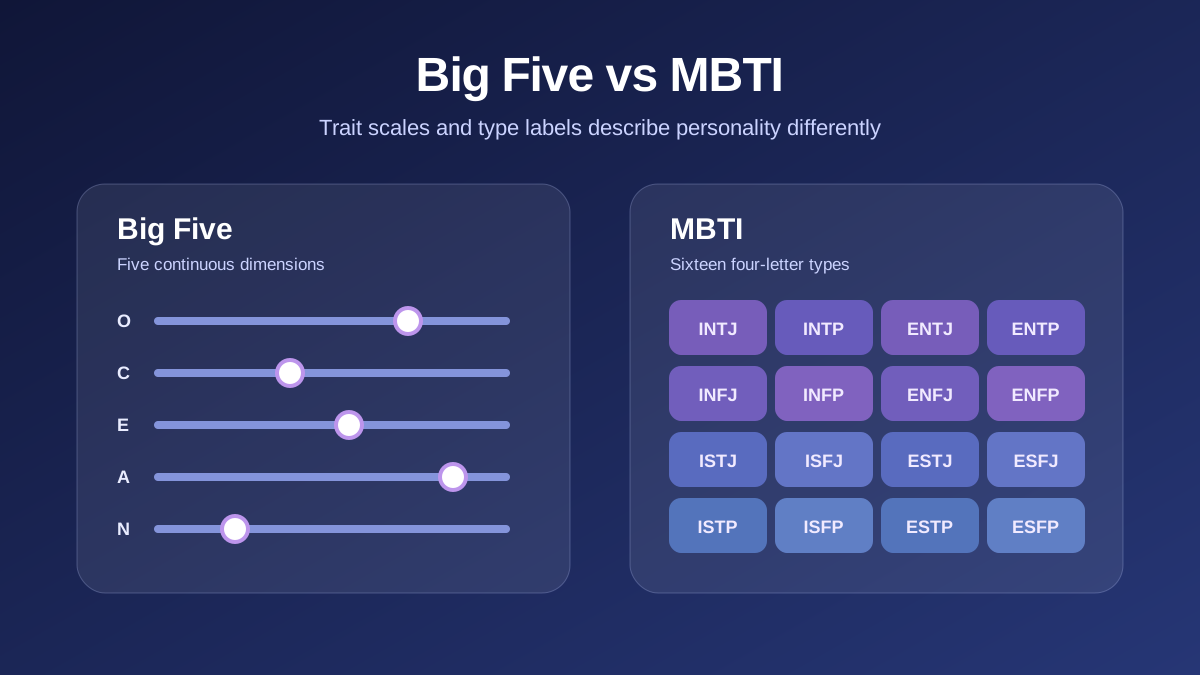
Compare Big Five and MBTI personality tests: what each measures, why trait scores differ from 16 types, and which is more useful for understanding yourself.
Discover how similarly you and your partner experience your relationship with Pair Perspective, a free and private 57-question relationship test for couples.
This article explores why some individuals are more vulnerable to stress and mental health issues than others, using the vulnerability-stress model to explain the role of genetic, environmental, and psychological factors.
This article explores simple self-care practices, such as nature activities, mindfulness, and creative play, that promote children's physical, emotional, and intellectual growth, fostering resilience, creativity, and empathy.
Do you feel uncomfortable in social settings? You might be an introvert, and this book can help you understand yourself better
This article explores the evolution of personality theory from its mythological origins in ancient Greece to contemporary psychological frameworks, highlighting key concepts and tools like the MBTI and the Big Five personality traits model.
This article explores the impact of the Big Five personality traits on job performance, highlighting their significance in employee productivity and organizational psychology.
Learn practical strategies to repair and improve communication in your relationship, addressing negative styles, managing emotions, and fostering collaboration for a healthier connection.
A recent study links disturbances in the gut microbiota of infants to the development of ADHD and autism later in life, highlighting the potential impact of gut health on neurodevelopment.
A recent study found that belief in astrology is associated with lower intelligence and higher levels of narcissism, suggesting that such beliefs may not be as benign as they seem.
A Danish study identifies 19 life circumstances that significantly increase the risk of suicide attempts among young people, offering new insights for effective prevention strategies.
Practical strategies for preventing anxiety and enhancing mental wellness, promoting a life of greater peace and reduced stress.
Self-efficacy, crucial for motivation and performance, can be enhanced through clear instructions, training, achievable goals, constructive feedback, supportive environments, and positive role models, ultimately fostering a motivated and resilient workforce.
Why the Myers-Briggs Type Indicator (MBTI), despite its popularity, is considered pseudoscience due to its lack of scientific validity, reliability, and its outdated theoretical basis.
This blog post traces the life and legacy of Carl Jung, highlighting his pioneering contributions to psychology, particularly his development of Analytical Psychology, the concepts of the collective unconscious and archetypes, and his enduring influence across various fields.
The life, career, and impact of Jordan B. Peterson, highlighting his rise from an academic psychologist to a prominent and controversial public intellectual.
Yes, on average. Women score higher on neuroticism and agreeableness, men on assertiveness and intellect. Here is how big the differences are, and why they are largest in the most gender-equal countries.
Discover how higher cognitive abilities can lead to more realistic optimism and better financial decisions, balancing hope with practical foresight.
This article provides an overview of schizotypal personality disorder, detailing its symptoms, differences from schizophrenia, and available treatments to help manage the condition.
This article explores the life, key theories, and enduring impact of Sigmund Freud, the pioneering neurologist and father of psychoanalysis.
Discover the transformative power of emotional intelligence and learn how it can enhance your mental health, relationships, and overall life success.
This study explores the relationship between belief in conspiracy theories and various personality traits, identifying key factors that influence these beliefs and suggesting implications for targeted interventions.
Who created the Big Five? No single person. Allport and Odbert, Cattell, Tupes and Christal, Goldberg, Costa and McCrae built it over 60 years. Timeline and sources.
A study of 1,432 people found that poor flirting capacity was the strongest predictor of being involuntarily single, for both men and women. The good news: it can be learned.
This article explores recent scientific findings that suggest personality traits are not fixed, but can change throughout our lives due to experiences and targeted interventions.
Explore how key personality traits like extraversion, neuroticism, and conscientiousness can influence whether you're likely to be single or romantically partnered
A study examines how personality traits like extraversion, conscientiousness, and agreeableness affect the satisfaction of basic psychological needs such as autonomy, competence, and relatedness.
Narcissism, Machiavellianism, psychopathy and sadism make up the Dark Triad and Dark Tetrad. Research shows they share a common core, the Dark Factor of Personality (D). Here is what it is and how it relates to the Big Five.
How the Big Five traits relate to relationship satisfaction: why neuroticism tends to hurt, why agreeableness, conscientiousness and extraversion help, and the role of self-esteem.
Explore recent research on lie detection, emphasizing the unreliability of nonverbal cues and advocating for a focus on verbal indicators and evidence-based methods.
Australian researchers followed 17,000 people and found links between personality and serious illness, from extraversion and heart disease to agreeableness and cancer.
Conscientious people tend to live longer. How healthier habits, following medical advice and better biological markers explain the link between conscientiousness and longevity.
This article explores how the Big Five personality traits affect academic performance, highlighting the significant influence of Openness and Conscientiousness on success in school settings.
Explore how the COVID-19 pandemic has surprisingly transformed our personalities, revealing shifts in traits like conscientiousness, extraversion, and neuroticism.
A study revealing that disagreeable traits like selfishness and manipulation do not aid in gaining power at work, contrasting with the positive correlation between extraversion and career advancement.
Agreeable and extraverted people tend to give away more when haggling over price, but do better when a deal can grow. Here is what research says about personality and negotiation, and how to use your traits.
Groundbreaking research that reveals stark contrasts in personality traits between psychopathic prisoners, non-psychopathic prisoners, and general patients, offering new insights into human behavior and psychology.
This article explores the spectrum of narcissism, its traits, impacts on relationships and professional environments, and differentiates between common narcissistic behaviors and Narcissistic Personality Disorder.
This article explores the meaning of introversion, debunks common myths, and celebrates the unique strengths of introverts in a world often dominated by extroverted ideals.
Can childhood trauma speed up ageing? New research links adverse childhood experiences to weaker mitochondria and shorter telomeres, and points to what can help.
Discover the fascinating insights into the human mind with Paul Bloom's free online Yale course, "Introduction to Psychology," covering topics from mental illness to the roots of happiness.
This article explores the integration of Positive Organizational Psychology 2.0 and the Talent Development Centre framework into Leadership Development Programs in Indian and Canadian organizations to optimize leadership effectiveness across diverse cultural contexts.
Доброзичливість відображає індивідуальні відмінності в тому, наскільки людині важливі співпраця та соціальна гармонія.
Сумлінність стосується того, як ми контролюємо, регулюємо та спрямовуємо свої імпульси. Імпульси самі по собі не є чимось поганим; іноді брак часу вимагає миттєвого…
Екстраверсія характеризується виразною взаємодією із зовнішнім світом. Екстраверти люблять бути серед людей, сповнені енергії та часто переживають позитивні емоції.
Нейротизм означає схильність переживати негативні почуття. Фройд спочатку вживав термін «невроз» для опису стану, що характеризується психічним напруженням,…
Відкритість досвіду описує вимір когнітивного стилю, який відрізняє людей з багатою уявою та творчою натурою від приземлених і консервативних.