Hồ sơ của bạn
 Linh

Trả lời 120 nhận định
Chọn phương án mô tả bạn đúng nhất. Không có câu trả lời đúng hay sai.
Nhận bức tranh đa chiều về cách bạn suy nghĩ, cảm nhận và hành động, rồi so sánh với người yêu, gia đình hay đồng nghiệp. Bài kiểm tra được xây dựng trên IPIP-NEO, mô hình nghiên cứu mở đứng sau Big Five. Miễn phí, không cần đăng ký.
Người yêu, gia đình, bạn bè hay đồng nghiệp. Khi cả hai đã làm bài kiểm tra, bạn sẽ thấy điểm giống và khác nhau cạnh nhau, kèm những chủ đề cụ thể để trò chuyện.
Bắt đầu với hồ sơ riêng tư của chính bạn.
Người kia tự trả lời một cách độc lập.
Kết quả làm nổi bật cả điểm giống lẫn điểm khác.
3chủ đề trò chuyện rõ ràng
Hãy xem sự khác biệt như một lời mời để tò mò, chứ không phải một phán xét.
Pair Perspective là bài kiểm tra mối quan hệ của chúng tôi. Mỗi người trả lời riêng 57 câu hỏi, rồi cùng khám phá những điểm mạnh chung và những khác biệt đáng để trò chuyện.
Big Five mô tả tính cách theo năm chiều kích độc lập. Không có hồ sơ nào tốt hơn hồ sơ khác – mỗi hồ sơ chỉ phản ánh những điểm mạnh, nhu cầu và xu hướng khác nhau.
Tìm khuôn mẫu của bạnTò mò, trí tưởng tượng và hứng thú với những ý tưởng mới.
Tính kỷ luật, sự ngăn nắp và cách bạn theo đuổi mục tiêu.
Năng lượng xã hội, sự chủ động và nhu cầu được kích thích.
Sự tin tưởng, thấu cảm và cách bạn đối xử với người khác.
Bài kiểm tra miễn phí. Bạn không cần tài khoản và có thể trả lời theo nhịp độ của riêng mình.
Làm bài kiểm tra ngayChọn phương án mô tả bạn đúng nhất. Không có câu trả lời đúng hay sai.
Kết quả của bạn gồm năm lĩnh vực chính và 30 khía cạnh tính cách bên dưới.
Hiểu các khuôn mẫu của bạn và so sánh kết quả với những người bạn quen.
Bạn thường tìm kiếm những góc nhìn mới và thích những ý tưởng thách thức điều quen thuộc.
Bắt đầu với một cái nhìn tổng quan rõ ràng, rồi khám phá từng đặc điểm tính cách và ý nghĩa của điểm số trong đời sống hằng ngày.
Hồ sơ của bạn mô tả các xu hướng, không phải chẩn đoán hay câu trả lời dứt khoát về con người bạn.
Những bài phân tích sâu về năm đặc điểm, các nghiên cứu và cách tính cách định hình đời sống hằng ngày.
Xem tất cả bài viếtEvery dog owner knows their dog is one of a kind. For decades, scientists called that wishful thinking. Now research shows that dog personality can be measured, that it is fairly stable, and that breed explains less than you might think.
Nice guys finish last, the saying goes. Some research seems to agree. But look closer, and the answer to whether your personality affects your pay is more surprising, and more useful, than the saying suggests.
You can understand your anger perfectly and still lie awake replaying the argument. A new Australian study suggests why insight alone may not calm you down.
Researchers found unusually high genetic risk scores in what is probably Hitler's DNA. But can genes explain a dictator? How people have tried to measure him for 80 years.
Two teenagers go through the same hard year, and only one seems to bounce back. A new study looks at how personality, hope and childhood relate to resilience.
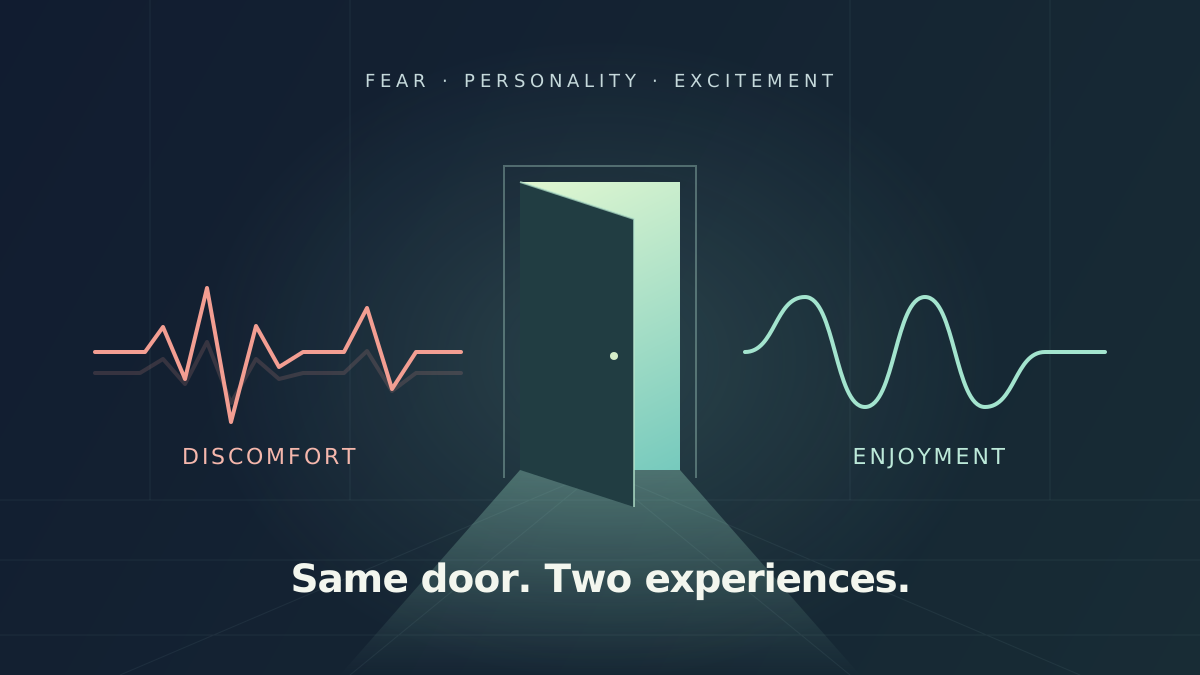
You hide behind a cushion. Your friend wants more. New research on psychopathic traits explores why the same scare can feel so different.
Bài kiểm tra dựa trên mô hình IPIP mở, miễn phí sử dụng và là mã nguồn mở. Phương pháp và bộ câu hỏi đều được công khai để xem xét.
Tính cách, điểm mạnh, sở thích nghề nghiệp và nhiều hơn nữa. Bạn nhận kết quả ngay.
Xem tất cả 36 bài kiểm traTính cách của bạn qua năm đặc điểm lớn và 30 khía cạnh: cởi mở, tận tâm, hướng ngoại, dễ chịu và nhạy cảm. Sau đó so sánh với bạn bè và người yêu.
Explore nine personality types and the patterns you recognize in yourself. A free full profile for self-reflection.
Explore six sides of love, from chemistry and friendship to care. Get a personal profile and something to talk about.
Is jealousy a feeling, a habit of checking, or a fear of losing someone? 16 statements, with a score on three sides.
A three-minute test of six broad traits: the Big Five plus honesty-humility. A quick overview; take the full Big Five test for facets and more detail.
Are you an introvert, an extrovert or somewhere in between? 24 statements, with your placement and a score on six facets.
Bản IPIP-NEO-300 đầy đủ với 300 câu hỏi. Mất nhiều thời gian hơn nhưng cho hồ sơ chính xác hơn về năm đặc điểm và toàn bộ 30 khía cạnh.
Each Big Five trait split in two: compassion and politeness, industriousness and orderliness, and more. 100 public-domain statements give you ten aspects.
Six broad traits instead of five: the HEXACO model adds honesty-humility to the Big Five picture. 240 public-domain statements give you 24 facets.
Raymond Cattell's classic model with 16 factors, from warmth and dominance to vigilance and perfectionism. 163 public-domain statements give you a profile between opposite poles.
Các bài toán ngôn ngữ, hình học và số trong 15 phút, từ một bài kiểm tra được các nhà tâm lý học công bố trên tạp chí Intelligence. Cho thấy khả năng suy luận của bạn ở ba lĩnh vực. Đây không phải bài kiểm tra IQ.
Find your signature strengths among the 24 character strengths in Peterson and Seligman's classification, from curiosity and kindness to bravery and humor.
Find out which of eight interest areas suit you best, from leadership and creativity to analysis and practical work, and which occupations match your profile.
Which of Holland's six interest types fit you: Realistic, Investigative, Artistic, Social, Enterprising or Conventional? Get your three-letter code and matching careers, with the O*NET Interest Profiler used in career guidance across the United States.
Your profile across seven components of emotional intelligence: noticing your feelings, showing joy and distress, empathy, being moved by others, and how much feelings guide your decisions.
How strongly do you feel with others, and how much do you show it? 17 statements, with a score on two sides of empathy.
How quickly do you catch fire, and does it reach other people? 27 statements, with a score on four sides of anger.
Is work taking over your life, or do you just work hard? 16 statements, with a score and what drives it.
How strongly do you react to rewards and to risks? Four scales on drive, fun seeking, reward responsiveness and caution, based on Gray's model of the brain's approach and avoidance systems.
Do you believe your life is steered by your own choices, by powerful others, or by chance? Three scales from Levenson's classic model, with your orientation explained.
Ten statements on how you value yourself and your abilities, based on Rosenberg's classic self-esteem scale. Quick, with a short explanation of your score.
Do you tend to see possibilities or difficulties? Ten statements about your outlook on life, with an explanation of your optimism score.
How satisfied are you with your life as a whole? Five statements and one minute, using one of the most widely used scales in happiness research.
A checklist of five kinds of everyday habits linked with good mental health: enjoyment, thinking habits, goals, routines and connection. With ideas for small steps.
The Short Dark Tetrad (SD4) measures four socially aversive traits found in everyone to some degree: Machiavellianism, narcissism, psychopathy and sadism.
Four sides of narcissism: the urge to lead, the need for attention, a sense of entitlement and a willingness to exploit others. Based on public-domain research scales.
How bold, how mean and how impulsive are you compared with others? Nine traits grouped into the three sides of psychopathy in Patrick's triarchic model. Measures normal variation, not a diagnosis.
The six-question screener from the WHO Adult ADHD Self-Report Scale (ASRS v1.1). Shows whether your answers are consistent with adult ADHD symptoms. Not a diagnosis.
Seven questions about worry and nervousness over the past two weeks, from the most widely used anxiety questionnaire. Shows how much the symptoms bother you. Not a diagnosis.
Nine questions about mood, sleep, energy and self-worth over the past two weeks, from the most widely used depression questionnaire. Shows how much the symptoms bother you. Not a diagnosis.
Twenty questions about how much memories, avoidance, mood and tension after a very stressful experience have bothered you in the past month. Not a diagnosis.
Twelve statements about checking, washing, order, numbers and unwanted thoughts, showing how well typical obsessive-compulsive symptoms fit you. Not a diagnosis.
The World Health Organization's ten questions on how much you drink, signs of dependence and harm, with your risk level.
Thirteen questions about exhaustion in daily life and at work, from the Copenhagen Burnout Inventory. Shows how worn out you are compared with others. Not a diagnosis.
Fourteen statements from a research-based screener for autism in adults. Shows whether your answers resemble those common in autism. Not a diagnosis.
Build the missing figure in a matrix. Choose 12, 22 or 36 tasks. A free pilot with a raw score.
Miễn phí · mã nguồn mở · không cần đăng ký · khoảng 10 phút