Din profil
 Alex
Svar på 120 udsagn
Vælg det svar, der beskriver dig bedst. Der findes ingen rigtige eller forkerte svar.
Få et nuanceret billede af, hvordan du tænker, føler og handler, og sammenlign dig med din partner, familie eller kolleger. Testen bygger på IPIP-NEO, den åbne forskningsmodel bag Big Five. Gratis og uden tilmelding.
Mener, jeg er bedre end andre
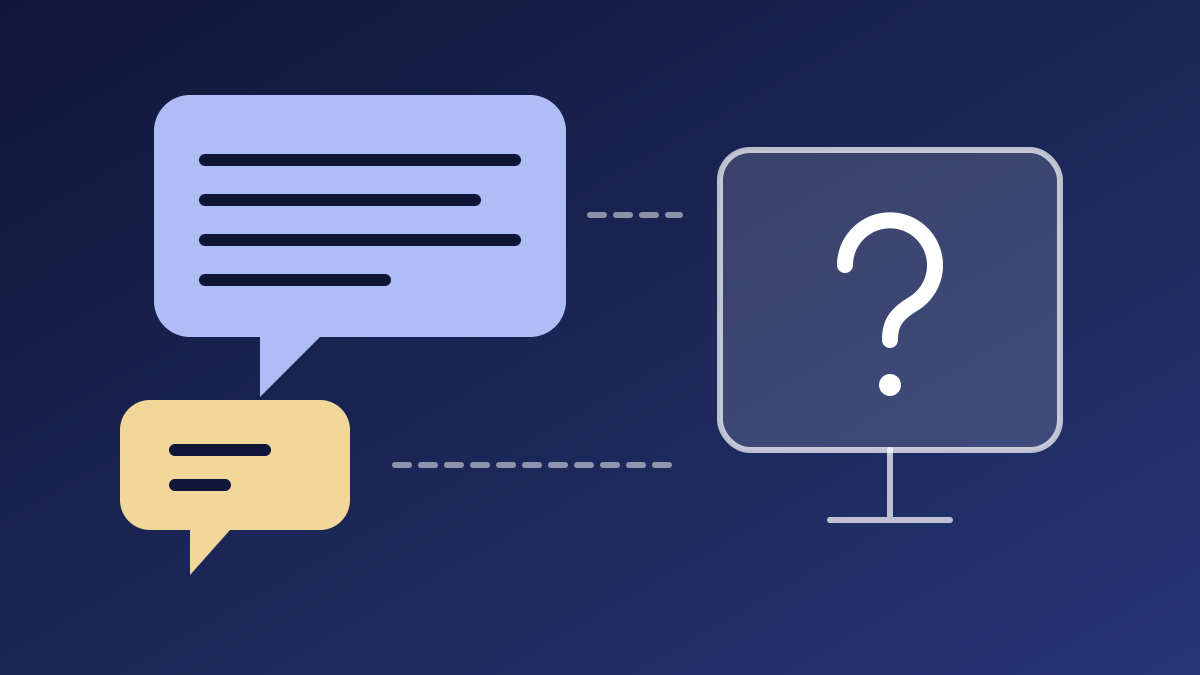
Din partner, familie, venner eller kolleger. Når I begge har taget testen, ser I ligheder og forskelle side om side, med konkrete emner at tale om.
Begynd med din egen private profil.
Den anden svarer på egen hånd.
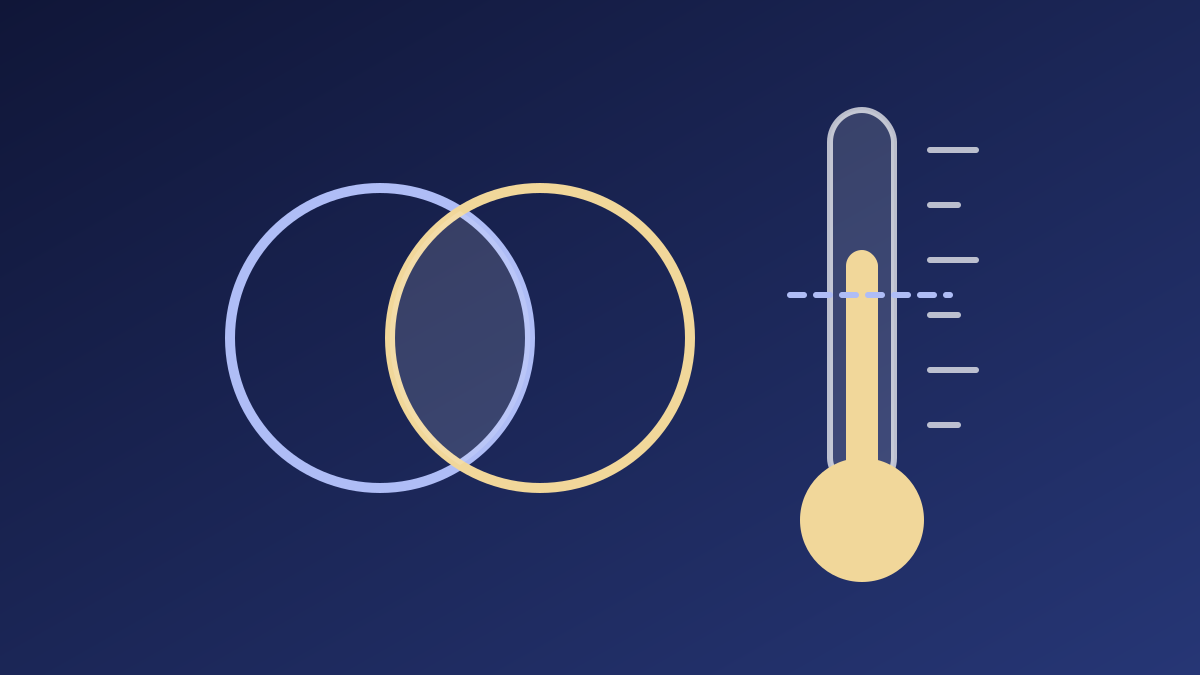
Resultatet fremhæver både ligheder og forskelle.
Underviser du en klasse eller leder et team? Opret et gruppelink til op til 100 personer
3tydelige samtaleemner
Brug forskellen som en invitation til at være nysgerrig, ikke som en dom.
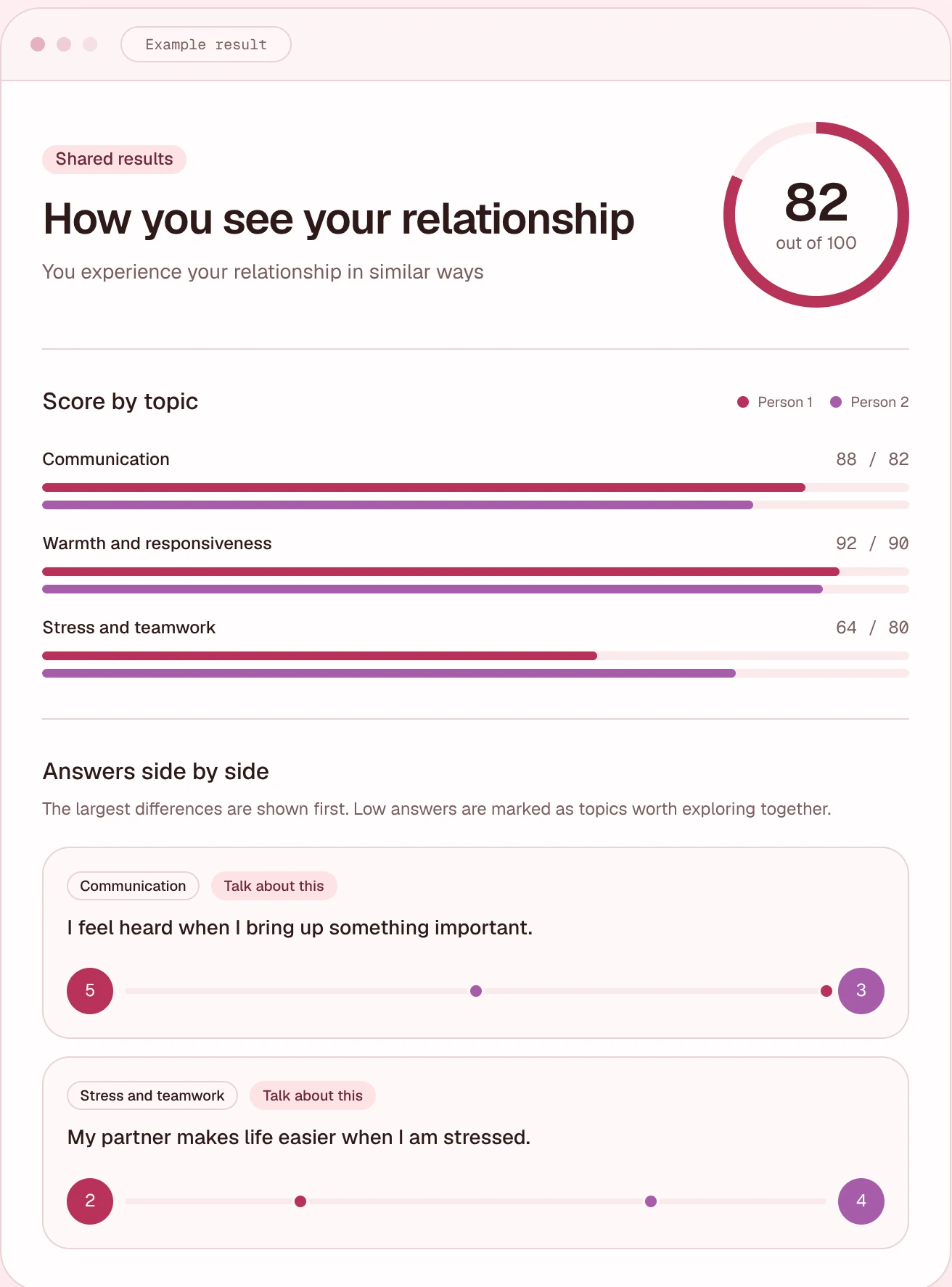
Pair Perspective er vores parforholdstest. Svar på 57 spørgsmål hver for sig, og udforsk derefter de styrker, I deler, og de forskelle, der er værd at tale om.
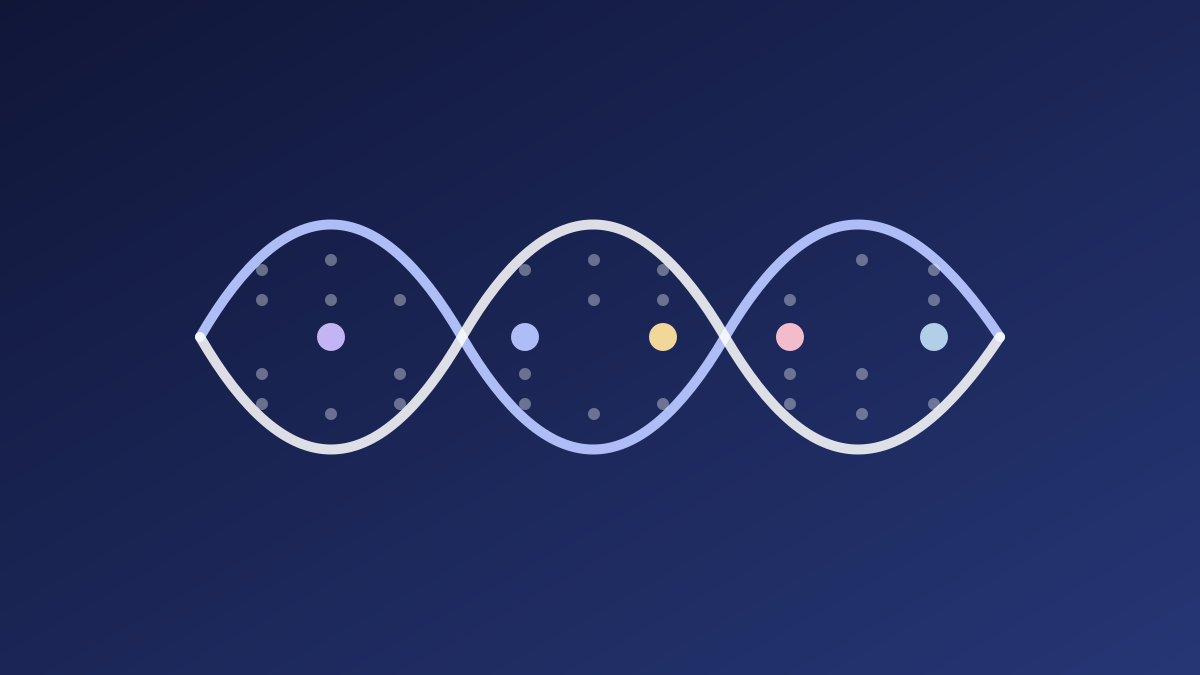
Big Five beskriver personlighed på tværs af fem uafhængige dimensioner. Ingen profil er bedre end en anden – den afspejler blot forskellige styrker, behov og tilbøjeligheder.
Find dit mønsterNysgerrighed, fantasi og interesse for nye idéer.
Struktur, selvdisciplin og hvordan du arbejder mod mål.
Social energi, initiativ og behov for stimulation.
Tillid, empati og hvordan du møder andre mennesker.
Testen er gratis. Du behøver ingen konto, og du kan svare i dit eget tempo.
Tag testen nuVælg det svar, der beskriver dig bedst. Der findes ingen rigtige eller forkerte svar.
Dit resultat viser fem hoveddomæner og 30 underliggende personlighedsfacetter.
Forstå dine mønstre og sammenlign dit resultat med folk, du kender.
Du opsøger ofte nye perspektiver og nyder idéer, der udfordrer det velkendte.
Begynd med et klart overblik, og udforsk derefter hvert personlighedstræk, og hvad dine scorer kan betyde i hverdagen.
Din profil beskriver tilbøjeligheder, ikke en diagnose eller et endegyldigt svar på, hvem du er.
Dybdegående artikler om de fem træk, forskningen og hvordan personlighed former hverdagen.
Se alle artiklerResearchers gave three AI models the stories of 220 children at a psychiatry clinic. With the child's own words the AI missed most problems. With the parent's words it found one in almost everyone, including the children who had none.
A study of 5,315 people found that the classic relationship questionnaires asked many questions that told almost nothing. The scale that replaced them shows how satisfaction differs between newlyweds and long marriages, and what goes with it.
In a classic experiment, two short sentences of thanks doubled the share of people who helped again. Other studies show that we thank each other surprisingly rarely, and that we badly underestimate how much it means.
Scientists searched the DNA of more than one million people for personality and found 1,260 genetic variants. The most interesting part is how little each of them matters, and what that says about who you are.
Every dog owner knows their dog is one of a kind. For decades, scientists called that wishful thinking. Now research shows that dog personality can be measured, that it is fairly stable, and that breed explains less than you might think.
Nice guys finish last, the saying goes. Some research seems to agree. But look closer, and the answer to whether your personality affects your pay is more surprising, and more useful, than the saying suggests.
Testen bygger på den åbne IPIP-model, er gratis at bruge og er open source. Metoden og spørgsmålene er tilgængelige, så alle kan gå dem efter.
Personlighed, styrker, karriereinteresser og mere. Du får dit resultat med det samme.
Se alle 40 testsDin personlighed på de fem store træk og 30 facetter: åbenhed for nyt, påpasselighed, udadvendthed, imødekommenhed og neuroticisme. Sammenlign dig med venner og partner bagefter.
Explore nine personality types and the patterns you recognize in yourself. A free full profile for self-reflection.
Explore six sides of love, from chemistry and friendship to care. Get a personal profile and something to talk about.
How satisfied are you in your relationship? 32 questions and about five minutes, using a scale researchers and couples therapists use.
Is jealousy a feeling, a habit of checking, or a fear of losing someone? 16 statements, with a score on three sides.
A three-minute test of six broad traits: the Big Five plus honesty-humility. A quick overview; take the full Big Five test for facets and more detail.
Er du introvert, ekstrovert eller et sted midt imellem? 24 udsagn, med din placering og en score på seks facetter.
Hele IPIP-NEO-300 med 300 spørgsmål. Den tager længere tid, men giver en mere præcis profil af de fem træk og alle 30 facetter.
Each Big Five trait split in two: compassion and politeness, industriousness and orderliness, and more. 100 public-domain statements give you ten aspects.
Six broad traits instead of five: the HEXACO model adds honesty-humility to the Big Five picture. 240 public-domain statements give you 24 facets.
Raymond Cattell's classic model with 16 factors, from warmth and dominance to vigilance and perfectionism. 163 public-domain statements give you a profile between opposite poles.
Verbale, figurale og numeriske opgaver på 15 minutter fra en test, som psykologer har offentliggjort i tidsskriftet Intelligence. Viser din evne til at ræsonnere på tre områder. Ikke en IQ-test.
Find your signature strengths among the 24 character strengths in Peterson and Seligman's classification, from curiosity and kindness to bravery and humor.
Find out which of eight interest areas suit you best, from leadership and creativity to analysis and practical work, and which occupations match your profile.
Which of Holland's six interest types fit you: Realistic, Investigative, Artistic, Social, Enterprising or Conventional? Get your three-letter code and matching careers, with the O*NET Interest Profiler used in career guidance across the United States.
What do you need from a job to be happy in it: results, freedom, recognition, good colleagues, a supportive employer or good conditions? Get your six work values ranked, with careers that offer most of what you value.
Your profile across seven components of emotional intelligence: noticing your feelings, showing joy and distress, empathy, being moved by others, and how much feelings guide your decisions.
How strongly do you feel with others, and how much do you show it? 17 statements, with a score on two sides of empathy.
How quickly do you catch fire, and does it reach other people? 27 statements, with a score on four sides of anger.
Is work taking over your life, or do you just work hard? 16 statements, with a score and what drives it.
Do you demand perfection, or do you just care about details? 16 statements, with a score and what lies behind it.
How strongly do you react to rewards and to risks? Four scales on drive, fun seeking, reward responsiveness and caution, based on Gray's model of the brain's approach and avoidance systems.
Do you believe your life is steered by your own choices, by powerful others, or by chance? Three scales from Levenson's classic model, with your orientation explained.
Ten statements on how you value yourself and your abilities, based on Rosenberg's classic self-esteem scale. Quick, with a short explanation of your score.
Do you tend to see possibilities or difficulties? Ten statements about your outlook on life, with an explanation of your optimism score.
How satisfied are you with your life as a whole? Five statements and one minute, using one of the most widely used scales in happiness research.
A checklist of five kinds of everyday habits linked with good mental health: enjoyment, thinking habits, goals, routines and connection. With ideas for small steps.
The Short Dark Tetrad (SD4) measures four socially aversive traits found in everyone to some degree: Machiavellianism, narcissism, psychopathy and sadism.
Fire sider af narcissisme: trangen til at lede, behovet for opmærksomhed, følelsen af at have krav på mere og viljen til at udnytte andre. Bygger på forskningsskalaer i public domain.
Hvor dristig, hvor ondskabsfuld og hvor impulsiv er du sammenlignet med andre? Ni træk samlet i de tre sider af psykopati i Patricks triarkiske model. Måler normal variation, ikke en diagnose.
The six-question screener from the WHO Adult ADHD Self-Report Scale (ASRS v1.1). Shows whether your answers are consistent with adult ADHD symptoms. Not a diagnosis.
Ten questions about how you have felt over the past 30 days, from the Kessler scale used in national health surveys. Shows your level of psychological distress. Not a diagnosis.
Seven questions about worry and nervousness over the past two weeks, from the most widely used anxiety questionnaire. Shows how much the symptoms bother you. Not a diagnosis.
Ni spørgsmål om humør, søvn, energi og selvværd de seneste to uger, fra det mest brugte spørgeskema om depression. Viser, hvor meget symptomerne generer dig. Ikke en diagnose.
Twenty questions about how much memories, avoidance, mood and tension after a very stressful experience have bothered you in the past month. Not a diagnosis.
Twelve statements about checking, washing, order, numbers and unwanted thoughts, showing how well typical obsessive-compulsive symptoms fit you. Not a diagnosis.
The World Health Organization's ten questions on how much you drink, signs of dependence and harm, with your risk level.
Thirteen questions about exhaustion in daily life and at work, from the Copenhagen Burnout Inventory. Shows how worn out you are compared with others. Not a diagnosis.
Fourteen statements from a research-based screener for autism in adults. Shows whether your answers resemble those common in autism. Not a diagnosis.
Build the missing figure in a matrix. Choose 12, 22 or 36 tasks. A free pilot with a raw score.
Gratis · open source · ingen registrering · cirka 10 minutter