پروفایل شما
 سارا
آزمون شخصیت بیگ فایو
شخصیت شما در پنج ویژگی بزرگ و ۳۰ جنبه: گشودگی به تجربه، وظیفهشناسی، برونگرایی، توافقپذیری و روانرنجوری. سپس خود را با دوستان و همسرتان مقایسه کنید.
تصویری دقیق از اینکه چطور فکر میکنید، چه احساسی دارید و چگونه رفتار میکنید به دست آورید و خودتان را با شریک زندگی، خانواده یا همکارانتان مقایسه کنید. این آزمون بر پایهٔ IPIP-NEO ساخته شده، مدل پژوهشی باز پشت بیگ فایو. رایگان و بدون ثبتنام.
معتقدم که از دیگران بهترم
برای جلو افتادن تقلب میکنم
معتقدم که هیچ درست و غلط مطلقی وجود ندارد
از یک جر و بحث حسابی لذت میبرم
معتقدم باید با جرم و جنایت قاطعانه برخورد کنیم
قوانین را زیر پا میگذارم
پنج ویژگی. یک تصویر کامل.
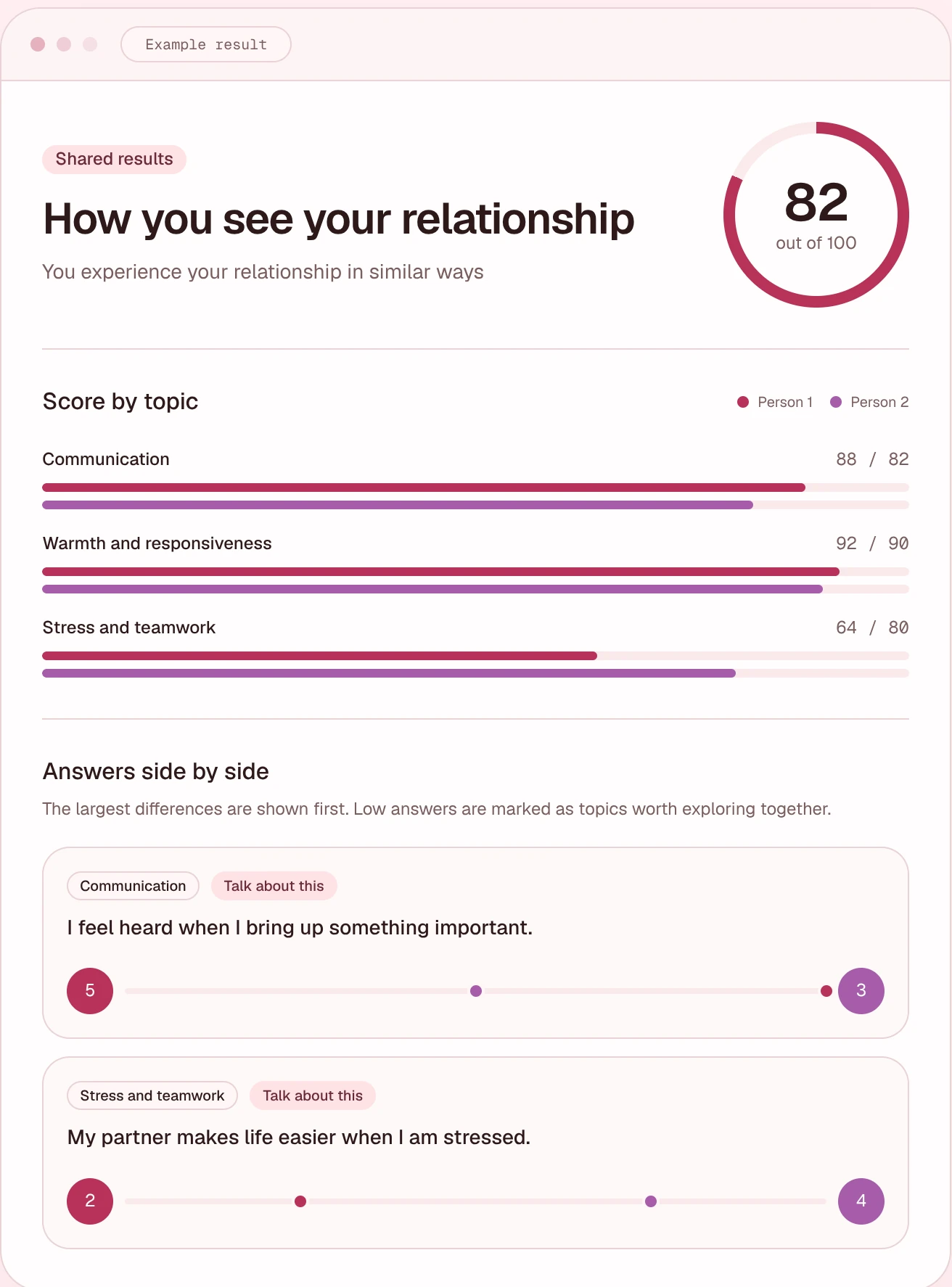
شریک زندگی، خانواده، دوستان یا همکاران. وقتی هر دو آزمون را انجام داده باشید، شباهتها و تفاوتها را کنار هم میبینید، همراه با موضوعهای مشخصی برای گفتگو.
با پروفایل خصوصی خودتان شروع کنید.
طرف مقابل بهطور مستقل پاسخ میدهد.
نتیجه هم شباهتها و هم تفاوتها را برجسته میکند.
۳موضوع روشن برای گفتگو
این تفاوت را دعوتی به کنجکاوی بدانید، نه یک حکم.
Pair Perspective آزمون رابطهٔ ماست. جداگانه به ۵۷ پرسش پاسخ دهید، سپس نقاط قوت مشترک و تفاوتهایی را که ارزش گفتگو دارند کاوش کنید.
بیگ فایو شخصیت را در پنج بُعد مستقل توصیف میکند. هیچ پروفایلی بهتر از دیگری نیست؛ فقط نقاط قوت، نیازها و گرایشهای متفاوتی را نشان میدهد.
الگوی خود را پیدا کنیدنظم، خودانضباطی و شیوهٔ پیش رفتن به سوی اهداف.
شما اغلب به دنبال دیدگاههای تازهاید و از ایدههایی که عادتها را به چالش میکشند لذت میبرید.
با یک نمای کلی روشن شروع کنید، سپس هر ویژگی شخصیتی را بررسی کنید و ببینید نمرههایتان در زندگی روزمره چه معنایی میتوانند داشته باشند.
پروفایل شما گرایشها را توصیف میکند، نه یک تشخیص یا پاسخ قطعی به اینکه چه کسی هستید.
شخصیت، نقاط قوت، علایق شغلی و موارد دیگر. نتیجهٔ خود را بلافاصله میگیرید.
دیدن هر 57 آزمونشخصیت شما در پنج ویژگی بزرگ و ۳۰ جنبه: گشودگی به تجربه، وظیفهشناسی، برونگرایی، توافقپذیری و روانرنجوری. سپس خود را با دوستان و همسرتان مقایسه کنید.
کدامیک از ۱۶ تیپ چهارحرفی بیشتر به شما میخورد؟ ۴۰ جمله، همراه با تیپ شما و میزان گرایشتان در هر یک از چهار جفت ترجیح.
Explore nine personality types and the patterns you recognize in yourself. A free full profile for self-reflection.
Explore six sides of love, from chemistry and friendship to care. Get a personal profile and something to talk about.
How satisfied are you in your relationship? 32 questions and about five minutes, using a scale researchers and couples therapists use.
حسادت یک احساس است، عادتی به وارسی کردن، یا ترس از دست دادن کسی؟ ۱۶ جمله، با نمرهای در سه جنبه.
آزمونی سهدقیقهای برای شش ویژگی کلی: پنج ویژگی بیگ فایو بههمراه صداقت-فروتنی. یک نمای کلی سریع؛ برای جنبهها و جزئیات بیشتر، آزمون کامل بیگ فایو را انجام دهید.
درونگرا هستید، برونگرا یا جایی میان این دو؟ ۲۴ جمله، همراه با جایگاه شما و نمره در شش جنبه.
در برابر استرس، نگرانی و ناکامی چقدر شدید واکنش نشان میدهید؟ ۲۴ جمله، همراه با نمرهٔ روانرنجوری شما و نمره در شش جنبه.
نسخه کامل IPIP-NEO-300 با ۳۰۰ پرسش. زمان بیشتری میبرد، اما نیمرخ دقیقتری از پنج ویژگی و همه ۳۰ جنبه ارائه میدهد.
هر ویژگی پنج عامل بزرگ به دو بخش تقسیم میشود: شفقت و ادب، سختکوشی و نظم، و بیشتر. ۱۰۰ گزارهٔ در دسترس عموم، ده جنبه را به شما نشان میدهد.
Six broad traits instead of five: the HEXACO model adds honesty-humility to the Big Five picture. 240 public-domain statements give you 24 facets.
Raymond Cattell's classic model with 16 factors, from warmth and dominance to vigilance and perfectionism. 163 public-domain statements give you a profile between opposite poles.
مسئلههای کلامی، تصویری و عددی در 15 دقیقه، از آزمونی که روانشناسان در مجلهٔ Intelligence منتشر کردهاند. توان استدلال شما را در سه حوزه نشان میدهد. آزمون هوش (IQ) نیست.
Find your signature strengths among the 24 character strengths in Peterson and Seligman's classification, from curiosity and kindness to bravery and humor.
Find out which of eight interest areas suit you best, from leadership and creativity to analysis and practical work, and which occupations match your profile.
Which of Holland's six interest types fit you: Realistic, Investigative, Artistic, Social, Enterprising or Conventional? Get your three-letter code and matching careers, with the O*NET Interest Profiler used in career guidance across the United States.
What do you need from a job to be happy in it: results, freedom, recognition, good colleagues, a supportive employer or good conditions? Get your six work values ranked, with careers that offer most of what you value.
Your profile across seven components of emotional intelligence: noticing your feelings, showing joy and distress, empathy, being moved by others, and how much feelings guide your decisions.
چقدر با دیگران همحس میشوید و چقدر آن را نشان میدهید؟ ۱۷ جمله، با نمرهای در دو جنبهٔ همدلی.
چقدر زود از کوره در میروید و آیا خشمتان به دیگران هم میرسد؟ ۲۷ جمله، با نمرهای در چهار جنبهٔ خشم.
Is work taking over your life, or do you just work hard? 16 statements, with a score and what drives it.
Do you demand perfection, or do you just care about details? 16 statements, with a score and what lies behind it.
How strongly do you react to rewards and to risks? Four scales on drive, fun seeking, reward responsiveness and caution, based on Gray's model of the brain's approach and avoidance systems.
Do you believe your life is steered by your own choices, by powerful others, or by chance? Three scales from Levenson's classic model, with your orientation explained.
ده جمله دربارهٔ اینکه برای خودتان و تواناییهایتان چه ارزشی قائلید، بر پایهٔ مقیاس کلاسیک عزت نفس Rosenberg. سریع، همراه با توضیحی کوتاه دربارهٔ نمرهٔ شما.
وقتی اوضاع خوب پیش نمیرود، چقدر با خودتان مهربانید؟ ۲۶ جمله از مقیاس کریستین نف، همراه با نمرهٔ شما و شش جنبهٔ شفقت به خود.
بیشتر امکانها را میبینید یا دشواریها را؟ ده جمله دربارهٔ نگاه شما به زندگی، همراه با توضیح نمرهٔ خوشبینیتان.
How satisfied are you with your life as a whole? Five statements and one minute, using one of the most widely used scales in happiness research.
A checklist of five kinds of everyday habits linked with good mental health: enjoyment, thinking habits, goals, routines and connection. With ideas for small steps.
The Short Dark Tetrad (SD4) measures four socially aversive traits found in everyone to some degree: Machiavellianism, narcissism, psychopathy and sadism.
چهار جنبهٔ خودشیفتگی: میل به رهبری، نیاز به توجه، احساس استحقاق و آمادگی برای بهرهکشی از دیگران. بر پایهٔ مقیاسهای پژوهشیِ در مالکیت عمومی.
در مقایسه با دیگران چقدر جسور، چقدر بیرحم و چقدر تکانشی هستید؟ نُه صفت که در سه جنبهٔ سایکوپاتی در مدل سهگانهٔ Patrick دستهبندی شدهاند. تفاوتهای عادی را میسنجد و تشخیص نیست.
The six-question screener from the WHO Adult ADHD Self-Report Scale (ASRS v1.1). Shows whether your answers are consistent with adult ADHD symptoms. Not a diagnosis.
Ten questions about how you have felt over the past 30 days, from the Kessler scale used in national health surveys. Shows your level of psychological distress. Not a diagnosis.
Seven questions about worry and nervousness over the past two weeks, from the most widely used anxiety questionnaire. Shows how much the symptoms bother you. Not a diagnosis.
Yes-or-no questions about sudden anxiety attacks and their symptoms, from the Patient Health Questionnaire. Shows whether your answers fit the pattern of panic disorder. Not a diagnosis.
Fourteen questions about fear of vomiting: worry, avoidance, checking and nausea over the past week. Shows whether your answers suggest emetophobia. Not a diagnosis.
Nine questions about mood, sleep, energy and self-worth over the past two weeks, from the most widely used depression questionnaire. Shows how much the symptoms bother you. Not a diagnosis.
Fifteen questions about pain, dizziness, stomach problems, tiredness and sleep, from the Patient Health Questionnaire. Shows how much physical symptoms weigh on you. Not a diagnosis.
Ten questions about falling asleep, waking up, daytime energy and worrying about sleep. Shows whether your sleep problems may be insomnia. Not a diagnosis.
Yes-or-no questions about binge eating and ways of avoiding weight gain, from the Patient Health Questionnaire. Screens for bulimia and binge eating disorder. Not a diagnosis.
Twenty questions about how much memories, avoidance, mood and tension after a very stressful experience have bothered you in the past month. Not a diagnosis.
Eighteen questions from the ICD-11 trauma questionnaire. Shows whether your answers match the pattern for PTSD or complex PTSD, with its effects on emotions, self-image and relationships. Not a diagnosis.
22 questions on grief reactions after the death of someone close, scored against ICD-11 and DSM-5-TR prolonged grief disorder. Not a diagnosis.
Questions on stressful life changes, worry and coping, based on ICD-11 adjustment disorder. Shows whether a strain has become hard to adapt to. Not a diagnosis.
Twelve statements about checking, washing, order, numbers and unwanted thoughts, showing how well typical obsessive-compulsive symptoms fit you. Not a diagnosis.
Questions on worry about your appearance, checking, hiding and avoiding, from David Veale's scales. Shows whether your answers suggest body dysmorphic disorder. Not a diagnosis.
Nineteen statements about control, cutting down and consequences of sex and porn use, based on ICD-11. Shows whether you may be at high risk of compulsive sexual behaviour disorder. Not a diagnosis.
The World Health Organization's ten questions on how much you drink, signs of dependence and harm, with your risk level.
Eight questions about how often you use cannabis, how much and how it affects you. Shows whether your use may be risky. Not a diagnosis.
Eleven questions about drug use, loss of control and harm, the drug counterpart of the AUDIT alcohol test. Shows whether your use may cause problems. Not a diagnosis.
Four questions on the WHO's features of gaming disorder: control, priority, continuing despite problems and harm. Shows whether your gaming may be a problem. Not a diagnosis.
Thirteen questions about exhaustion in daily life and at work, from the Copenhagen Burnout Inventory. Shows how worn out you are compared with others. Not a diagnosis.
Fourteen statements from a research-based screener for autism in adults. Shows whether your answers resemble those common in autism. Not a diagnosis.
Twenty-five statements about hiding or compensating for autistic traits in social situations. Shows your scores for compensation, masking and assimilation. Not a diagnosis.
Build the missing figure in a matrix. Choose 12, 22 or 36 tasks. A free pilot with a raw score.
نگاهی عمیق به پنج ویژگی، پژوهشها و اینکه شخصیت چطور زندگی روزمره را شکل میدهد.
همهٔ مقالات را ببینیدFive years after two doses of psilocybin and about eleven hours of therapy, 67 % of a small group of people with depression were in remission. The bigger trials tell a more modest story. A guide to the results, the doubts, the risks and where the treatment is allowed.
Researchers gave three AI models the stories of 220 children at a psychiatry clinic. With the child's own words the AI missed most problems. With the parent's words it found one in almost everyone, including the children who had none.
A study of 5,315 people found that the classic relationship questionnaires asked many questions that told almost nothing. The scale that replaced them shows how satisfaction differs between newlyweds and long marriages, and what goes with it.
In a classic experiment, two short sentences of thanks doubled the share of people who helped again. Other studies show that we thank each other surprisingly rarely, and that we badly underestimate how much it means.
Scientists searched the DNA of more than one million people for personality and found 1,260 genetic variants. The most interesting part is how little each of them matters, and what that says about who you are.
Every dog owner knows their dog is one of a kind. For decades, scientists called that wishful thinking. Now research shows that dog personality can be measured, that it is fairly stable, and that breed explains less than you might think.
این آزمون بر پایهٔ مدل باز IPIP است، استفاده از آن رایگان است و متنباز است. روش و پرسشهای آن برای بررسی در دسترساند.
رایگان · متنباز · بدون ثبتنام · حدود ۱۰ دقیقه